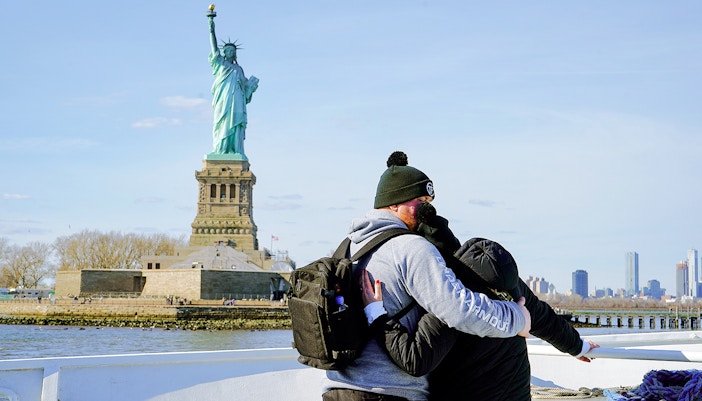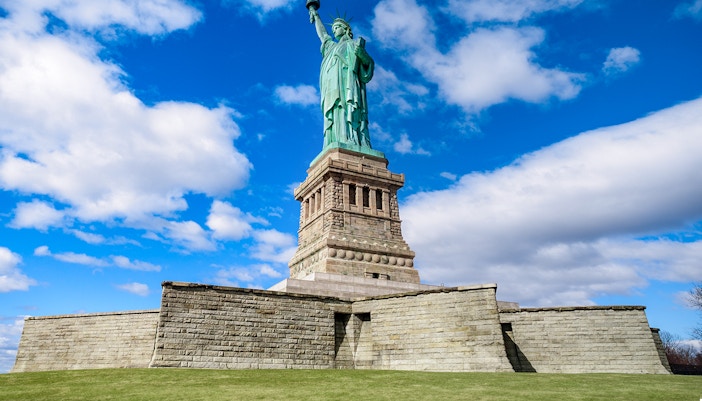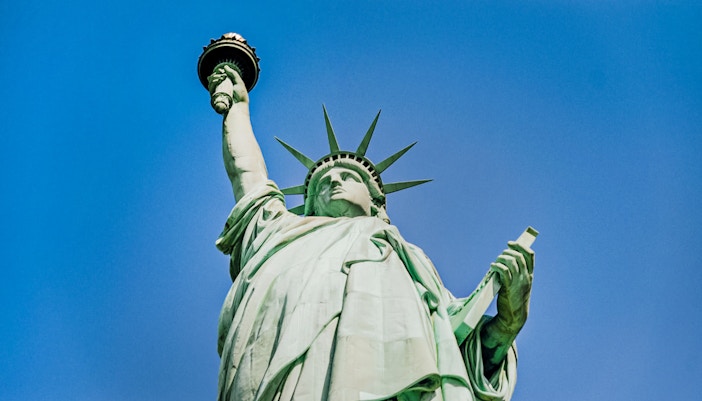
Tracing the fascinating history of the Statue of Liberty | America's iconic symbol of freedom

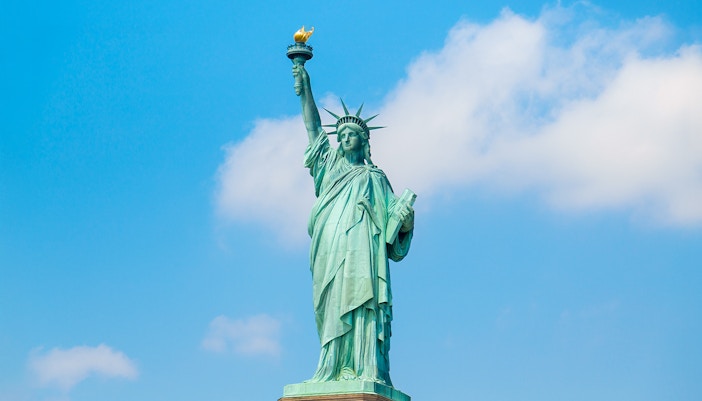
Serving as a beacon of hope and a symbol of freedom to millions of people around the globe, the Statue of Liberty is an enormous neoclassical sculpture that was sent as a gift by the French to the United States to commemorate 100 years of independence. With a torch held in her right hand over her head, Lady Liberty is a representation of enlightenment.

On this page, we will provide you with a complete insight into major events and delve deeper into the rich history of the Statue of Liberty and why it creates such a powerful mark in the world.

Detailed timeline of the Statue of Liberty

  • 1865: Edouard de Laboulaye, a famous French historian, came up with the idea that France should build a statue to give to the United States to celebrate their success in becoming a democracy.
  • 1870: The French sculptor Frederic Auguste Bartholdi was appointed to build and design the Statue of Liberty, and began sketching the same.
  • 1871: In order to decide on a site for the statue, Bartholdi visited the US and chose the New York Harbor as the location.
  • 1875: The project was announced and efforts to raise fundraising for the statue began. 
  • 1876: Construction of the Statue of Liberty began.
  • 1878: The work on the Statue of Liberty’s head and shoulders is completed and kept on display at the Paris Universal Exposition.
  • 1881: American architect Richard Morris Hunt is chosen to design the pedestal.
  • 1883: The assembly of the statue began in Paris as well as the construction of the pedestal.
  • 1885: The Statue of Liberty arrived in New York City from France on June 17th, but the pedestal was not done and hence it was kept in storage for almost a year.
  • 1886: On October 28, President Grover Cleveland officially unravels the symbolic Statue of Liberty at a ceremony.
  • 1892: The U.S. government sets up an immigration station on Ellis Island. Millions of immigrants would pass by the statue as they entered the country for the first time.
  • 1903: The poem ‘The New Colossus’ by Emma Lazarus gets inscribed at the base of the statue.

History of the Statue of Liberty explained

Early Conceptualisation

1865

In 1865, Edouard de Laboulaye came up with the idea of gifting a monumental structure from the French to the United States. He wished to commemorate the Declaration of Independence and celebrate the close friendship between France and America.

Laboulaye was impressed by the recent abolition of slavery in the United States, which furthered the country’s ideals of freedom and liberty. Frederic Auguste Bartholdi was in attendance for Edouard’s proclamation and began to conceptualize a colossal structure that would be known as Liberty Enlightening the World.

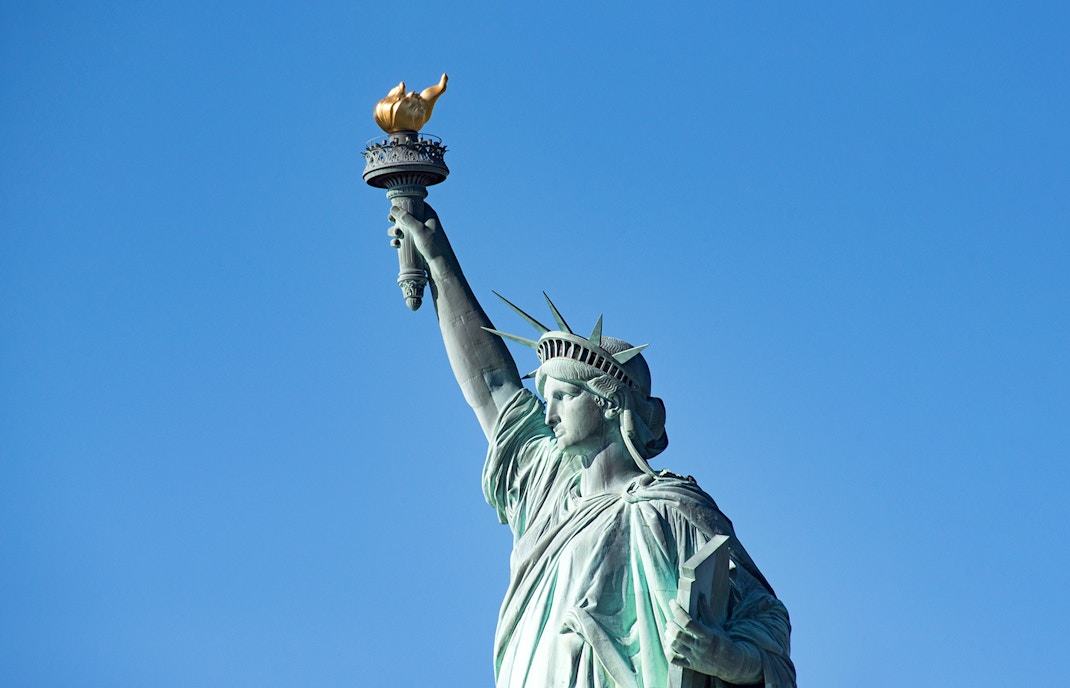
In Bartholdi’s design, the crown on the right hand represented light with its spikes evoking sun rays; the tablet on the left hand, noted the date of American independence (July 4, 1776, in Roman numerals).
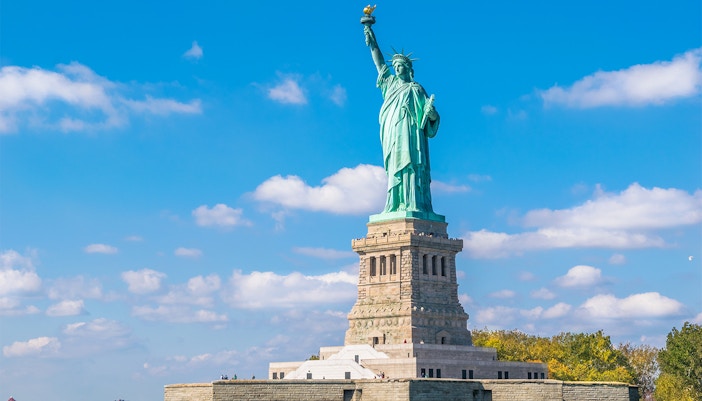

Funding the Statue

1877

The Statue of Liberty played an integral role in bringing people together in history. France had taken the responsibility of building the Statue and assembling it in the United States whereas the Americans decided to fund it and build the pedestal.

In France, funds were raised in the form of public fees, through entertainment, and a lottery system was in place. On the other hand, the US conducted theatrical events, art exhibitions, and auctions to finance the pedestal. The famous poet Emma Lazarus wrote her sonnet The New Colossus for an art and literary auction to contribute to the funding. Despite these efforts, the fundraising for the pedestal took a slow pace.

To push this, Joseph Pulitzer placed an ad in the paper the New York World to invite readers to donate to the cause in exchange for printing each donor’s name in the newspaper.

The Original Torch

1880

Bartholdi had envisioned that the flame of the Statue’s torch was to be made of solid copper sheet and gilded so that it would shine bright in daylight. However, numerous modifications were made in place for the torch over the years.

When the foundation was restoring the Statue of Liberty in 1880 for a centennial celebration, the original torch could not be restored. Leaks and corrosion had damaged the original torch and hence it was removed and replaced with a replica of Bartholdi’s design. In 1916, copper was removed in about 250 places and replaced with cathedral glass. Later in 1931, a new lighting system was installed. Today, the original torch is kept on display in the Inspiration Gallery of the Statue of Liberty Museum.

Liberty’s Voyage

1885

Due to the massive size of the statue, it was disassembled into about 350 pieces and shipped to New York in over 200 crates. The Statue of Liberty arrived in New York Harbor on June 17, 1885. Since the construction of its pedestal was still ongoing, the pieces of the Statue were preserved on what was then called Bedloe’s Island.

In April 1886 the pedestal was completed and on October 28 of the same year, President Grover Cleveland dedicated the Statue of Liberty in front of many spectators. For a long time, the island was a major source of food for the Lenape native people and later for the Dutch people.

Official announcement

1886

The Statue of Liberty was announced to the world on October 28, 1886, during a dedication ceremony on Liberty Island in New York Harbor. The announcement ceremony of the Statue of Liberty was a grand event attended by dignitaries and thousands of people. The statue was unveiled by President Grover Cleveland, and a parade was held in New York City to celebrate the occasion.

The dedication ceremony included speeches by the French ambassador to the United States, the American ambassador to France, and President Cleveland. The event was also marked by the firing of a cannon and the release of hundreds of carrier pigeons, symbolizing the spreading of the news about the statue to the world.

The Statue of Liberty today

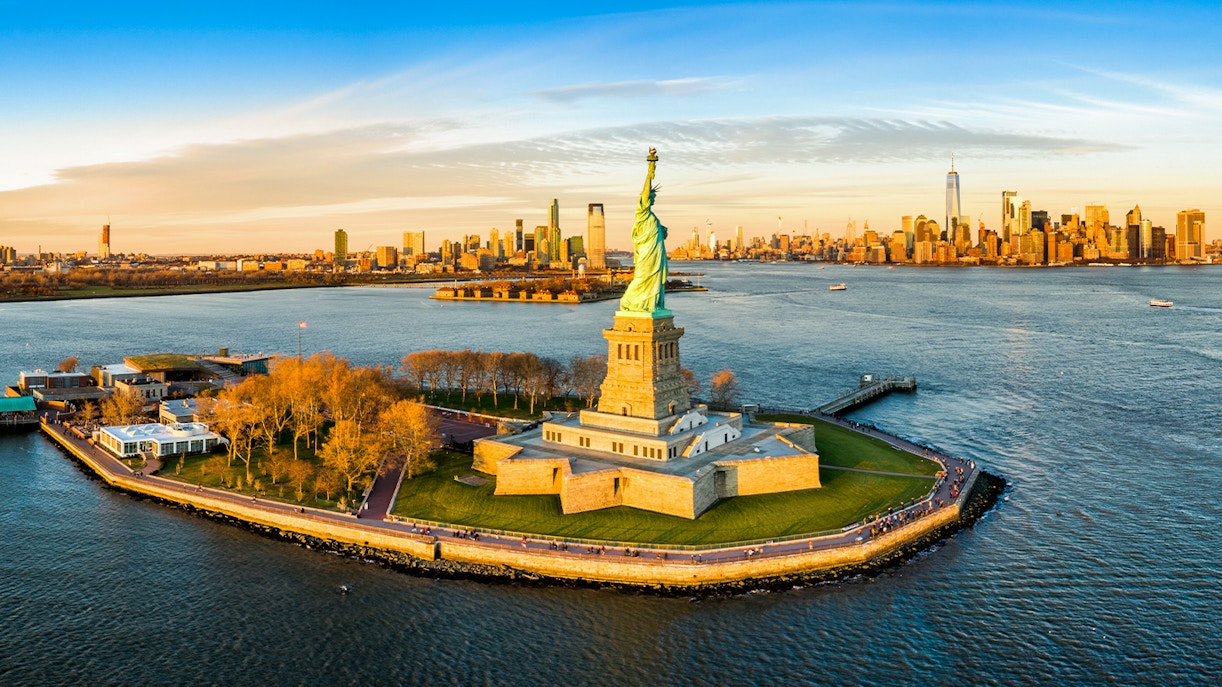
Aerial view of the Statue of Liberty with New York City skyline in the background.

The Statue of Liberty is an iconic symbol of political freedom and democracy in the World. In 1984, the Statue of Liberty was inscribed as a World Heritage Cultural Site.

Over the years, the Statue of Liberty has become an iconic symbol. Today, it greets millions of immigrants and builds hope and opportunity for all those seeking a great life in the United States of America.

Due to its magnificence and importance, the Statue of Liberty welcomes visitors from across the world to come and admire this glorious symbol of the state that took centuries to complete. If you are visiting New York City, then this is an experience you absolutely must not miss!

Book Statue of Liberty tickets & tours

Statue of Liberty & Ellis Island Tickets

Free cancellation
Book now, pay later
Flexible duration
Audio guide
Guided tour
Transfers available

New York CityPASS®: Choose 5 Attractions

Free cancellation
Book now, pay later
Extended validity
Flexible duration

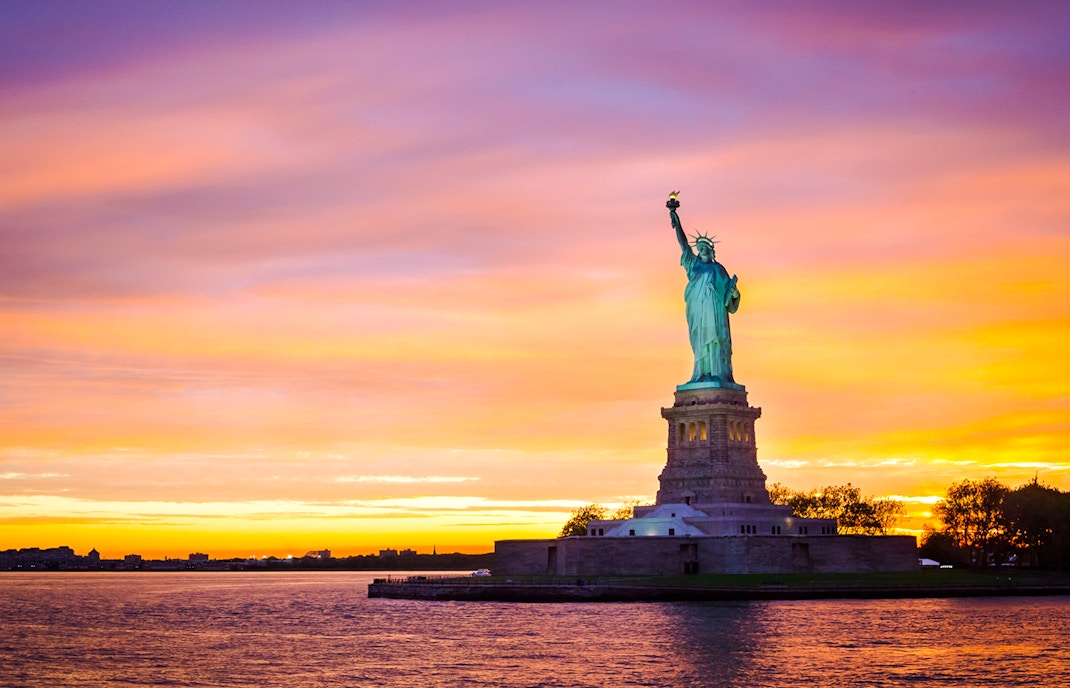
Statue of Liberty Sunset Cruise

Free cancellation
Book now, pay later
1 hr. - 1 hr. 30 min.
Audio guide

Statue of Liberty & Ellis Island Guided Tour with Ferry

Free cancellation
Book now, pay later
2 hr. - 4 hr.

Frequently asked questions about the history of the Statue of Liberty

Standing beautifully in Upper New York Bay, the Statue of Liberty stands as a symbol of freedom. It was built as an emblem of friendship between the French and the US and stood for their desire for liberty. Historically, it celebrated the abolition of slavery after the U.S. Civil War.

More reads

Facts

Tours

Timings