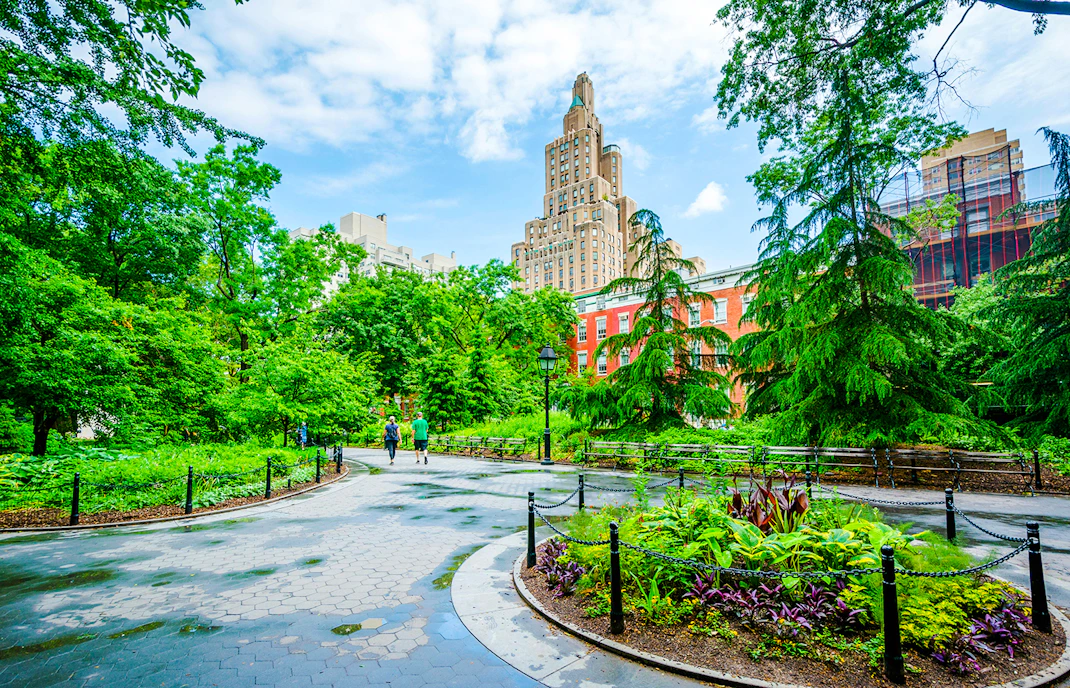
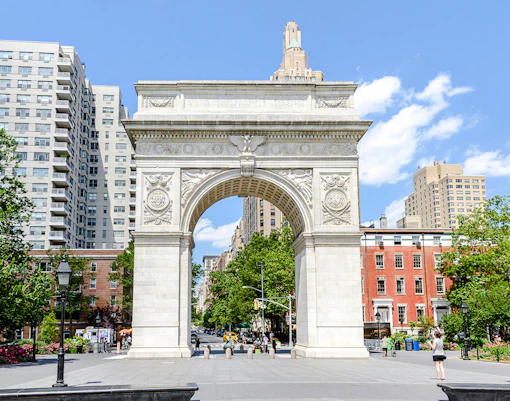
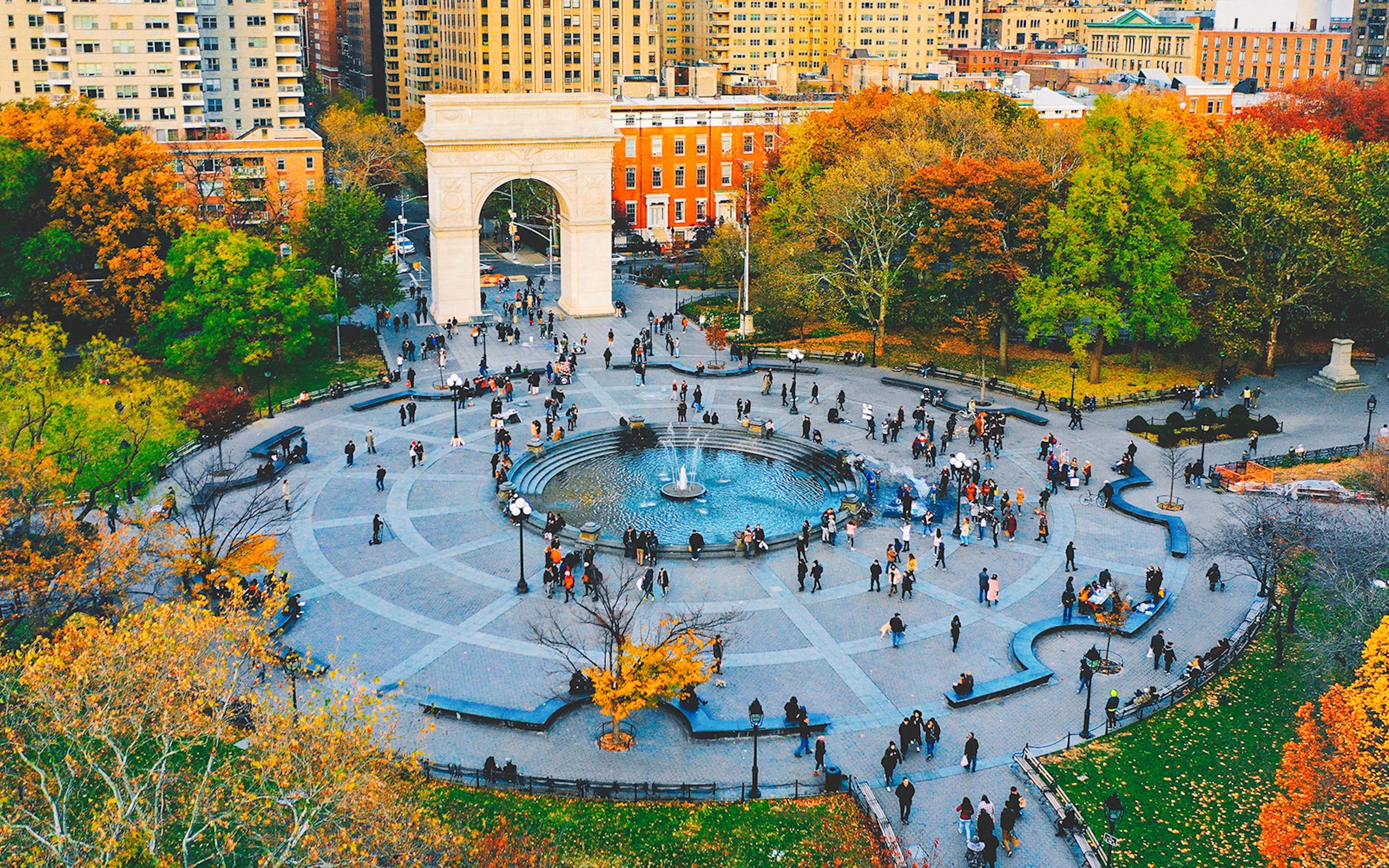
- Description: Sit by the fountain, watch buskers near the arch, and drift between chess tables, dog runs, and NYU students crossing the square.
- Best for: Budget travelers, solo travelers, people-watching.
- Duration: 30–45 min.
- Combine this with: Bleecker Street (5 minutes on foot) and Jefferson Market Library (7 minutes on foot)
Neighborhood at a glance
- Why visit: Greenwich Village is where you come for Washington Square Park, Stonewall history, classic New York comedy clubs, and a downtown street grid that still feels different from the rest of Manhattan.
- Atmosphere: Lively, historic, walkable, late-night.
- Top things to do: Walk through Washington Square Park, visit Stonewall National Monument, eat along Bleecker and MacDougal Streets, catch a set at Comedy Cellar.
- Best for: First-time visitors, LGBTQ+ travelers, food-focused travelers, nightlife fans.
- Time needed: 3–4 hours.
- Best time to visit: Late afternoon into evening for park activity, dinner crowds, and comedy club energy.
- Nearby: Washington Square Park, Stonewall National Monument, Bleecker Street, Jefferson Market Library, Hudson River Park, SoHo.
Top things to do in Greenwich Village
Quick navigation
🏛️ Why visit | 🎟️ Best ways to explore |🧭 Plan your visit | 🌟 Free things to do | 📋 Itinerary | 💡 Tips | 🍴 Dining
Why visit Greenwich Village
1/5
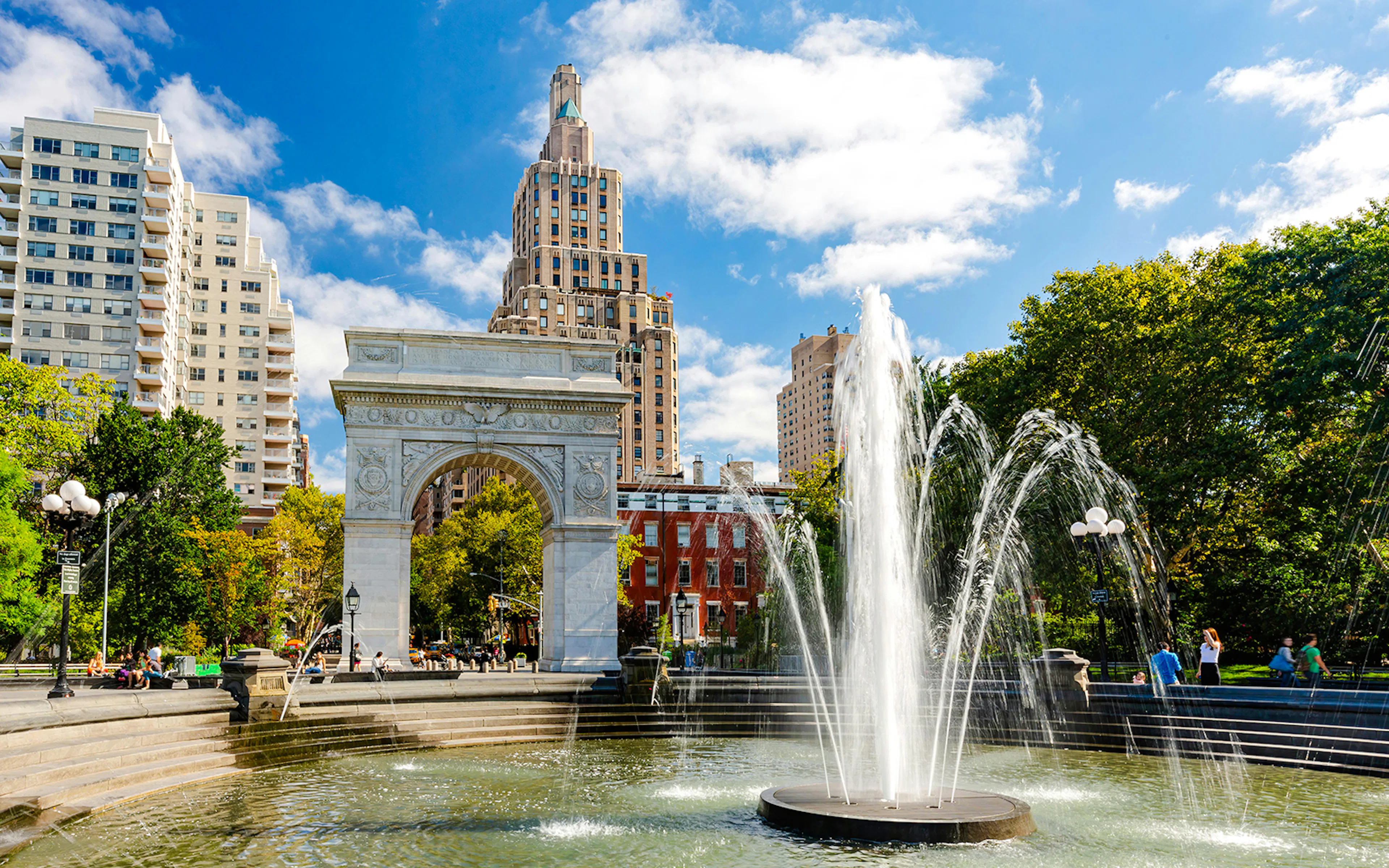
Washington Square Park anchors the whole neighborhood
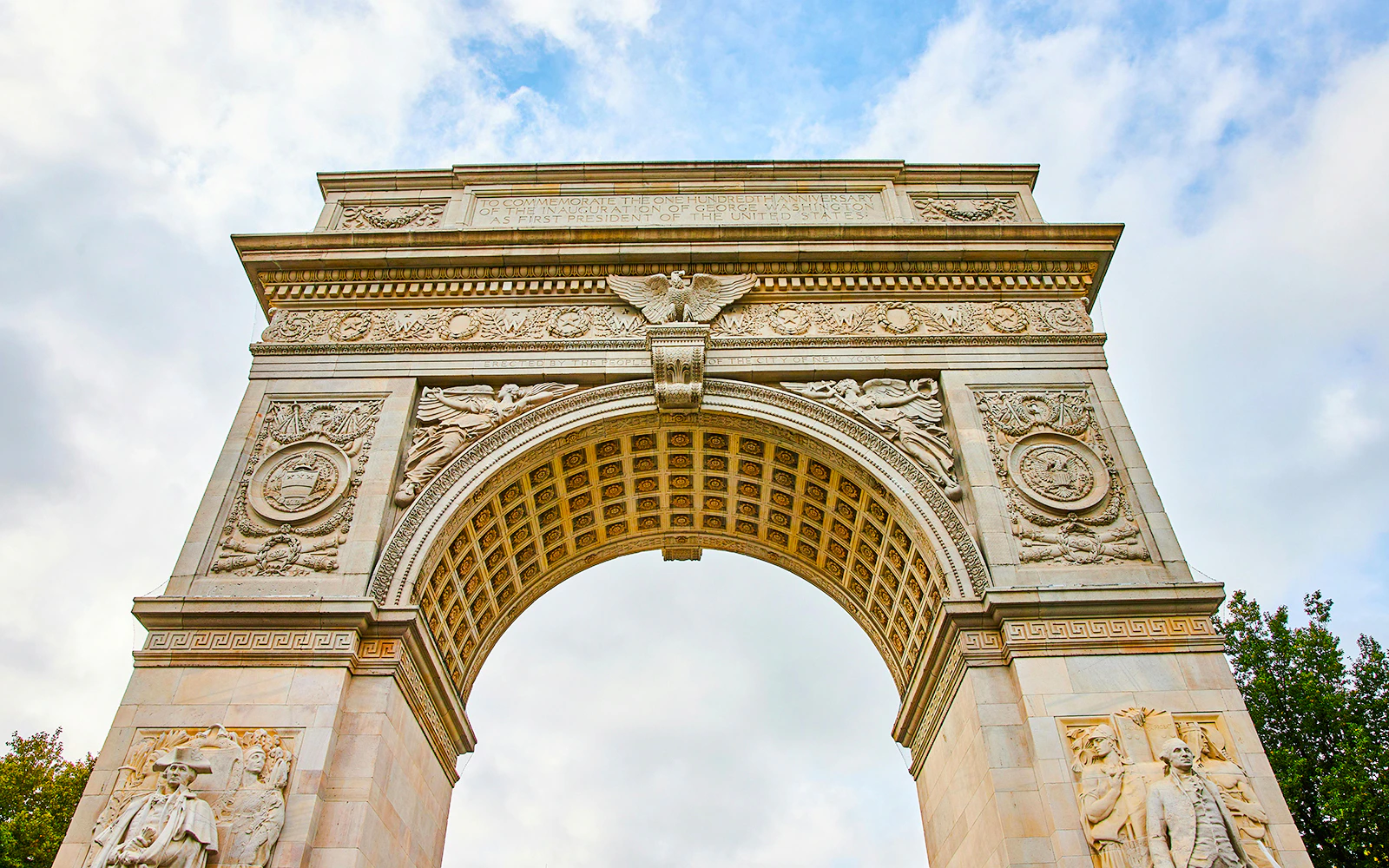
The arch, fountain, benches, chess tables, and constant street performance scene give Greenwich Village a clear center. It is one of the easiest places in downtown Manhattan to start walking without a plan.
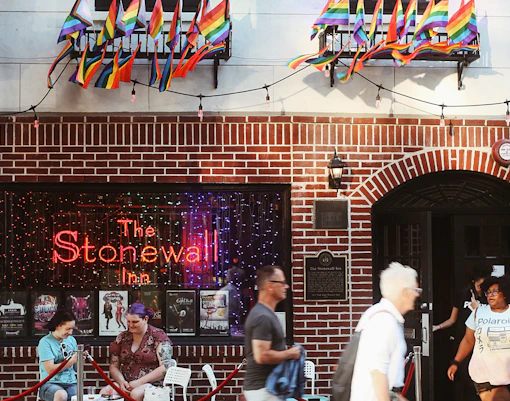
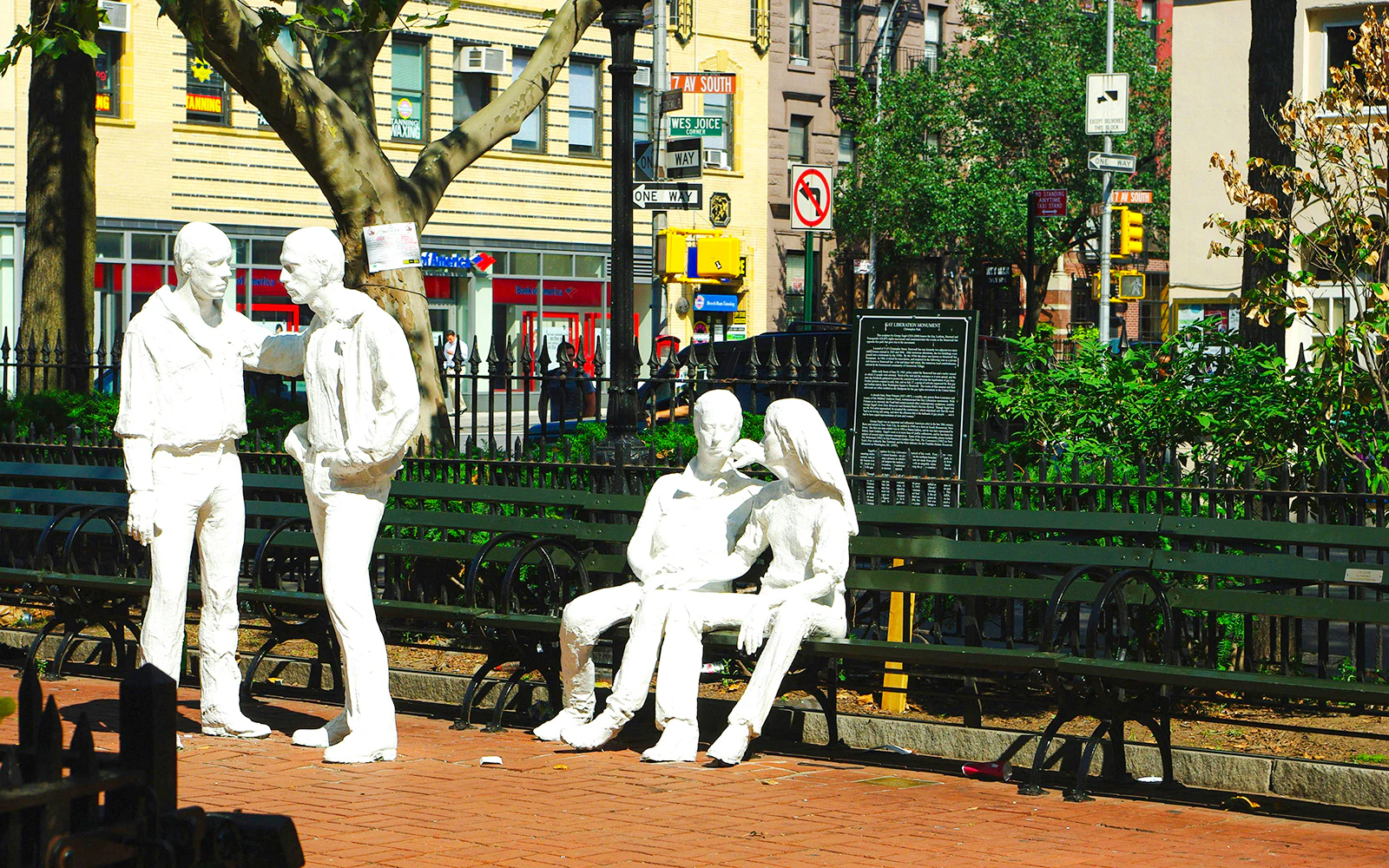
Stonewall changed American LGBTQ+ history in 1969
The Stonewall Inn and Christopher Park are not background landmarks — they are the reason many travelers come here. You can stand on the block where the uprising began and then keep walking through a neighborhood shaped by that legacy.
The street grid feels different from Midtown
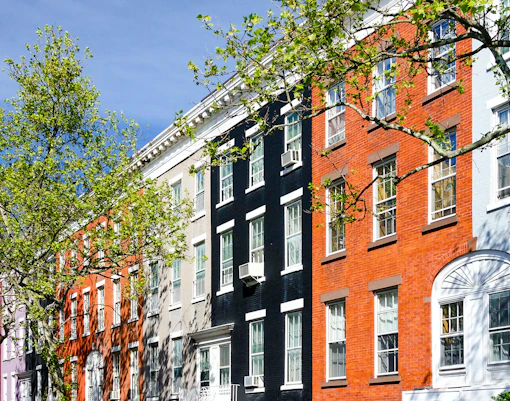
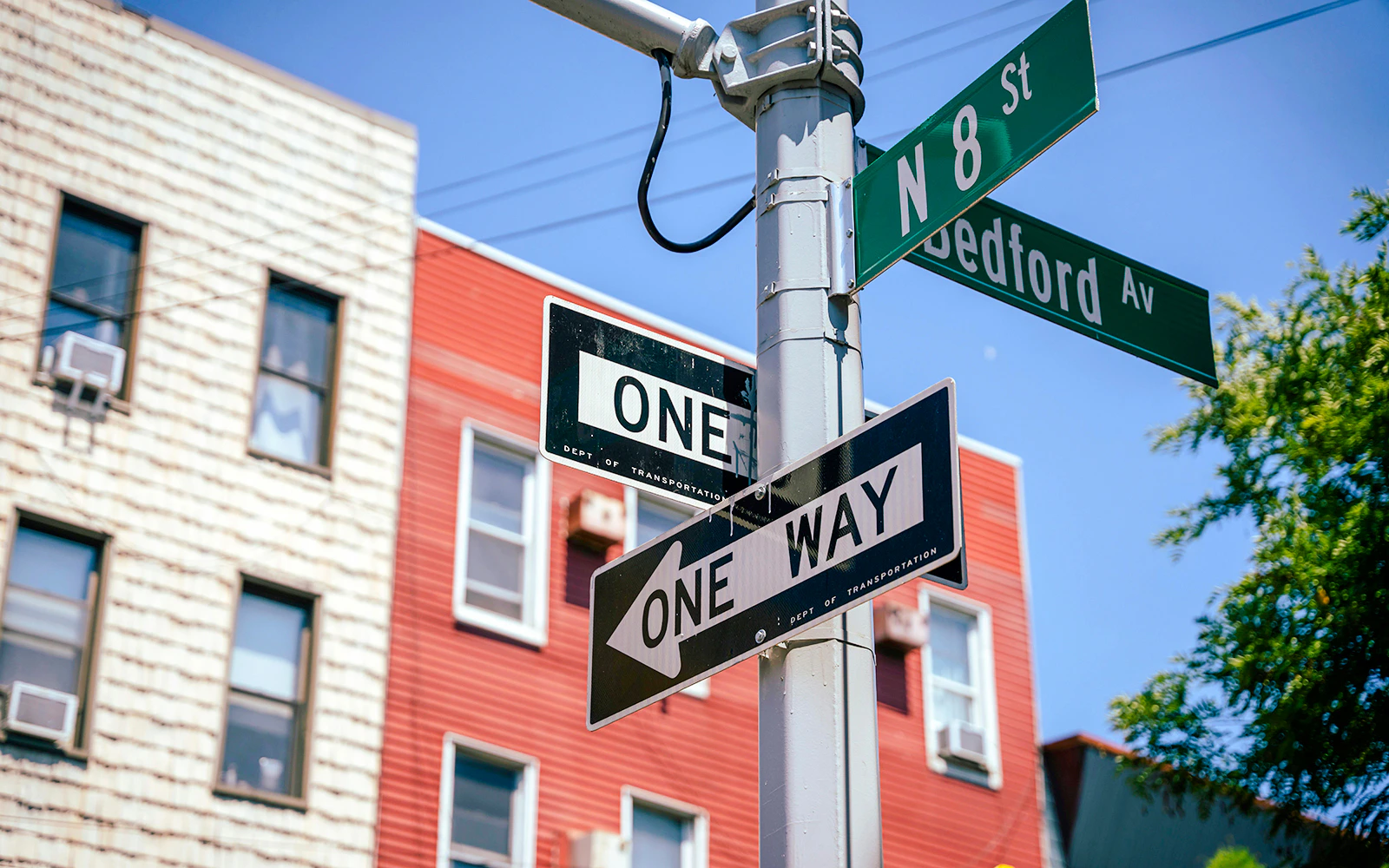
Greenwich Village breaks Manhattan’s regular grid with shorter blocks, angled streets, and older townhouses. That makes it better for wandering than checklist sightseeing, especially around Waverly Place, Grove Street, and Bedford Street.
Good food is packed into a small area
Joe’s Pizza, Mamoun’s Falafel, Caffe Reggio, and Minetta Tavern sit within a compact walking radius. You can build a meal-by-meal afternoon here without using the subway once.
It connects easily to SoHo, Chelsea, and Lower Manhattan
From Washington Square Arch, you can walk south to SoHo, west to Hudson River Park, or north-west toward the Meatpacking District.
Best ways to explore Greenwich Village
Walking is the right format here because the neighborhood’s appeal sits in short blocks, side streets, and linked landmarks rather than one major ticketed site. A good route usually covers Washington Square Park, MacDougal Street, Stonewall, and the brownstone streets west of Seventh Avenue. Check Midtown Walking Tour with Empire State Building Tickets.
Food-focused visits work best along Bleecker Street, MacDougal Street, and nearby side streets where the range runs from pizza slices to old-school Italian and falafel counters. This is a neighborhood where a food tour makes sense even if you only have 2 hours.
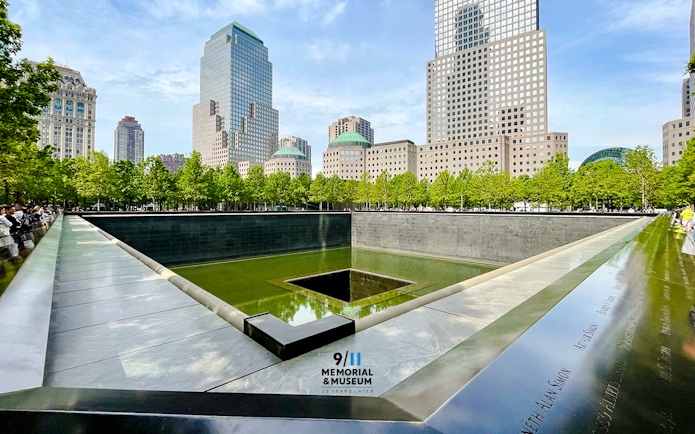
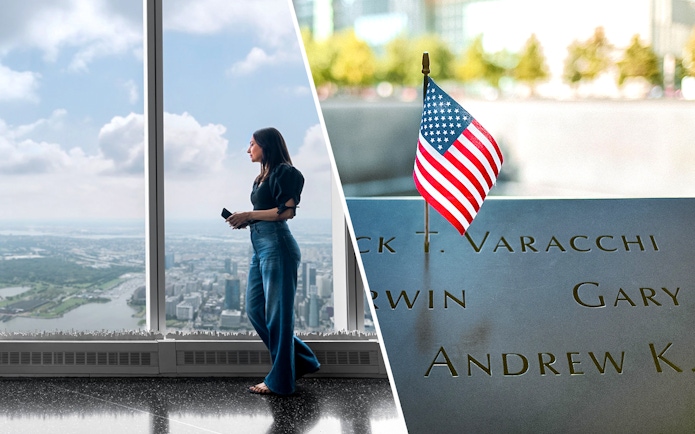
Greenwich Village pairs naturally with Lower Manhattan landmarks. A Village walk in the morning works well with the 9/11 Memorial & Museum or the One World Observatory later in the day because both are a short subway ride or a longer downtown walk away.
If you want to add a boat ride, the closest practical sailing point is Chelsea Piers at Pier 61, north-west of the Village. That makes a Greenwich Village afternoon and an evening skyline cruise a clean one-day pairing. Check NYC Skyline and Statue of Liberty Harbor Lights Night Cruise.
Comedy is the standout local experience here. The Comedy Cellar remains the best-known venue, but the neighborhood also works for live music nights, jazz nearby on West 3rd Street, and late dinners that continue well past midnight.
Plan your visit
Free things to do in Greenwich Village
Suggested itinerary for visiting Greenwich Village
Greenwich Village is best handled on foot. The core area between Washington Square Park and Christopher Street is compact, and the neighborhood gets better when you let the side streets do some of the work.
Tips for visiting Greenwich Village
- Start at West 4th Street–Washington Square only if Washington Square Park is your first stop. If Stonewall is the priority, Christopher Street–Sheridan Square saves you a chunk of walking.
- Washington Square Park is most crowded on Saturday and Sunday afternoons. Go before 10am if you want cleaner photos of the arch and fewer people around the fountain.
- If you want the best-value food stop, do not overthink it: Joe’s Pizza on Carmine Street for a slice, or Mamoun’s on MacDougal Street for falafel. Both are faster and cheaper than sitting down on Bleecker.
- Comedy Cellar is not a walk-up plan on busy nights. Book in advance, arrive early, and expect a two-item minimum once you are inside.
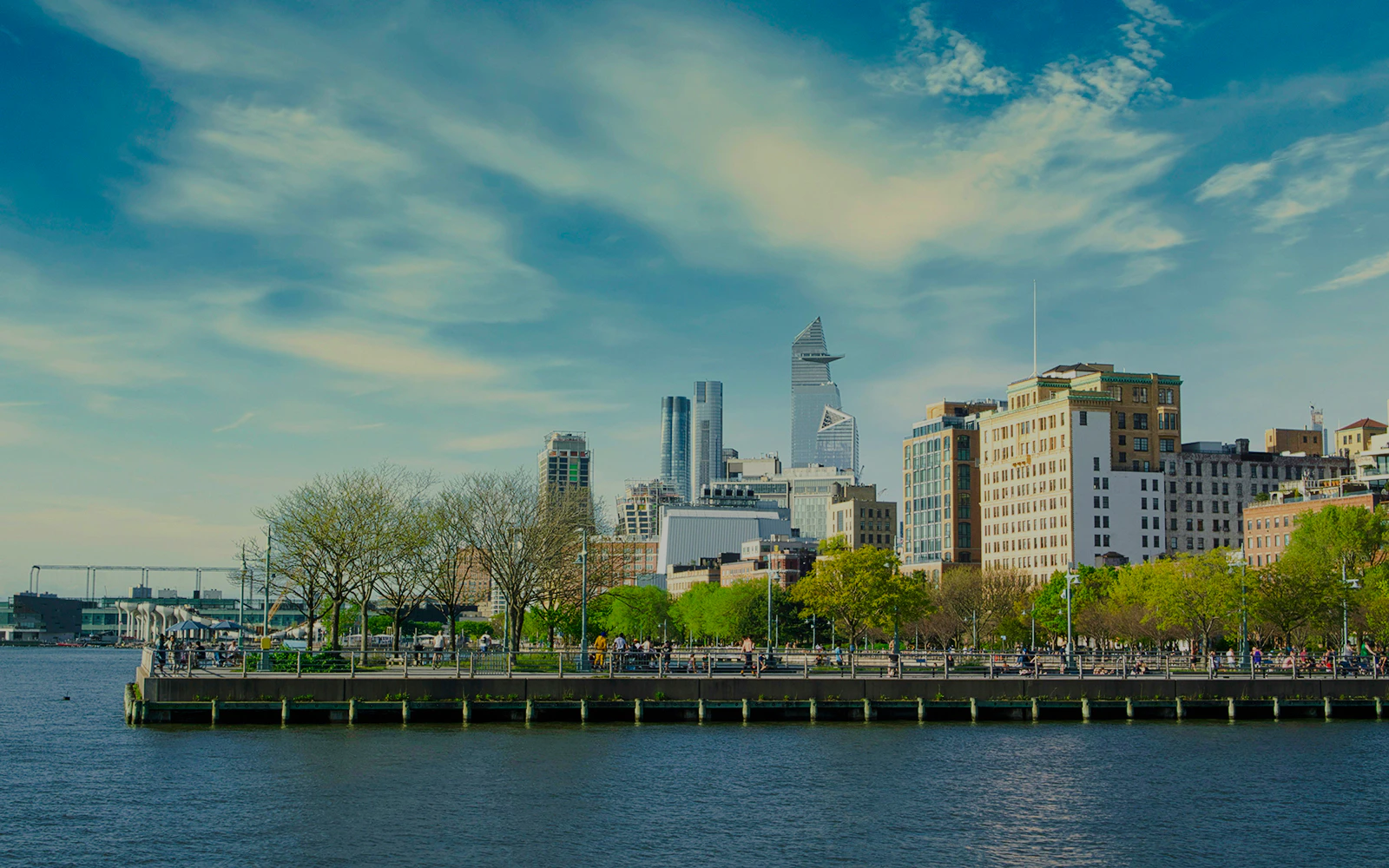
- For the best sunset angle, walk to the south-west edge of Pier 45 in Hudson River Park. You get river light, downtown skies, and fewer obstructions than deeper inside the Village.
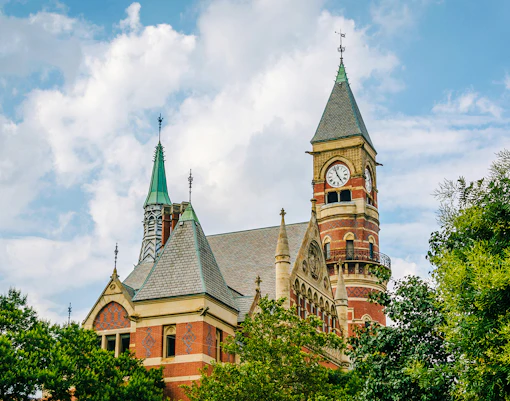
- Jefferson Market Library is easy to miss if you stay on Bleecker Street only. Cut up through Sixth Avenue and West 10th Street to see one of the neighborhood’s strongest buildings.
- Greenwich Village looks compact on a map, but the angled streets can slow you down. A realistic walk from Washington Square Arch to Pier 45 is about 18 minutes before stops.
- If you want the quieter residential part of the area, shift west of Seventh Avenue after dinner. The blocks around Grove Street, Charles Street, and Perry Street feel very different from MacDougal.
Best photo spots in Greenwich Village
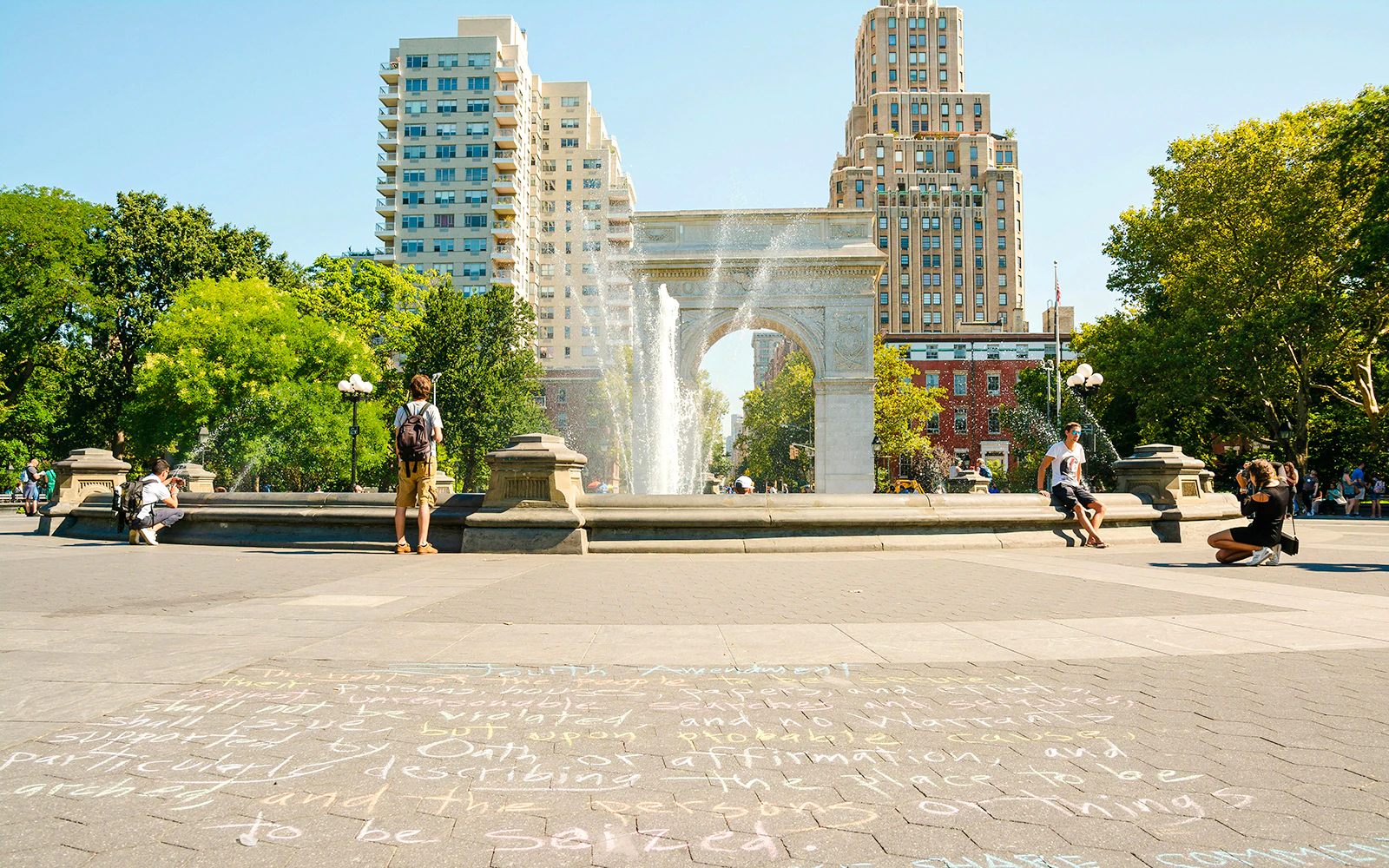
Washington Square fountain facing the arch
Go around 8–9am, when the paving is clearer and the light is softer.
Dining in Greenwich Village
Should you stay in Greenwich Village?
Short answer: Yes, if you want dining, nightlife, and walkability over big hotels and bargain rates. It suits travelers who like downtown streets and evening activity, but it is less practical if you want cheap rooms or simple step-free transit.
- The vibe — Early mornings are calmer around Waverly Place and Washington Square North, while nights build fastest on MacDougal Street, Bleecker Street, and around Christopher Street. West of Seventh Avenue, the mood shifts quickly to quieter residential blocks.
- The logistics — Greenwich Village has fewer large hotels than Midtown, so you are more likely to find boutique stays, smaller inns, or apartment-style options nearby than big chain towers. Prices usually run higher than they look on a map because the neighborhood is central and low-rise.
- Who it’s for — This area suits couples, solo travelers, food-first travelers, and anyone who wants bars, restaurants, and walking streets close at hand. It is less suitable for strict budget travelers, travelers with lots of luggage, or anyone who wants lots of elevator-accessible subway options.
- Top recommendation — Look around Waverly Place, University Place, or the blocks just west of Washington Square Park if you want a central base with easier subway access but less late-night noise than MacDougal Street. For a quieter stay, target the west-side blocks near Grove Street and Charles Street.
Explore other neighborhoods in New York
Frequently asked questions about Greenwich Village
Not exactly. Travelers often use the names loosely, but Greenwich Village is the broader area, while the West Village usually refers to the quieter western section closer to the Hudson. If your plans focus on Stonewall, Christopher Street, and Hudson-side brownstones, you are mostly in the West Village section.
Yes. You can easily build a visit around Washington Square Park, Stonewall National Monument, Jefferson Market Library, and a food walk on Bleecker Street without going into a single bar. The neighborhood’s appeal is as much about walking and history as nightlife.
You can do a basic visit cheaply because the main landmarks are free. A realistic half-day budget is:
- $2.90 for one subway ride with OMNY
- $6–$15 for a quick food stop at Joe’s or Mamoun’s
- $0 for Washington Square Park and Stonewall
If you add cocktails, dinner, or a comedy show, the number rises quickly.
Usually yes, especially for Thursday through Sunday nights. Greenwich Village attracts plenty of walk-through traffic, and this is one of the first venues people try to add at the last minute. Booking ahead is the difference between planning your evening and standing outside hoping for a cancellation.
Yes, in daylight. Washington Square Park gives you space, performers, and a central meeting point, and the neighborhood is easy to cover on foot. It becomes less family-friendly late at night when MacDougal Street and Christopher Street get busier and louder.
Yes, and that is one of the neighborhood’s strengths. SoHo is roughly 10–12 minutes south of Washington Square Arch, while the southern access points of the High Line are about 20 minutes north-west on foot. If you like walking cities, Greenwich Village fits neatly into a larger downtown route.
Your best bet is to use facilities in Washington Square Park or inside cafés, restaurants, and bars where you are buying something. Do not expect luggage-locker-style visitor facilities in the middle of the neighborhood — this is a lived-in residential district, not a single attraction complex.
Usually yes. Because hotel stock is limited and the location is strong, rates tend to run above many Midtown budget options and well above stays in outer-borough neighborhoods. You are paying for walkability, dining, nightlife, and character rather than hotel volume.
The neighborhood itself does not require timed entry, but the add-ons do. Book Comedy Cellar early, and if you are pairing the Village with a downtown landmark, reserve the 9/11 Memorial & Museum, One World Observatory, or a Statue of Liberty cruise in advance.
Generally, yes, especially on well-trafficked streets like Christopher Street, Bleecker Street, and Sixth Avenue. The main issues are crowding, late-night noise, and keeping track of your belongings in dense areas rather than isolated empty streets.