Neighborhood at a glance

  • Why visit: Home to the Empire State Building, four competing rooftop observation decks, Times Square, and more Broadway theaters than anywhere else on Earth — all within roughly 2 miles.
  • Atmosphere: Dense, fast-paced, commercial, vertical.
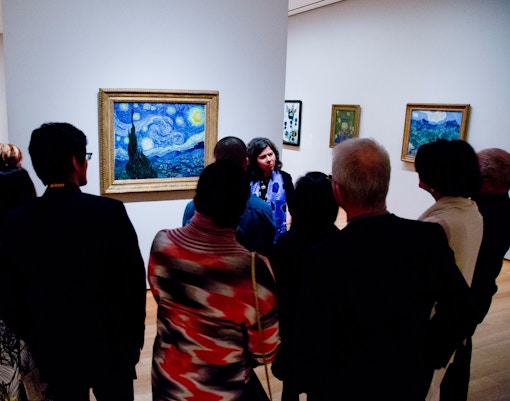
  • Top things to do: Ride to the top of the Empire State Building; watch the lights of Times Square after dark; see a Broadway show; stand on the glass ledge at Edge or SUMMIT One Vanderbilt; browse MoMA.
  • Best for: First-time NYC visitors, theater fans, architecture enthusiasts, families.
  • Time needed: Half-day for highlights; full day or more to do it properly; multiple days if Broadway shows are involved.
  • Best time to visit: Weekday mornings (9–11am) for observation decks with shorter queues; weekday evenings for Broadway shows; Saturday afternoon for Times Square energy.
  • Nearby: Central Park, Hell's Kitchen, Murray Hill, Hudson Yards, Chelsea, Upper West Side.

Top things to do in Midtown Manhattan

💡 Pro tip

Book observation deck tickets for 9–10am on a weekday — all four Midtown decks (Empire State Building, Top of the Rock, SUMMIT, Edge) see their shortest queues in the first hour, and the morning light hits the southern skyline directly, which improves photographs taken from the north-facing terraces.


Quick navigation

🏛️ Why visit   | 🎟️ Best ways to explore   |🧭 Plan your visit   | 🌟 Free things to do  | 📋 Itinerary   | 💡 Tips   | 🍴 Dining


Why visit Midtown Manhattan

Placeholder Image Headout Blimp
1/5

Four observation decks within 2 miles of each other

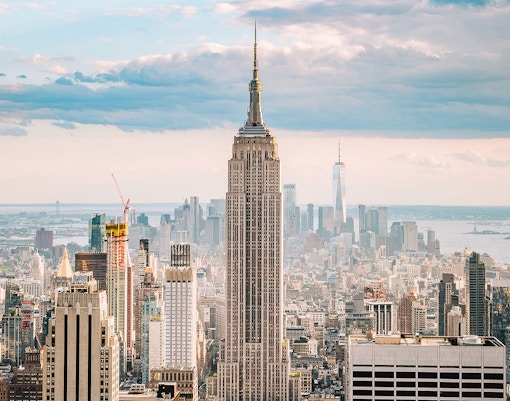
The Empire State Building (86th and 102nd floors), Top of the Rock (30 Rock's three-level open deck), SUMMIT One Vanderbilt (next to Grand Central), and Edge (at Hudson Yards) are all within a 2-mile radius. No other district in any city offers this density of rooftop views, and each gives a meaningfully different angle: Top of the Rock frames the Empire State Building in the shot, SUMMIT puts the Chrysler Building at near-equal height, and Edge looks west over the Hudson. Visitors who prioritize skyline experiences have genuine choices rather than one obvious option.

The Theater District contains 40+ active Broadway houses

Almost every Broadway venue sits between 41st and 54th Streets, a stretch of about 15 blocks where the side streets off 7th Avenue and Broadway are dense with marquees. The Majestic Theatre on 44th Street — home to The Phantom of the Opera for 35 years — the historic Lyceum on 45th, and the Palace on Broadway are all within a 10-minute walk of each other. Same-day tickets are available at the TKTS booth on the red steps in Times Square, which offers 20–50% discounts on same-day performances from most major shows.

The Empire State Building defined the Manhattan skyline in 1931

Construction began in March 1930 and the building opened on May 1, 1931 — 410 days after ground was broken, a pace made possible by a workforce of 3,400 men working in shifts. At 443 m with antenna, it held the title of tallest building in the world for 40 years until the World Trade Center surpassed it in 1971. The building appears in King Kong (1933), Sleepless in Seattle (1993), and dozens of other films, making it as recognizable in popular culture as in the physical skyline. The 86th-floor outdoor terrace, where the main observation experience takes place, opened at the same time as the building itself.

5th Avenue, 42nd Street, and Park Avenue offer distinct architecture within a short walk

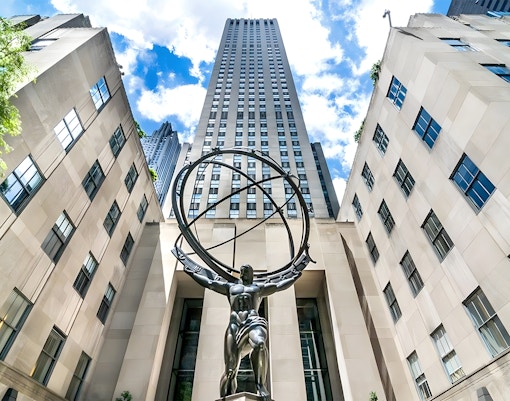
5th Avenue between 42nd and 59th Streets passes the New York Public Library's Beaux-Arts main branch (free entry), St. Patrick's Cathedral, the Rockefeller Center complex, and Bergdorf Goodman. 42nd Street runs east from the Hudson River piers through the Port Authority Bus Terminal, past Times Square, through Bryant Park, and ends at Grand Central Terminal — a sequence of major public spaces spanning 1.3 miles on foot. Park Avenue north of 42nd Street is flanked by the MetLife Building and the Seagram Building (a Mies van der Rohe landmark), with the Chrysler Building's Art Deco crown visible from most intersections.

Central Park, Penn Station, and Grand Central Terminal make Midtown a practical base

Grand Central Terminal — the largest train station in the world by number of platforms — sits at the east end of 42nd Street and connects to the Metro-North commuter rail network, the 4/5/6 subway lines, and the 42nd Street Shuttle. Penn Station at 33rd Street connects to Amtrak intercity trains, Long Island Rail Road, and New Jersey Transit. Central Park's southern edge begins at 59th Street, a 15-minute walk north from 42nd Street. This transport density means visitors based in Midtown can reach downtown Manhattan in under 20 minutes by subway, the Upper West Side in under 30, and JFK or Newark airports in under an hour.

Best ways to explore Midtown Manhattan

The Midtown Manhattan Walking Tour with SUMMIT One Vanderbilt ticket covers Grand Central Terminal, the Chrysler Building, Bryant Park, and 42nd Street before ascending to the SUMMIT deck — roughly 2.5 hours in total. A separate Midtown Walking Tour with Empire State Building ticket pairs a guided 34th Street and 5th Avenue walk with deck entry. Both tours run as guided experiences with a fixed route and commentary at each landmark.

💡 Book your Midtown experience

Midtown's most efficient visit combines a morning observation deck (the Empire State Building or Top of the Rock before 10am) with an afternoon at MoMA, then an evening Broadway show — all three sites sit within a 12-block walk of each other. Book Empire State Building tickets or get Broadway tickets to lock in your show before same-day availability disappears.

Plan your visit

💡 Observation deck combo

NYC's Best Observation Decks ticket bundles access to multiple Midtown rooftop decks — the most efficient way to compare the Empire State Building, Top of the Rock, SUMMIT One Vanderbilt, and Edge without booking each separately. Book NYC's Best Observation Decks tickets.

Free things to do in Midtown Manhattan

Suggested itinerary for visiting Midtown Manhattan

Midtown is compact enough to cover on foot between 34th and 59th Streets; most major sites are no more than a 15-minute walk apart. The avenues (5th, 6th, 7th) run north–south and are the main navigation arteries.

Tips for visiting Midtown Manhattan

  • Book observation deck tickets online and choose timed-entry windows — all four major decks (Empire State Building, Top of the Rock, SUMMIT One Vanderbilt, Edge) have significantly shorter queues for pre-booked entries than walk-ups, particularly between 11am and 3pm when demand peaks.
  • The TKTS booth on the red steps in Times Square (45th and Broadway) sells same-day tickets to most Broadway shows at 20–50% discount; the queue forms before the 3pm opening for matinees and before 6pm for evening shows. Check the TKTS app before queuing to see which shows have seats.
  • Avoid 5th Avenue between 48th and 57th Streets on a Saturday afternoon — the combination of flagship retail stores, tourists, and office workers returning from lunch creates pedestrian congestion that slows walking speed significantly. Use 6th Avenue to run parallel.
  • The Empire State Building's 86th floor faces all four directions, but the north-facing terraces give the clearest sightlines up to Central Park; the south-facing terrace looks toward the Statue of Liberty on clear days. On the Top of the Rock, the south-facing upper deck directly frames the Empire State Building — position yourself there for the standard skyline photograph.
  • Grand Central Terminal's Whispering Gallery is outside the Oyster Bar on the lower level: stand in one arched corner and whisper into the wall; a companion in the diagonally opposite corner will hear it clearly across the 15-foot vault. It works best when the concourse isn't at rush-hour volume (avoid 8–9am and 5–6pm on weekdays).
  • Most Broadway theaters do not permit late seating after the show begins — plan to arrive 20–30 minutes before curtain. If you are coming from an observation deck or museum, build buffer time and check the venue's specific late-seating policy, as some admit latecomers only between scenes.
  • The Hudson Yards complex, including Edge and the Vessel, is best reached by the 7 train to 34th Street–Hudson Yards (one stop from Times Square). The 10-minute walk from Times Square along 42nd Street and 11th Avenue is feasible but passes through an area with limited pedestrian infrastructure.
  • Free public restrooms in Midtown are available inside Bryant Park (the permanent facilities at the east and west ends of the park), Grand Central Terminal (lower level, near the food court), and the New York Public Library (main branch, on entry level). The Times Square area has no free public restrooms on the street.

Best photo spots in Midtown Manhattan

Placeholder Image Headout Blimp

Top of the Rock south deck at sunrise or late afternoon

Stand at the south-facing railing on the upper observation level of 30 Rock. Face due south and slightly south-west: the Empire State Building fills the center of the frame with the Chrysler Building behind it to the left. Morning light after 8am falls on the Empire State Building's south facade, giving clean direct illumination; late afternoon turns the building copper-gold against the downtown skyline.

Placeholder Image Headout Blimp

Dining in Midtown Manhattan

💡 A Midtown food note

Avoid the sit-down restaurants immediately adjacent to Broadway theaters on show nights — the block around 44th Street and 8th Avenue turns over at speed between 5:30 and 7:30pm and service slows noticeably. Go one block north to 45th Street or one block east to 7th Avenue for calmer pre-show dining.

Should you stay in Midtown Manhattan?

Short answer: Yes, if proximity to major attractions and transit convenience matter more than neighborhood character or quiet. Midtown hotels are louder and more expensive than most other Manhattan areas.

  • The vibe: Midtown does not quiet down much at night. Hotel streets in the 40s and 50s have 24-hour foot traffic, vehicle noise, and early-morning garbage collection. The blocks between 42nd and 54th Streets on 6th and 7th Avenues are dense with chain hotels and have a corporate rather than residential character. If you stay in the upper 50s near Central Park, the atmosphere shifts to quieter residential streets with Park Avenue and 5th Avenue townhouses.
  • The logistics: Midtown has the highest hotel density in Manhattan, with major chains (Marriott, Hilton, Hyatt, IHG) on nearly every major avenue between 42nd and 57th Streets. Room rates are among the most expensive in New York; a standard room at a 3-star hotel in the Times Square area runs $300–$500/night [VERIFY current pricing]. Boutique options exist on side streets in the 40s and 50s and along Park Avenue south of 42nd Street.
  • Who it's for: First-time visitors to New York who want to minimize travel time to major sights — all four observation decks, Times Square, Broadway, and Central Park's south end are walkable. Business travelers using Grand Central or Penn Station. Families doing a high-volume sightseeing trip. Not suited to visitors seeking local neighborhood character, affordable options, or early-morning quiet.
  • Top recommendation: Book on the side streets between 5th and Park Avenues in the upper 40s to lower 50s (47th–52nd Streets specifically) for the best balance of access and relative quiet. Avoid hotels directly on 7th Avenue between 43rd and 48th Streets if noise sensitivity is a concern — the street carries theatrical crowds, vehicle traffic, and delivery activity through midnight most evenings.

Explore other neighborhoods

FAQs for Midtown Manhattan

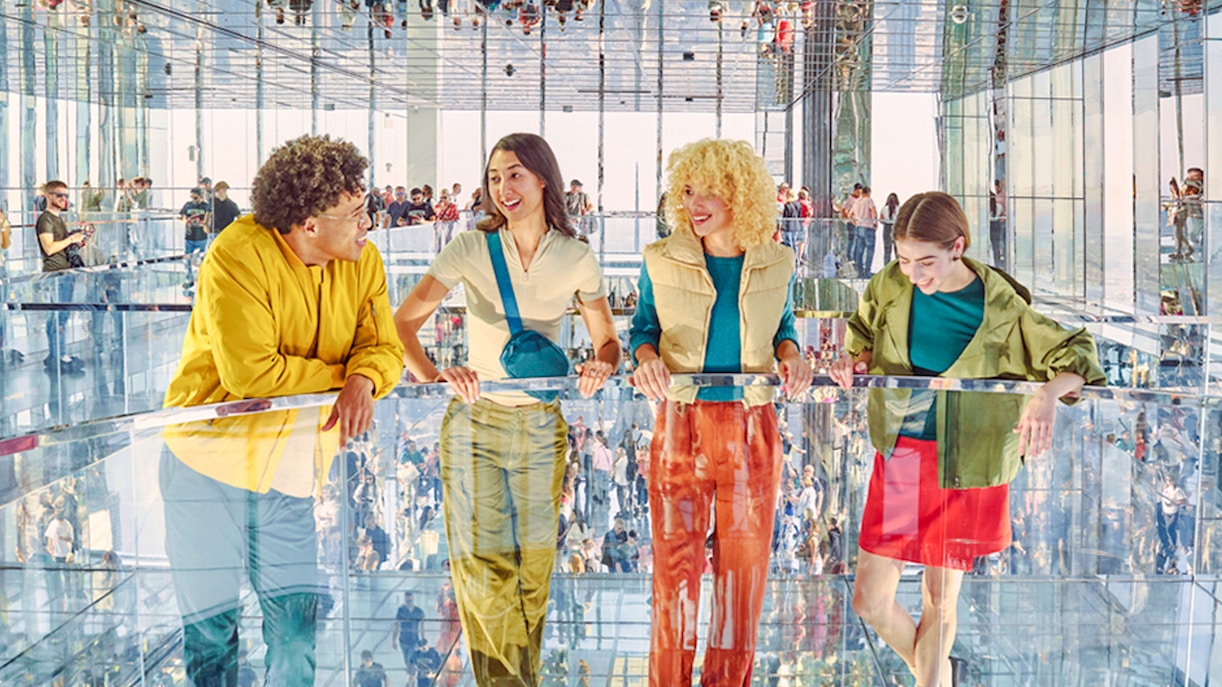
It depends what you want from the view. Top of the Rock is the best choice if you want the Empire State Building in your photograph — it's the only major deck with a clear south-facing sightline toward 34th Street. The Empire State Building itself gives the greatest height (320 m at the 86th floor) and the most 360-degree openness. SUMMIT One Vanderbilt offers the most designed interior experience, with mirrored rooms and glass floors, and is next to Grand Central. Edge is the most dramatic physically — the glass-floored ledge projects over the building face — and gives Hudson River views that the others don't. Each is a genuinely different experience rather than a superior/inferior comparison.