Visiting Mercer Labs: Your complete guide
Mercer Labs is a multi-room immersive art and technology experience in Lower Manhattan, best known for its projection chambers, light installations, sound spaces, and interactive digital rooms. It is not a traditional museum you wander at your own pace with lots of labels; the route is mostly fixed, the rooms are dark, and the visit feels shorter than many people expect unless you slow down deliberately. The biggest difference between a rushed visit and a good one is timing your entry before the busiest photo crowds build. This guide covers arrival, tickets, pacing, and what to prioritize.
Quick overview
If you want the short version before you book, these are the details that will shape your visit most.
- When to visit: Mercer Labs runs daily timed-entry slots from late morning into the evening. Tue–Thu in the first 90 minutes after opening is noticeably calmer than Saturday afternoons, because the most photogenic rooms bottleneck once World Trade Center foot traffic builds.
- Getting in: From $73.83 for standard entry, with combo tickets available for added value. The Mercer Labs + ARTE Museum New York combo is ideal if you plan to visit multiple immersive museums in one day. For most visitors, booking a timed slot in advance is recommended, especially on weekends, holidays, and rainy days when demand is highest.
- How long to allow: 1–1.5 hours works for most visitors. It stretches closer to 2 hours if you wait for the 4D Sound room, linger for full visual cycles in The Map, or stop in the kids’ interactive zone.
- What most people miss: The pneumatic ‘wishes’ tubes and the robotic sand installation near the end make the experience feel more layered, but they are easy to skim once people start thinking about the exit café and gift shop.
- Is a guide worth it? Usually not for navigation, because the route is straightforward, but added context helps if you want more than a photo-forward visit since room-by-room interpretation is intentionally light.
Jump to what you need
Where and when to go
How much time do you need?
| Visit type | Route | Duration | Walking distance | What you get |
|---|---|---|---|---|
Highlights only | Entry foyer → The Map → LED cloud room → 4D Sound → exit | 1–1.25 hrs | ~0.6 km | You cover the headline rooms and leave satisfied if time is tight, but you will rush the wishes tubes, children’s interactives, and the slower kinetic pieces near the end. |
Balanced visit | Entry foyer → full fixed route → major rooms with pauses → interactive drawing and Beach → café/shop | 1.5–2 hrs | ~0.8 km | This is the best fit for most visitors because you get the major visual rooms, the tactile and interactive pieces, and enough time for the quieter installations to register. |
Full exploration | Full fixed route → repeat cycles in major rooms where possible → 4D Sound wait → kids’ zone → Beach → café/shop | 2–2.5 hrs | ~1 km | This works if you love immersive art, want better photo timing, or are visiting with children, but the dark rooms, sound load, and repetition can feel heavy by the end. |
Which Mercer Labs ticket is best for you
| Ticket type | What's included | Best for | Price range |
|---|---|---|---|
Mercer Labs Museum of Art and Technology Tickets | Entry to Mercer Labs with access to all exhibitions, 15+ immersive installations, and highlights like Maestros & the Machines | Visitors who want a focused, single immersive museum experience blending art, light, and technology | From $44 |
Combo: Mercer Labs Museum of Art and Technology + ARTE Museum New York Tickets | Entry to both Mercer Labs and ARTE Museum, including immersive digital art, sensory installations (sound, scent, visuals), and optional café drink at ARTE | Travelers looking for a full immersive art day across two cutting-edge museums | From $85.55 |
How do you get around Mercer Labs?
What happens inside Mercer Labs?

The Map
Experience type: 360° projection chamber
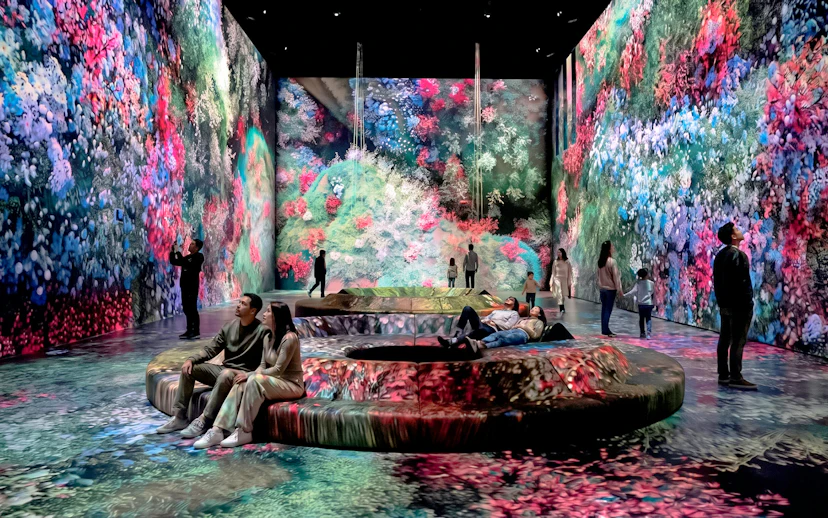
The Map is the room that makes Mercer Labs feel immediately bigger than you expected — a 5,000-square-foot projection space with towering ceilings and constantly shifting digital visuals around you. Most visitors snap a few photos and move on too fast, but the room works best if you stay still long enough to catch a full loop of the visuals and soundtrack. The shift from spectacle to immersion is the detail people miss.
Where to find it: Early in the route, shortly after the opening entry sequence.
I See Sound
Experience type: Vibro-acoustic sound chamber
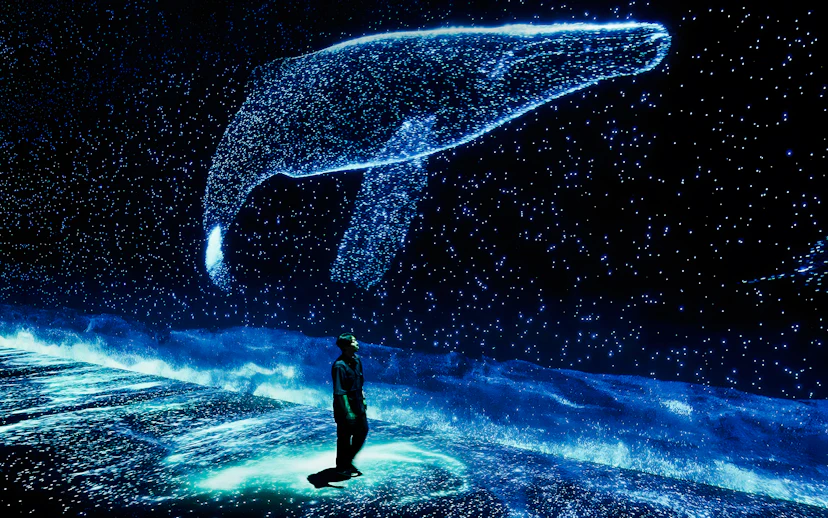
This is one of the most distinctive rooms in the building because the experience is felt as much as heard: you lie down, settle in, and let sound and vibration move through the space. It is quieter, slower, and more meditative than the photo-forward rooms around it, which is exactly why many visitors underrate it on the way in and remember it most afterward. Capacity is limited, so short waits can happen.
Where to find it: Mid-route, after the first big visual chambers.
The LED cloud room
Experience type: Infinity-mirror light installation
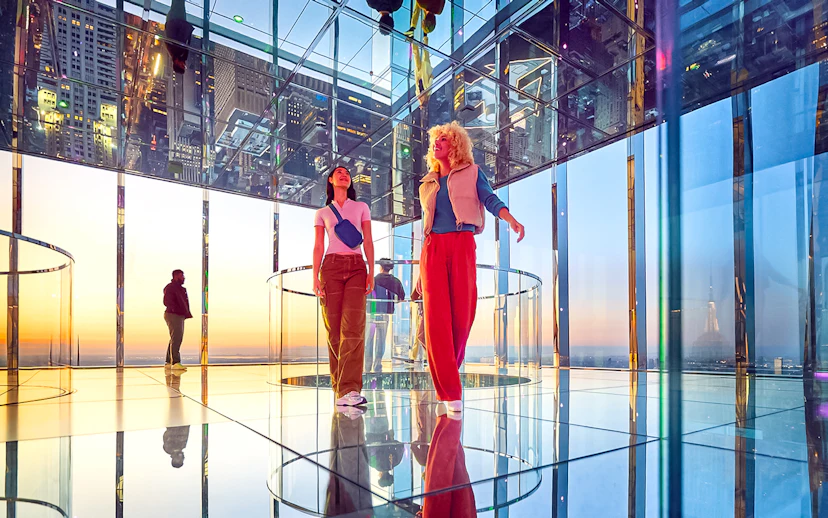
This mirrored room turns a sculptural grid of hundreds of thousands of LED points into an apparently endless field of light. It is one of the most photogenic rooms in Mercer Labs, but the best part is not the first glance — it is the way the patterns shift when you stop moving and let your eyes adjust. Most visitors miss the symmetry changes because they treat it as a quick photo stop.
Where to find it: In the early-middle portion of the fixed path, after the headline projection spaces.
Pneumatic wishes tubes
Experience type: Interactive digital installation
This room asks you to submit a wish or message and then watch it travel through a network of overhead tubes, turning a playful old technology into part of the art. It matters because it is one of the few rooms where your own input visibly changes the experience, but a lot of people breeze through without realizing they can participate. If you have children with you, this is usually a favorite.
Where to find it: In the middle of the route, near the more hands-on interactive rooms.
The Beach
Experience type: Kinetic sculpture with sand
The Beach feels quieter than the big visual rooms, which is why it is easy to under-appreciate. A robotic arm draws patterns in real sand and then erases them again, turning the room into a slower meditation on machine movement and repetition. The detail most visitors miss is the full cycle — pause long enough to watch a pattern form and disappear before you leave.
Where to find it: Near the end of the route, before the café and gift shop.
Interactive drawing and play zone
Experience type: Family-friendly digital interaction
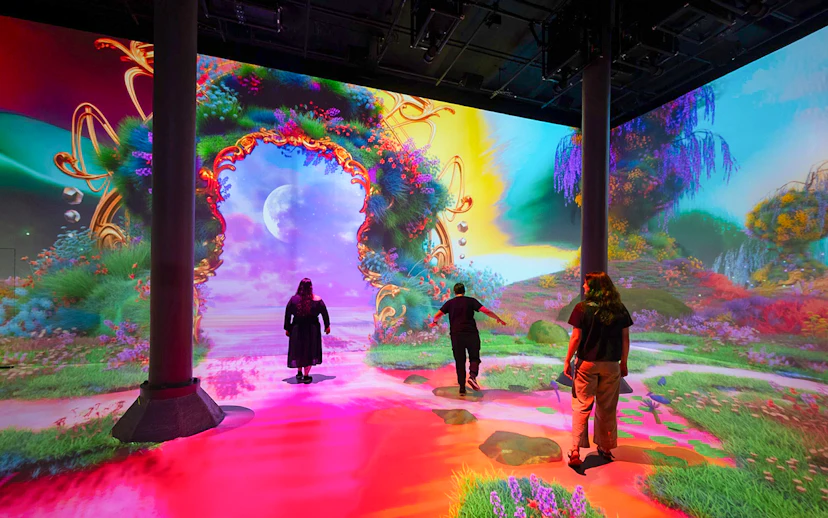
This section is where Mercer Labs becomes clearly multi-age rather than simply visually immersive. Children and adults can create drawings and see them translated into the digital environment, and the ball pit slide and oversized game elements break up the darker, moodier spaces elsewhere in the visit. People without kids often walk past too quickly, but it is one of the best clues to Mercer Labs’ broader personality.
Where to find it: In the later-middle part of the route, before the final installations.
Facilities and accessibility
- 🎟️ Timed-entry setup: Entry is organized by timed slots, so arriving 10–15 minutes early is more useful than arriving much earlier and waiting around outside.
- 👟 Shoe covers: Disposable shoe covers are part of the experience in several rooms, so wear shoes you can manage easily during quick stop-start transitions.
- 🍽️ Café/dessert bar: The exit café is best thought of as a dessert stop rather than a meal stop, with mochi ice cream as the signature item and extra drinks or upgraded snacks sold separately.
- 🛍️ Gift shop/merchandise: The shop sits by the exit and focuses on Roy Nachum-branded merchandise, books, prints, and design-forward souvenirs rather than generic museum gifts.
- 🪑 Seating/rest areas: The 4D Sound chamber is the main built-in rest point because visitors lie down during the experience, which makes it the easiest place to reset if the visit starts to feel intense.
- ♿ Mobility: Mercer Labs is not fully wheelchair accessible, and the combination of stairs, dark transitions, floor-based installations, and shoe-cover requirements can make the route difficult for many visitors with limited mobility.
- 👁️ Visual impairments: This is a heavily visual experience overall, but several rooms rely on sound, vibration, and tactile awareness, so it is worth asking staff at entry which spaces are strongest beyond the purely visual.
- 🧠 Cognitive and sensory needs: The Map, the mirrored LED spaces, and the 4D Sound room can feel intense because of darkness, sound, and shifting visual stimuli, so the first weekday slot is the gentlest time to visit if you need more control over pace and crowding.
- 👨👩👧 Families and strollers: Families are welcome, but compact strollers are easier than large ones, and the full route is not as smooth for stroller users as a traditional museum with open galleries and wide circulation space.
Mercer Labs works best for children who like sensory play, digital interaction, and short bursts of novelty rather than long reading-based museum visits.
- 🕐 Time: 60–90 minutes is realistic with younger children, and the best strategy is to protect time for the drawing zone, the ball pit slide, and one or two marquee rooms rather than trying to linger equally everywhere.
- 🏠 Facilities: The family-friendly parts of the visit are concentrated in the interactive sections later in the route, so it helps to tell children that the more hands-on rooms are coming if the darker opening rooms feel slow.
- 💡 Engagement: The wishes tubes and drawing stations usually land better than the abstract projection rooms because children can directly affect what happens instead of only watching it.
- 🎒 Logistics: Bring as little as possible, keep jackets easy to carry, and aim for the first part of the day so children are fresher when the darkest rooms appear.
- 📍 After your visit: The Oculus and Westfield World Trade Center are the easiest nearby decompression stop if children need food, bright light, or a bathroom break after the darker installations.
Rules and restrictions
Practical tips
- Book a weekend or holiday slot a few days ahead if Mercer Labs is a fixed part of your trip, but weekday visits are often flexible enough that you can still plan close in; timed entry matters more than long advance notice here.
- Save your energy for the middle and final third of the route, most people spend too long filming The Map and the first mirrored room, then rush the wishes tubes, the sand robot, and the family-friendly interactive spaces.
- Tue–Thu in the first 60–90 minutes after opening is the best crowd-management window because you get the cleanest flow through the marquee rooms before downtown foot traffic and photo-taking groups thicken.
- Bring a fully charged phone, but keep the rest light: large coats, shopping bags, and complicated shoes make the stop-start rhythm of shoe covers and dark room transitions more irritating than they look on paper.
- Eat a real meal before or after the visit rather than planning around the exit café, because the mochi stop is fun and worth doing, but it is closer to dessert than lunch.
What else is worth visiting nearby?
Eat, shop and stay near Mercer Labs
- On-site: Mercer Labs’ own café is best for mochi and a quick sweet finish, not a full meal, and anything beyond the included mochi is extra.
- Eataly NYC Downtown (6-min walk, 101 Liberty St): Italian, $$, the most useful nearby sit-down option if you want a dependable post-visit meal close to the Oculus.
- Blue Bottle Coffee (6-min walk, 185 Greenwich St): Coffee and pastries, $, the best pre-visit stop if you want something fast without committing to a full lunch.
- Hudson Eats at Brookfield Place (10-min walk, 230 Vesey St): Food hall, $–$$, a smart fallback if your group wants different cuisines or you need something easy after the museum.
- Pro tip: Save the included mochi for the end and eat proper food before or after the visit, the sweet finish works better as a reward than as your lunch plan.
- Mercer Labs shop: Roy Nachum merchandise, art books, prints, and design-forward souvenirs, right by the exit and worth a look if you want something more venue-specific than standard museum merch.
- Westfield World Trade Center: Mainstream fashion, tech, travel basics, and easy practical shopping, 3–5 minutes away if you want convenience rather than a souvenir.
- Century 21 NYC: Off-price designer shopping a short walk away on Cortlandt Street, useful if you want downtown shopping with more local recognition than a mall chain.
Yes, if your trip is short and you want to stack downtown sights with minimal transit. No, if you want New York at its liveliest after dark — this part of Lower Manhattan is efficient and well connected, but it quiets down earlier than neighborhoods farther north.
- Price point: The area leans business and upscale, though you can find better value on weekends than in some Midtown hotel corridors.
- Best for: Visitors on a short trip who want to walk to the World Trade Center, Battery Park, ferries, and Mercer Labs without spending time on subway transfers.
- Consider instead: Tribeca or Soho if restaurants and neighborhood energy matter more to you, or Midtown if this is your first New York stay and you want easier cross-city access.
Frequently asked questions about visiting Mercer Labs
Most visits take 60–90 minutes, though 2 hours is realistic if you linger in the big rooms or visit with children. The fixed route keeps navigation simple, but it also makes pacing the real variable, people who stay for full cycles in The Map or wait for the 4D Sound room will naturally take longer.
Yes, it is smarter to book in advance if you want a specific weekend or holiday slot. Mercer Labs uses timed entry, so advance booking matters more for securing your preferred arrival time than for avoiding massive same-day sellouts. Weekday visits are usually easier to plan close in.
Arrive about 10–15 minutes early for your timed slot. That gives you enough time for check-in and the shoe-cover setup without creating a long wait outside. Arriving much earlier usually does not buy you anything, because entry is still managed by time slot.
Yes, but a small bag is much easier than a large backpack. Mercer Labs includes dark rooms, transitions, and shoe-cover areas, so anything bulky becomes more annoying than useful once you are inside. If you can travel light, the visit feels smoother.
Yes, photography is generally part of the experience in the main installation rooms. That said, always check room-specific signage because special exhibitions can change the rule in individual spaces. Even where photos are allowed, keep flash, tripods, and oversized selfie setups out of the route.
Yes, Mercer Labs works well for small groups and social visits. The route is straightforward, the rooms are conversation-friendly in parts, and the space can handle heavy throughput. Just know that the best group visits stay compact, large clusters slow themselves down in the photo-heavy rooms.
Yes, Mercer Labs is family-friendly, especially for children who like sensory play and interactive digital experiences. The drawing stations, ball pit slide, and participatory rooms give younger visitors something concrete to do. The darker and moodier rooms at the start can be less engaging for very young children.
No, Mercer Labs is not fully wheelchair accessible. The combination of stairs, dark transitions, shoe-cover requirements, and floor-based immersive rooms creates real mobility limitations. If accessibility is a deciding factor for your group, this is one detail to take seriously before booking.
Yes, but the on-site option is better for dessert than for a full meal. Mercer Labs has a café at the exit, best known for mochi ice cream, while the Oculus, Westfield, Brookfield Place, and Eataly give you stronger nearby choices for coffee, lunch, or dinner within a 5–10 minute walk.
You will move through roughly 15 installations that mix projection, light, sound, mirrors, sculpture, and interactive digital art. The best-known rooms include The Map, the 4D Sound chamber, the LED cloud room, the pneumatic wishes tubes, and the robotic sand installation called The Beach.
No, there is no formal dress code. What matters more is practical clothing: shoes you can handle easily with disposable covers, layers you do not mind carrying, and nothing too bulky for darker rooms where you will already be managing your phone and personal items.