Visiting St. Patrick’s Cathedral: Your guide
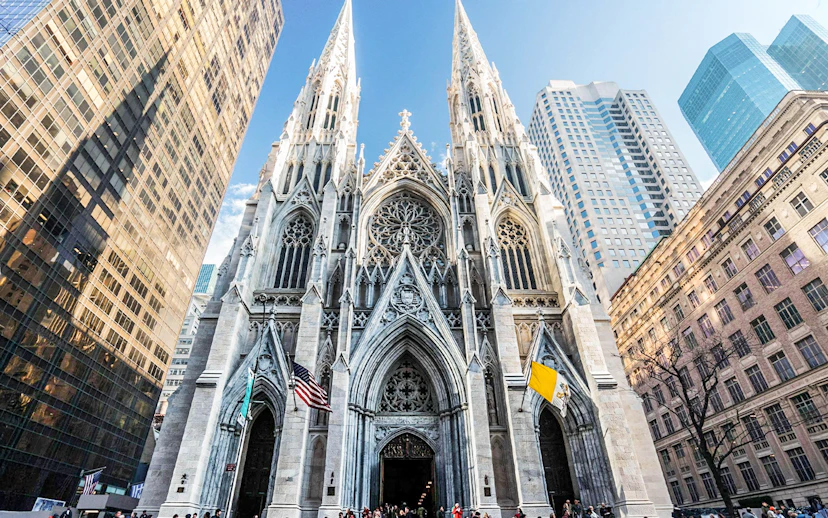
St. Patrick’s Cathedral is New York City’s best-known Catholic cathedral, famous for its Neo-Gothic spires, vast marble interior, and surprising calm in the middle of Midtown. A visit is usually easy and fairly short, but the experience changes quickly depending on when you arrive, especially once Rockefeller Center foot traffic spills in around midday. The key is to plan around services and security, not just your Midtown route. This guide covers timing, access, tickets, and what to prioritize once you’re inside.
Quick overview
You can keep this visit simple, but a little planning makes it noticeably calmer.
- When to visit: Daily, 6:30am–8:45pm. Weekday mornings are noticeably calmer than lunchtime and holiday afternoons, because tour traffic from Rockefeller Center and Fifth Avenue has not fully spilled inside yet.
- Getting in: Free for standard entry. Official self-guided audio tour available for $24, and while you can usually just show up for general entry, holiday weeks and major feast days reward arriving earlier than you think.
- How long to allow: 45–90 minutes for most visitors. It stretches closer to 2 hours if you use the audio tour, light candles, or stay for music or Mass.
- What most people miss: The Lady Chapel and side altars are where the cathedral feels most intimate, and the Pietà is often rushed past by visitors focused only on the main nave.
- Is a guide worth it? Yes if you want the stories behind the stained glass, altars, and symbolism; otherwise, a quiet self-guided visit still works well because the layout is straightforward.
Jump to what you need
🕒 Where and when to go
🗓️ How much time do you need?
🗺️ Getting around
⛪ What to see
♿ Facilities and accessibility
Where and when to go
How do you get to St. Patrick’s Cathedral?
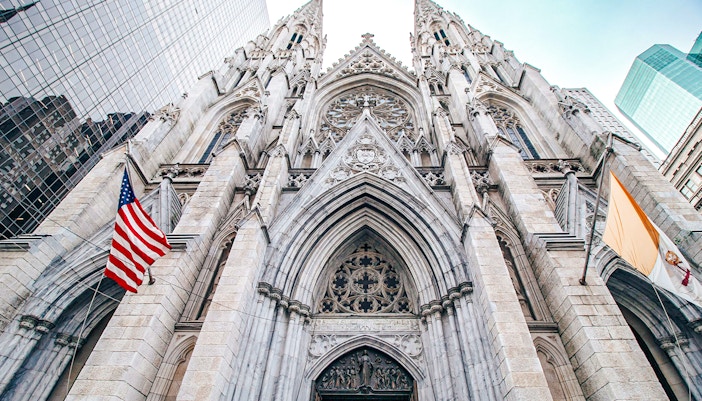
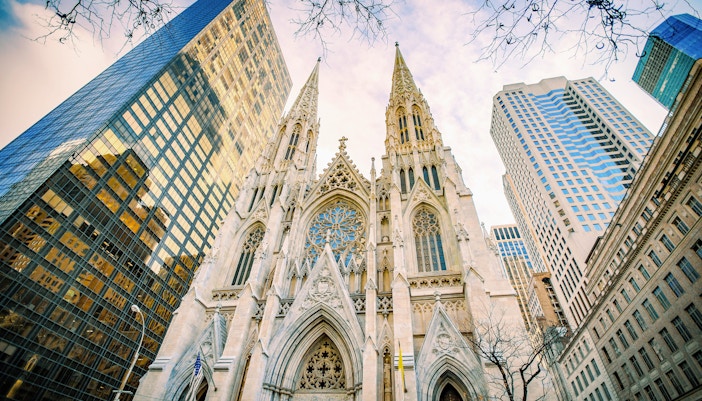
The cathedral sits in Midtown Manhattan on Fifth Avenue, directly across from Rockefeller Center and a short walk from Grand Central Terminal.
Address: 5th Avenue, New York, NY 10022, United States | Find on Maps
- Subway: 47–50 St–Rockefeller Center (B, D, F, M) → 2-min walk → the most direct stop for the main Fifth Avenue entrance.
- Train: Grand Central Terminal → 8-min walk → an easy option if you’re arriving by Metro-North, Long Island Rail Road, or subway connections.
- Taxi/rideshare: Drop-off on East 50th or East 51st Street → 1–3 min walk → easier than stopping directly on Fifth Avenue.
Which entrance should you use?
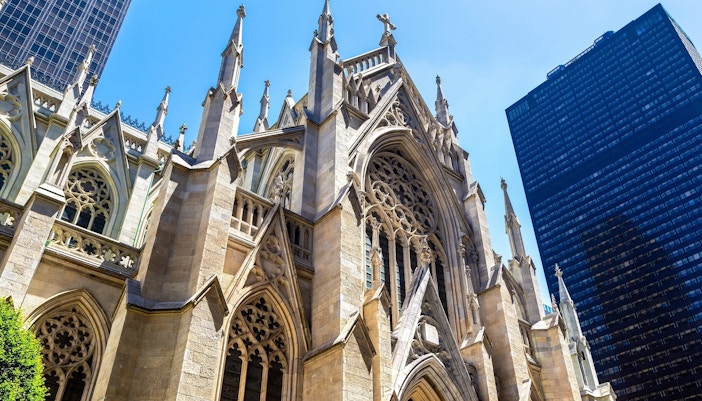
Most visitors use the Fifth Avenue entrance, but the one thing people get wrong is assuming every doorway works the same once security starts forming lines.
- Fifth Avenue main entrance: Located on Fifth Avenue between 50th and 51st Streets. Best for general visitors and most photo-first arrivals. Expect 5–10 min wait on regular weekdays.
- East 51st Street accessible entrance: Located on 51st Street. Best for wheelchair users and anyone who needs step-free access. Expect 5–10 min wait, but allow longer on major religious holidays.
When is St. Patrick’s Cathedral open?
- Monday–Sunday: 6:30am–8:45pm
- Major liturgies and special events: Visitor access may tighten or pause around services
- Last entry: Plan to be inside about 1 hour before closing, especially if you want time for the audio tour
When is it busiest? Weekdays from late morning through mid-afternoon, plus weekends, Christmas week, and Easter, feel busiest because sightseeing traffic overlaps with worshippers and security screening.
When should you actually go? Arrive on a weekday morning if you want the side chapels, stained glass, and central nave before Midtown foot traffic builds outside and inside.
How much time do you need?
| Visit type | Route | Duration | Walking distance | What you get |
|---|---|---|---|---|
Highlights only | Main nave → High Altar view → side chapels → exit | 45–60 min | ~0.5 km | A quick but satisfying look at the nave, altar, and chapels, though you will move fast and likely skip the quieter details. |
Balanced visit | Main nave → High Altar → Lady Chapel → Pietà → side aisles | 60–90 min | ~0.8 km | Enough time to see the main spaces properly without rushing, including the Lady Chapel and Pietà that many visitors miss. |
Full exploration | Full interior loop → chapels → Pietà → stained glass pauses → audio tour route | 1.5–2 hrs | ~1 km | The fullest visit, especially if you use the official audio tour or stay for prayer or music, but it only works if you are happy to slow down. |
How do you get around St. Patrick’s Cathedral?
The layout inside
St. Patrick’s Cathedral is best explored on foot, and most visitors can cover the main interior in under 1 hour, though the side chapels reward a slower loop.
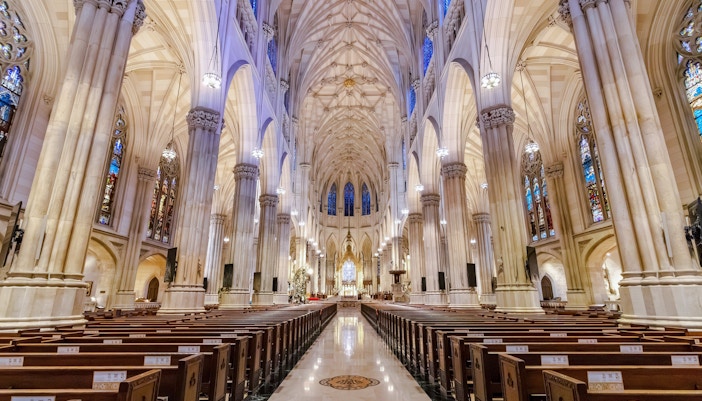
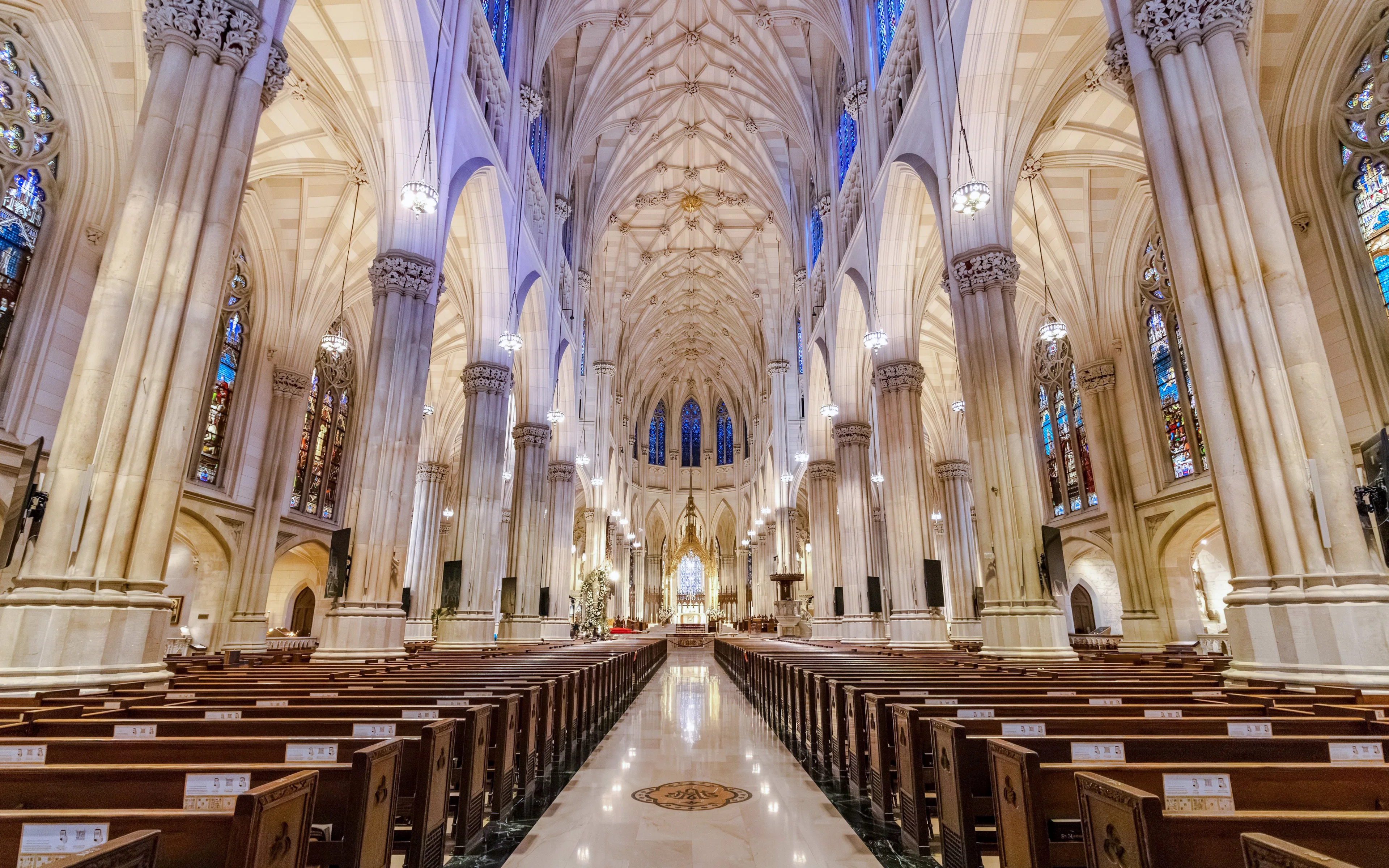
The main focal point is the long central nave, which draws your eye straight to the High Altar, while the quieter devotional spaces branch off to either side.
- Main nave: The grand central aisle, columns, and ceiling vaults → the cathedral’s big first impression → budget 10–15 min.
- High Altar and sanctuary: The spiritual center with the baldachin and altar carvings → best for slowing down → budget 10 min.
- Lady Chapel: A more intimate chapel behind the main sanctuary area → quieter and often less crowded → budget 10 min.
- Side chapels and altars: Smaller shrines, candles, and devotional spaces along the aisles → best for wandering at your own pace → budget 15–20 min.
- South transept: Home to the Pietà and other sculptural details → easy to miss if you only stay in the center aisle → budget 5–10 min.
Suggested route: Start in the nave for the full first view, move toward the High Altar before crowds stack up in the center aisle, then work back through the side chapels and the Pietà, which many visitors miss because they turn around too early.
Maps and navigation tools
- Map: The official audio tour effectively doubles as your route guide → it covers the major spaces in a logical order → get it at the venue on arrival if you’ve booked the Headout audio tour.
- Signage: Basic wayfinding is enough for a simple visit, but a guided audio route helps you notice details you’d otherwise walk past.
- Audio guide/app: The official audio guide is available in 6 languages, plus a kids’ version in English → it adds real value if you want more than a quick look.
- Large outdoor POIs only: Not applicable.
💡 Pro tip: Don’t turn back after the first full view of the nave, the quieter chapels and the Pietà are where the cathedral starts to feel personal rather than purely monumental.
What are the most significant spaces in St. Patrick’s Cathedral?
Grand nave
Attribute — Era: 19th century
This is the space that gives the cathedral its emotional scale: a long marble nave, soaring columns, pointed arches, and a ceiling that pulls your eye forward. Most visitors stop for a photo and move on too quickly. Slow down and look sideways as well as ahead, the side aisles, not just the center line, are what make the interior feel layered rather than empty.
Where to find it: Immediately beyond the main public entrance on Fifth Avenue
High Altar and Baldachin
Attribute — Era: 1879
This is the visual and spiritual center of the cathedral, framed by intricate carving and the tall canopy above the altar. It matters most when you view it from a distance first, then move closer to study the detail. Many visitors photograph it from halfway down the nave and never notice the sculpture and relief work around the sanctuary.
Where to find it: At the far east end of the nave, directly ahead from the main entrance
Lady Chapel
Attribute — Dedication: Marian chapel
The Lady Chapel feels quieter, smaller, and more reflective than the main body of the cathedral, which is exactly why it’s worth prioritizing. It’s where the visit shifts from sightseeing to stillness. Many people miss it because they assume the altar area is the end of the route and turn back too soon.
Where to find it: Beyond and to the left of the sanctuary area, behind the main altar zone
Stained glass windows
Attribute — Medium: Stained glass
The stained glass is one of the cathedral’s richest details, but it rewards patient looking more than quick photography. The light changes the mood of the space throughout the day, especially along the side aisles. Most visitors notice the color and not the storytelling, pause long enough to look at the saints, symbols, and framing details, not just the glow.
Where to find it: Along both side aisles and above the main entrance, including the large rose window
Pietà
Attribute — Material: Carrara marble
This full-scale Pietà is one of the cathedral’s most contemplative works, and it catches people off guard because it feels more intimate than the main altar. It’s easy to rush past if you stay centered in the nave and never explore the transept edges. Give it a minute; it changes the tone of the visit completely.
Where to find it: In the south transept, away from the central aisle
Pipe organ
Attribute — Type: Pipe organ
Even when it’s silent, the organ is worth looking for because it helps explain the scale of the cathedral and its liturgical life. When it’s in use, it transforms the space more than any visual detail can. Most people hear it without locating it, then leave without realizing how dominant it is in the architecture.
Where to find it: In the choir loft area flanking the sanctuary end of the cathedral
Facilities and accessibility
- 🎧 Audio guide desk: If you book the official audio tour, you’ll collect the device and headphones at the cathedral on arrival.
- 🚻 Restrooms: Restrooms are available on-site, and accessible restrooms are available.
- 🪑 Seating / rest areas: Seating is built into the visit through the pews and chapel benches, so it’s easy to pause without leaving the main route.
- ♿ Wheelchairs: Wheelchairs are available on request for visitors who need one during their visit.
- 🎟️ Entry screening: All visitors pass through airport-style security before entering, so leave extra time even though the process is usually efficient.
- ♿ Mobility: Step-free access is available via the 51st Street entrance, the cathedral is wheelchair accessible in public visitor areas, and accessible restrooms are available.
- 👁️ Visual impairments: The official audio guide helps with orientation and interpretation, which is useful in a space where many details are high above eye level.
- 🧠 Cognitive and sensory needs: Weekday mornings are the calmest window if you want lower crowd levels, while holiday afternoons and major services are the loudest and busiest.
- 👨👩👧 Families and strollers: The main central route is stroller-friendly, but visitors should expect pauses for security and quieter behavior during prayer and services.
St. Patrick’s Cathedral works best for children as a 30–60 minute stop, especially if they’re old enough to notice the scale, stained glass, and candle-lighting rituals.
- 🕐 Time: Plan on 30–60 minutes with younger children, and prioritize the nave, stained glass, and one or two side chapels rather than trying to cover every altar.
- 🏠 Facilities: On-site restrooms and built-in seating make this an easier Midtown stop than many street-level landmarks.
- 💡 Engagement: Give children 3 things to look for, spires, stained glass colors, and marble statues, and the visit feels far less static.
- 🎒 Logistics: Bring only a small bag, keep snacks for after the visit, and aim for a weekday morning if you want a quieter experience.
- 📍 After your visit: Rockefeller Center is the easiest nearby follow-up if you want open space, seasonal décor, or a quick family reset.
Rules and restrictions

What you need to know before you go
- Entry requirement: General entry is free, while the official audio tour should be booked in advance if you want the Headout experience and device pickup on arrival.
- Bag policy: Large bags are not allowed, so bring only a small day bag if you want to clear security faster.
- Re-entry policy: Re-entry can be inconvenient because you’ll need to go through security again, so don’t step out expecting to pop back in quickly.
- Dress note: This is an active house of worship, so respectful clothing works best even when you’re visiting as a tourist.

Not allowed
- 🚫 Food and drink: Food and beverages are not allowed inside the cathedral.
- 🚬 Smoking and vaping: Smoking and vaping are not permitted inside the cathedral grounds.
- 🐾 Pets: Pets are not allowed, though service animals should follow standard access rules.
- 🖐️ Behavior: Flash photography, tripods, and noise-making items are not allowed because they disrupt worship and the quiet atmosphere.

Photography
Personal photography is allowed inside St. Patrick’s Cathedral, but it should stay respectful and low-impact. Flash photography, tripods, and other intrusive equipment are not allowed. If a service is taking place, treat the cathedral as a working church first and a sightseeing stop second, which means keeping phones down and avoiding disruptive photo-taking around prayer areas.
Good to know
- Tour confusion: Catacombs tours belong to Old St. Patrick’s Cathedral in Lower Manhattan, not the Fifth Avenue cathedral.
- Service impact: Parts of the cathedral can feel different or become less accessible during Mass, so if you want a pure sightseeing visit, avoid arriving right before a major service.
Practical tips
- Booking and arrival: You don’t need a ticket for basic entry, but if you want the official audio tour, booking ahead is the simplest way to avoid deciding at the desk during busy holiday periods.
- Pacing: Don’t spend your whole visit in the center aisle, save 15–20 minutes for the side chapels, because that’s where the cathedral feels least like a Midtown landmark and most like a working church.
- Crowd management: Weekday mornings work best here because the cathedral stays quieter before Rockefeller Center visitors and Fifth Avenue shoppers start drifting in around late morning.
- What to bring or leave behind: Bring a small bag, because large bags are not allowed, and security is noticeably easier when you’re not carrying extra gear.
- Photography: If photos matter to you, take your wide nave shots first, then move into the chapels once the center aisle gets busier and more cluttered.
- Food and drink: Eat before or after your visit, not between stops, because food isn’t allowed inside, and Midtown lunch crowds build quickly around Rockefeller Center from noon onward.
- Audio tour use: The official audio tour is most useful if architecture and symbolism are part of why you came; if you only want a quick look, free entry alone is enough.
What else is worth visiting nearby?

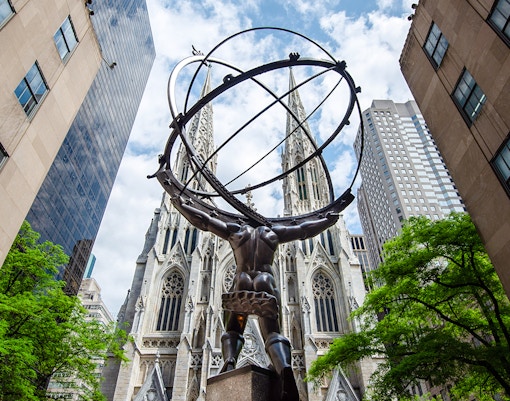
Rockefeller Center
Distance: 0.1 mi — 2-min walk
Why people combine them: They sit directly opposite each other, so it’s one of the easiest same-block pairings in Midtown and works especially well if you want a quiet interior stop before or after city views.
Old St. Patrick’s Cathedral
Distance: 3 mi — 15–20 min by subway or taxi
Why people combine them: Together, they show New York’s Catholic history in 2 very different settings, Fifth Avenue grandeur here, and older, more atmospheric history downtown.

Also nearby
MoMA
Distance: 0.3 mi, 6-min walk
Worth knowing: This is the cleanest art-and-architecture pairing nearby if you want to follow stained glass and Gothic detail with modern painting and design.
Grand Central Terminal
Distance: 0.4 mi, 8-min walk
Worth knowing: It’s a practical next stop if you’re heading downtown or uptown anyway, and it turns the cathedral into an easy part of a wider Midtown walking route.
Eat, shop and stay near St. Patrick’s Cathedral
- On-site: There isn’t a full café inside the cathedral, so plan to eat before or after your visit rather than once you’re through security.
- Bill’s Bar & Burger (2-min walk, 16 W 51st St): Burgers, salads, and quick service make this one of the easiest post-visit lunch stops nearby.
- Magnolia Bakery (3-min walk, 1240 Avenue of the Americas): Best for coffee and something sweet if you only want a short break before moving on.
- Le Rock (4-min walk, 45 Rockefeller Plaza): A stronger choice for a sit-down meal if you’re pairing the cathedral with Rockefeller Center and want to stay in the same pocket of Midtown.
- 💡 Pro tip: Eat before noon or after 2pm if you can, Midtown lunch lines often take longer than the cathedral’s security check.
- Saks Fifth Avenue: A classic Fifth Avenue stop for fashion and holiday window displays, just steps from the cathedral.
- Rockefeller Center shops: Useful for practical Midtown shopping, beauty brands, and easy souvenir browsing without needing another subway ride.
Midtown East is convenient, polished, and easy if this cathedral is one stop in a dense Fifth Avenue itinerary. It is not the most atmospheric base in New York City, and it usually costs more than neighborhoods with better food and nightlife. Stay here if convenience matters more than local character.
- Price point: Mostly mid-range to high-end, with the biggest premium going to business hotels and locations closest to Fifth Avenue.
- Best for: Short trips where you want to walk to Rockefeller Center, Fifth Avenue, and several Midtown landmarks without wasting time on transit.
- Consider instead: Bryant Park or Midtown West for a better balance of transit, dining, and sightseeing, or Long Island City if you want better hotel value and don’t mind a short subway ride.
Frequently asked questions about visiting St. Patrick’s Cathedral
Most visits take 45–90 minutes. Give yourself closer to 2 hours if you’re using the official audio tour, lighting candles, or staying for music or Mass.
No for general entry, because the cathedral itself is free to enter. Book in advance only if you want the official self-guided audio tour ready to go on arrival, especially during holiday periods.
Arrive 10–15 minutes early if you’ve booked the official audio tour. That gives you enough time for security and device pickup without starting your visit rushed.
Yes, but keep it small. Large bags are not allowed, and smaller day bags move through security much more smoothly.
Yes, personal photography is allowed. Flash photography, tripods, and other disruptive equipment are not allowed, and you should keep photo-taking respectful during services.
Yes, groups can visit, but they should expect the space to function as a working church first. If you’re coming with a larger group, arrive earlier in the day and avoid major service times.
Yes, especially as a short 30–60 minute stop. Children usually respond best to the scale, stained glass, candles, and marble statues rather than a full wall-to-wall visit.
Yes, the cathedral is wheelchair accessible in public visitor areas. Step-free access is available via the 51st Street entrance, accessible restrooms are available, and wheelchairs can be requested on-site.
Food is available nearby, but not as part of the cathedral visit itself. Midtown gives you plenty of choices within a 2–5 minute walk, especially around Rockefeller Center.
Yes, visitors are welcome at Mass. Just remember that attending a service is different from sightseeing, so keep noise, movement, and photography to a minimum.
There isn’t a Vatican-style screening process, but respectful dress is the right call because this is an active house of worship. Avoid beachwear, clothing with offensive language, and anything that would feel out of place during prayer or service.
No, the catacombs tour belongs to Old St. Patrick’s Cathedral in Lower Manhattan. That confusion catches people out often, so double-check which cathedral your booking refers to before you go.