The experience doesn’t throw you straight onto the platform. There’s a sense of buildup first, with interior spaces that help you adjust, get your bearings, and spot landmarks before the open-air moment lands.
Inside the Edge viewing platform | glass floors, open-air views, and what it feels like
Step onto Edge, and the difference is immediate: this isn’t a sealed observatory, but an open-air platform that makes Manhattan feel startlingly close.
- What stands out: the outdoor sky deck, angled glass walls, and Glass Floor turn skyline viewing into something physical, not just visual.
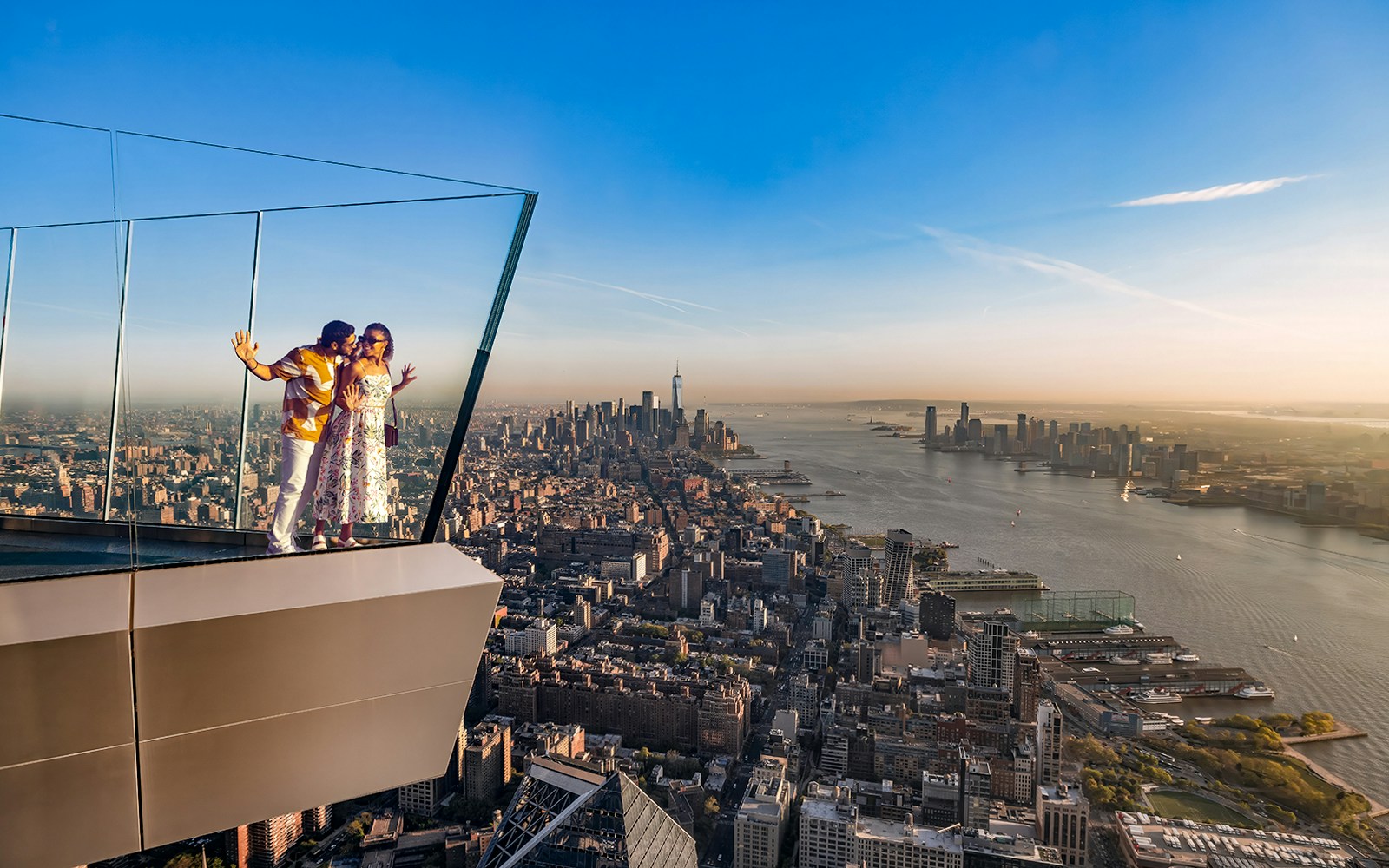
- Often-missed stop: Eastern Point gives you the cleanest ‘floating over the city’ photo, while the Skyline Steps offer a calmer place to pause.
- Pro-tip: If heights or crowds make you hesitant, start indoors and work outward. Flexible or priority options like [Edge NYC Observation Deck Tickets:Timed Entry, Flexible & Priority Access Options] can make the experience feel less rushed. Know more about: [Top highlights inside Edge] [How to explore Edge] [FAQ]
What to expect inside the Edge viewing platform?
From the street, Edge looks like a sharp architectural gesture. Inside, it feels more like a gradual reveal — you begin in a controlled interior space, then move toward wind, open sky, and the strange thrill of standing beyond the building line. That shift is the real reward. You’re not just seeing New York from above; you’re stepping into it.
If you’re short on time, prioritize the outdoor perimeter first, then circle back to slower areas once you’ve seen the core views. If you want neighborhood context before going up, [Hudson Yards Guided Walking Tour with Edge Observation Deck Tickets] is a useful add-on rather than a salesy extra.
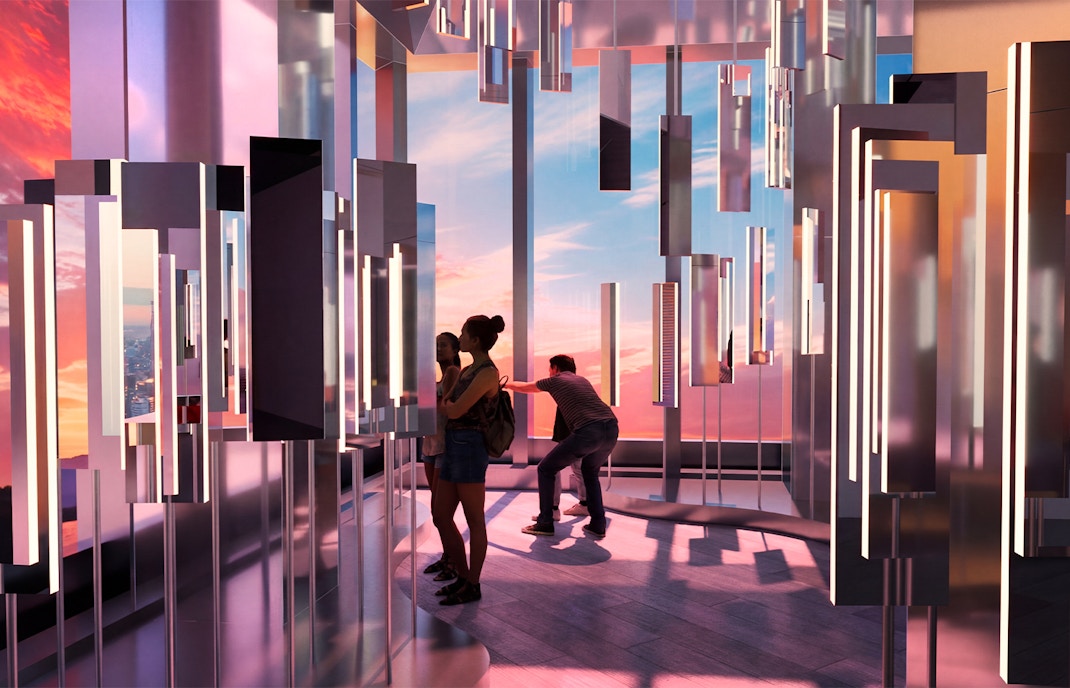
A reveal that builds, not shocks
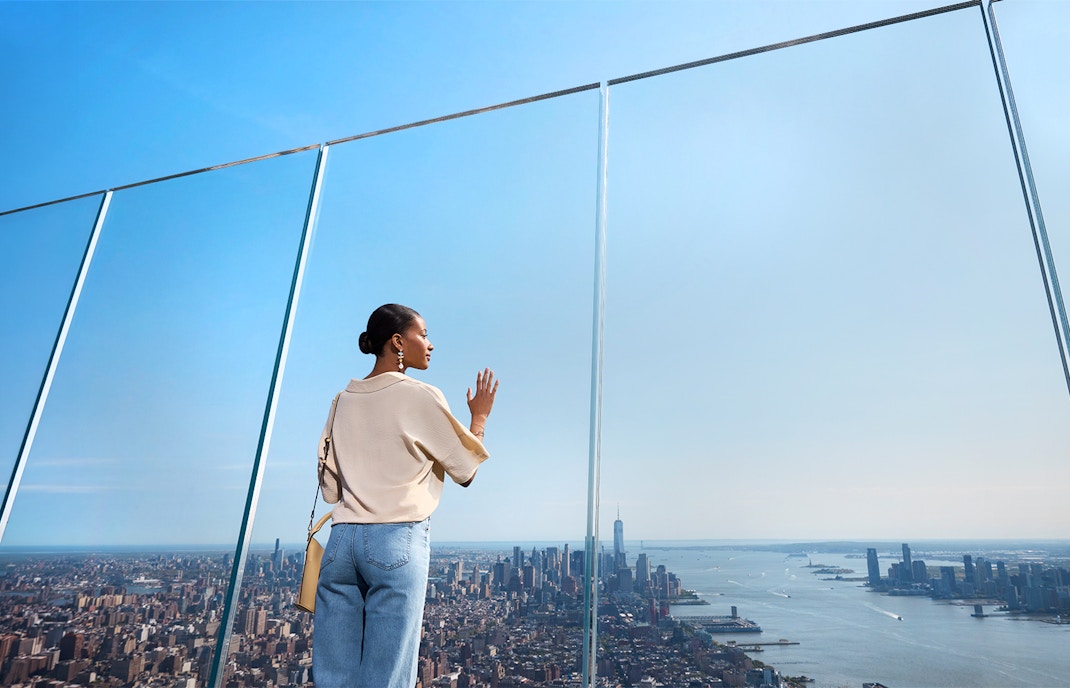
Open air changes everything
Once outside, Edge feels very different from a traditional observation deck. You hear the city more faintly, feel the wind more directly, and notice how little separates you from the skyline. The Glass Floor adds a sharper jolt, especially if you’re testing your comfort with heights.
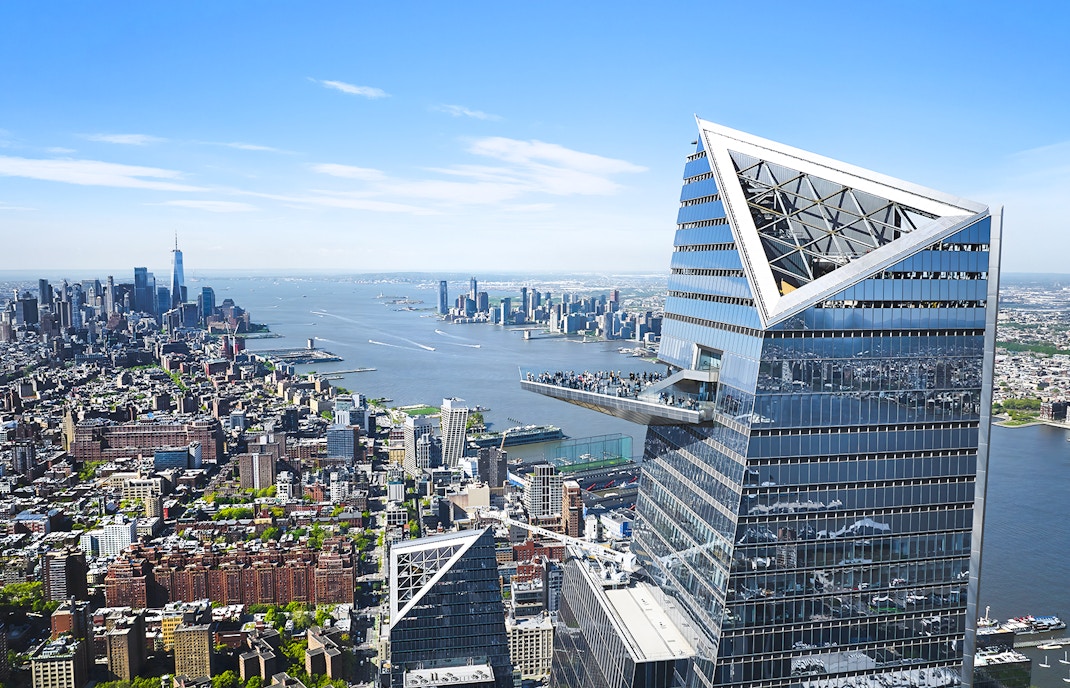
Views with a strong Manhattan read
The vantage here is excellent for understanding the city’s shape — Midtown towers, the Hudson River, Downtown, and the long northward stretch of Manhattan. The Eastern Point sharpens that feeling of projection, as if the platform briefly narrows into air.
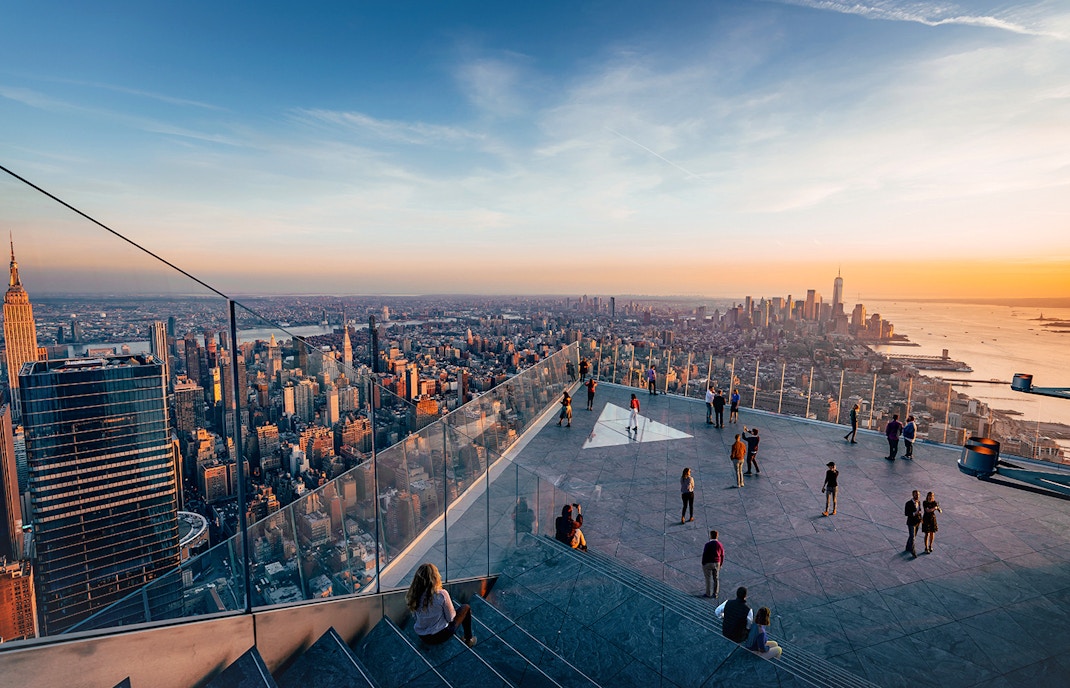
More social than solemn
Edge has an energetic mood. People are taking photos, comparing skyline sightings, and lingering with drinks instead of moving through in silence. It feels contemporary, a little theatrical, and very much built for shared moments.
Edge sits inside 30 Hudson Yards (Google Maps: ‘Edge NYC’). Most visits begin in The Shops & Restaurants at Hudson Yards, usually around Level 4, before a high-speed elevator takes you up to Level 100. Once upstairs, the layout is easy to understand: an indoor viewing area first, then the open-air deck, with the Glass Floor, Eastern Point, Skyline Steps, and Skyline Bar & Café naturally branching off that main outdoor loop.
| Area | What it feels like | Exposure level | Crowd tendency | Photo value |
| --- | --- | --- | --- | --- |
| Indoor observation deck | Climate-controlled orientation space with wide windows | Low | Moderate on arrival | Good for framing the skyline without wind |
| Outdoor sky deck | Wraparound open-air platform | High | High at sunset | Excellent for panoramic shots |
| Glass Floor | Short, intense thrill zone | Very high | Often busiest | Strong for reaction photos |
| Skyline Bar & Café | Social pause point with drinks and light bites | Medium | Moderate | Best for relaxed, candid shots |
Top highlights inside Edge NYC

Glass Floor
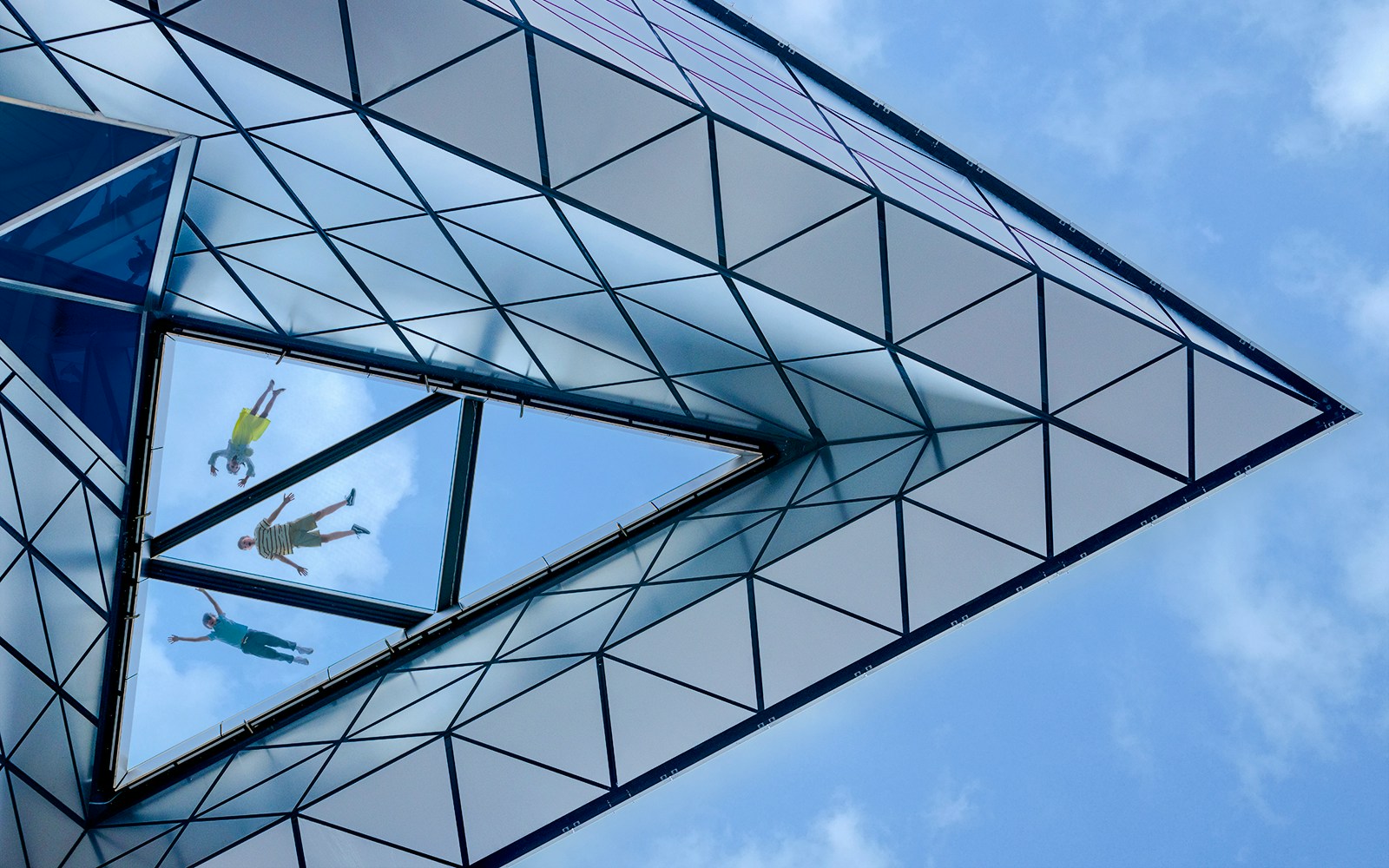
A transparent panel suspended 100 floors above the streets. Why it matters: this is where Edge shifts from scenic to visceral. Pro tip: step on from the metal frame first, then move inward once you’re steady.

Inside Edge NYC
Explore a compact, high-impact layout where each zone changes how the skyline feels rather than simply showing you more of it.
Multimedia arrival on Level 4
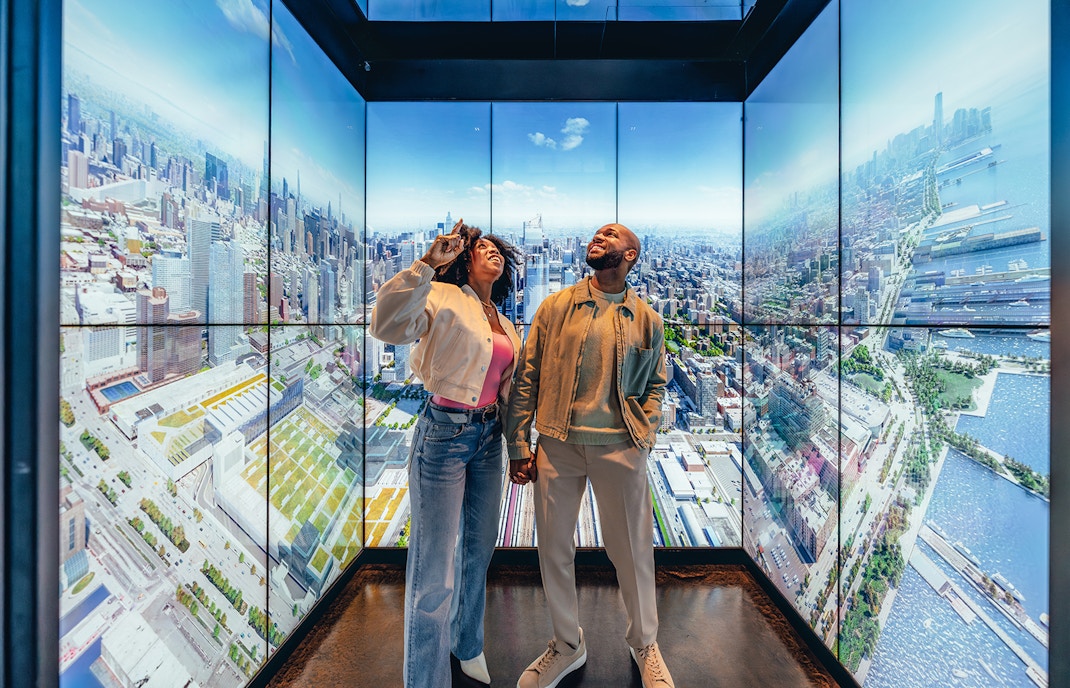
Your visit starts below the deck, with exhibits and a quick pre-show feel rather than an immediate height reveal. It’s useful if you like context before the views, and it makes the elevator ascent feel more dramatic once you’re on your way up.
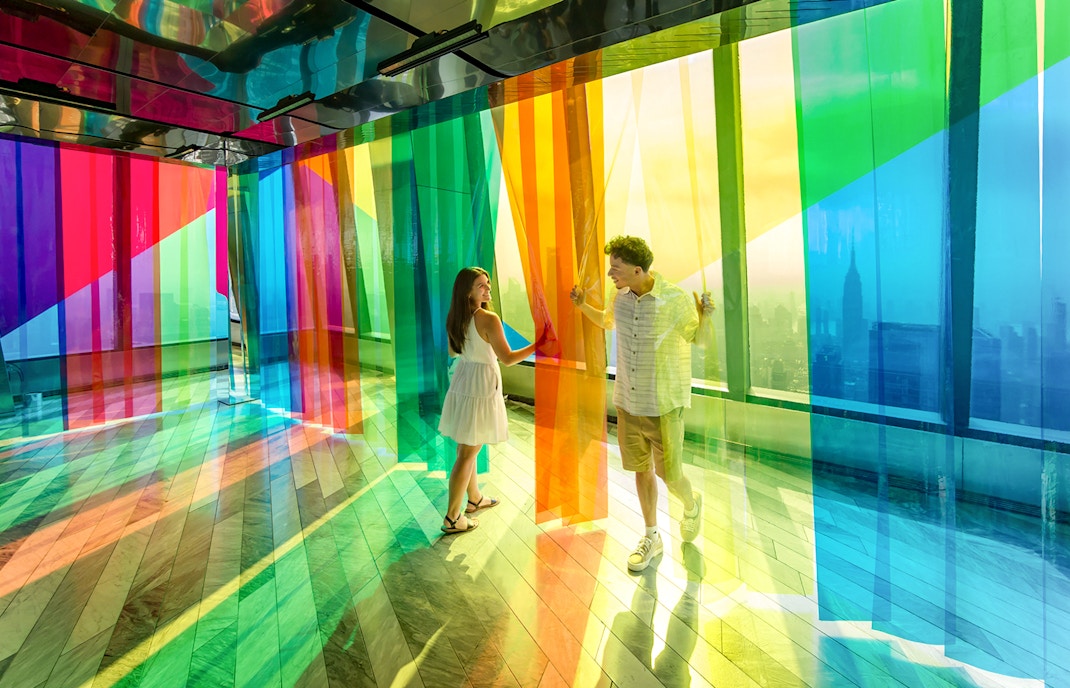
Level 100 indoor deck
This is the bridge between enclosed comfort and full exposure. Floor-to-ceiling windows let you study Manhattan, test visibility, and decide your first outdoor stop. If you’re traveling with someone height-sensitive, this is the easiest place to pause and calibrate.
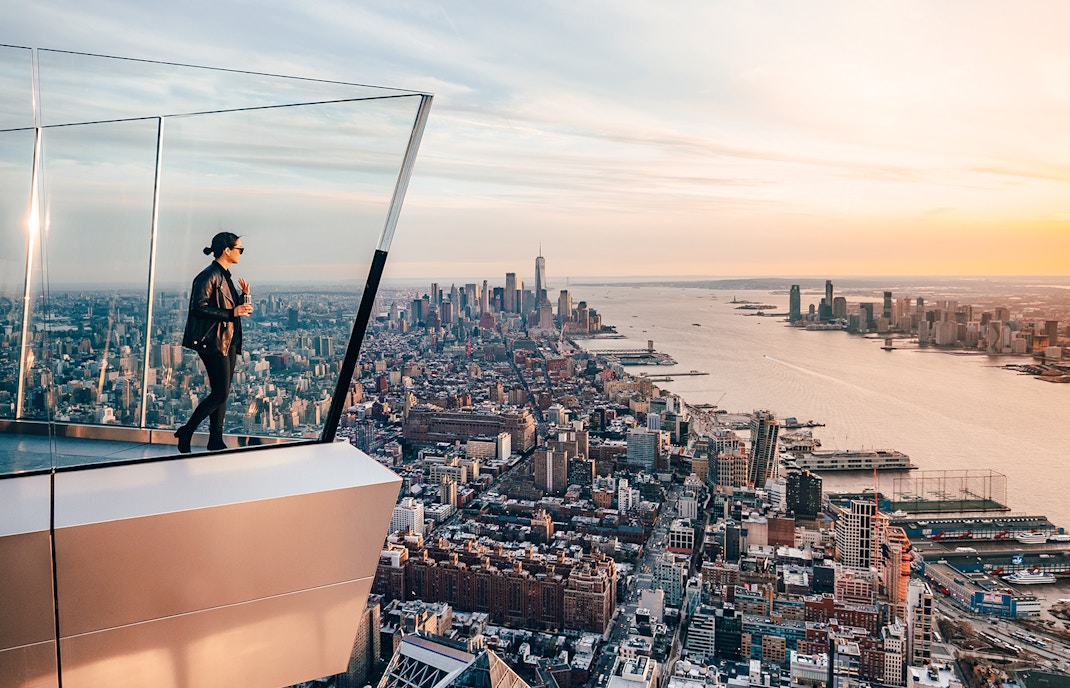
Outdoor sky deck
The wraparound deck is where Edge separates itself from enclosed observatories. Wind, air, and open space change the experience completely. Walk the perimeter before committing to photo lines — you’ll get a better sense of which angle suits your priorities.
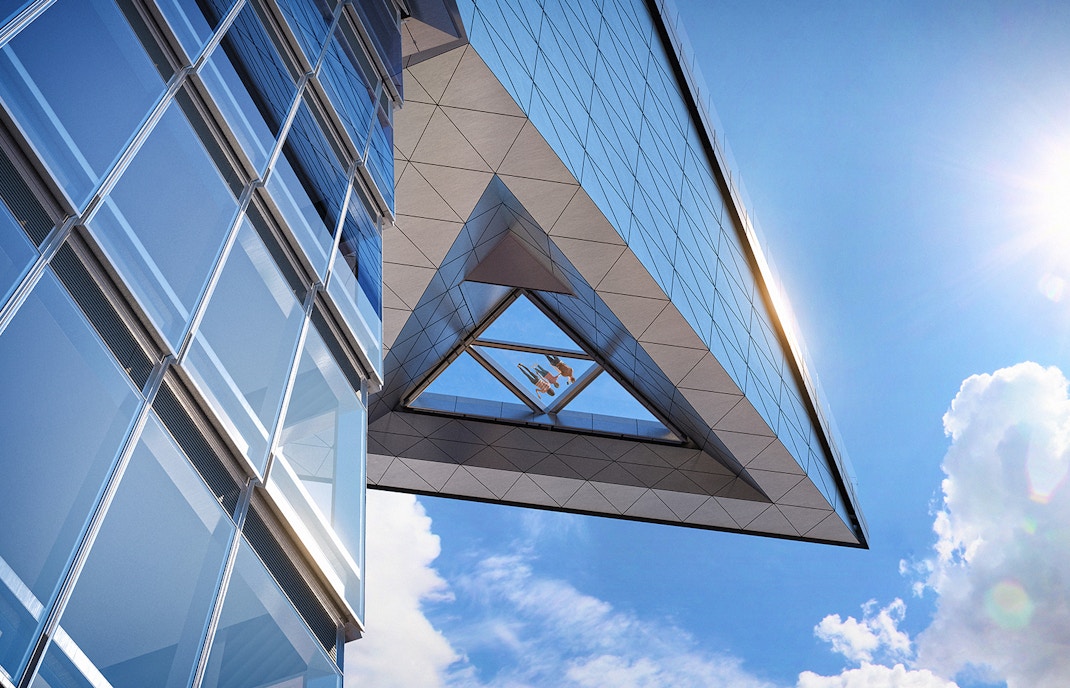
Glass Floor
Placed along the outdoor route, the Glass Floor compresses the whole experience into one focused moment: you’re no longer just viewing the city, you’re suspended above it. Expect short queues at busy times, and watch a few people cross first if you’re unsure.
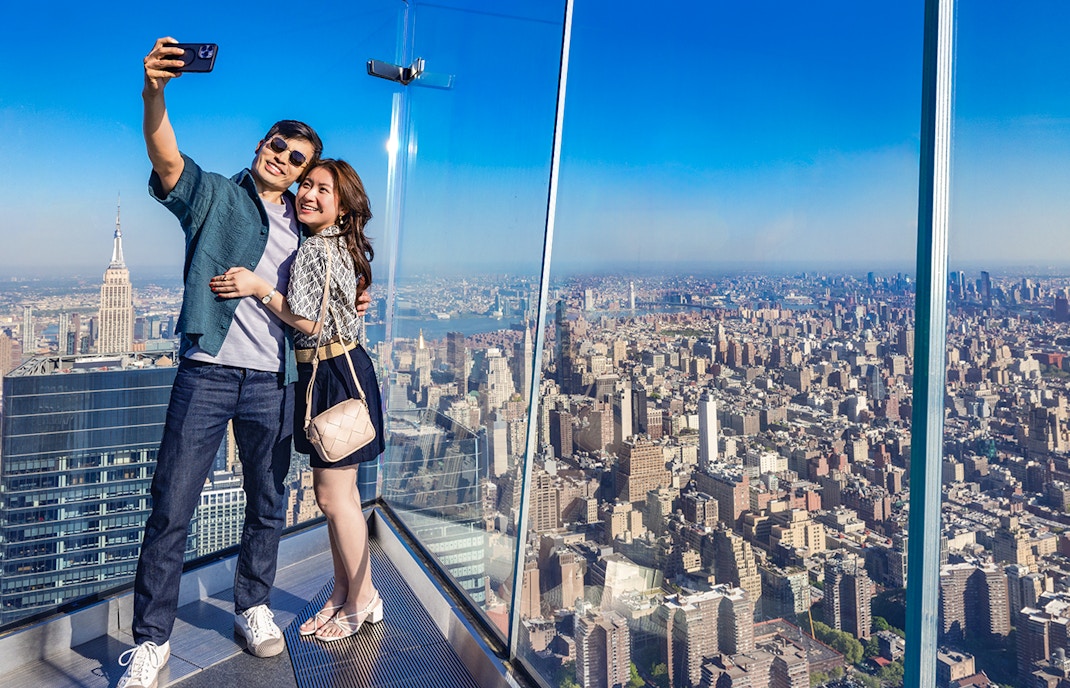
Eastern Point
This projecting corner intensifies the feeling of standing beyond the building, not simply on top of it. It’s compact, photogenic, and usually busier than it first appears. If you want your turn to feel quick, have your camera settings ready in advance.
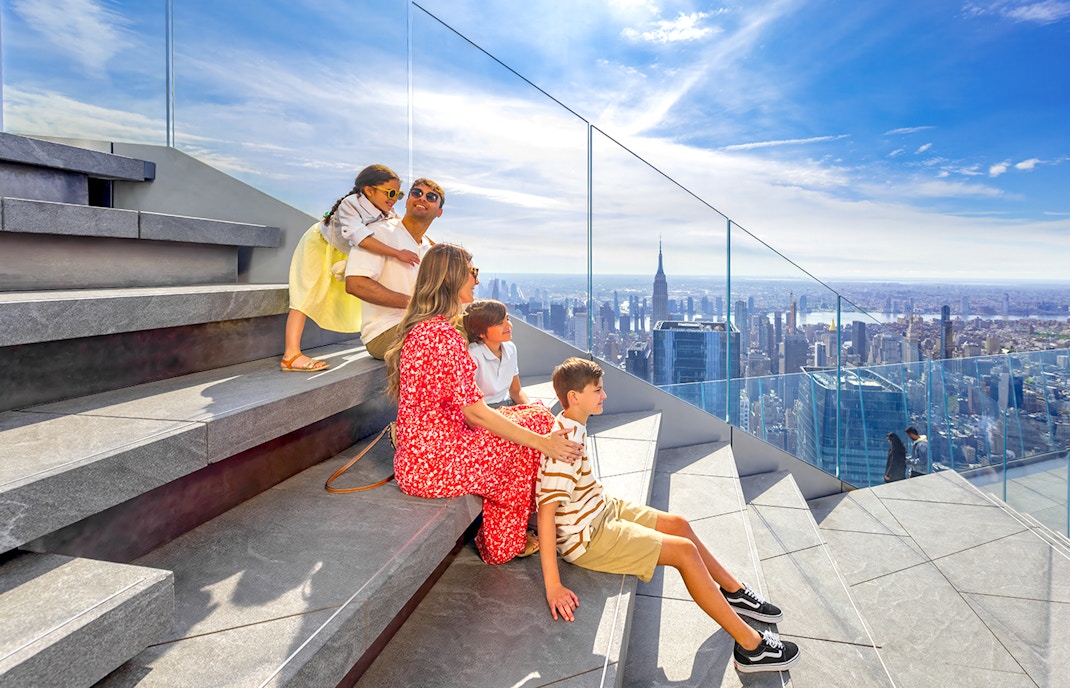
Skyline Steps and Skyline Bar & Café
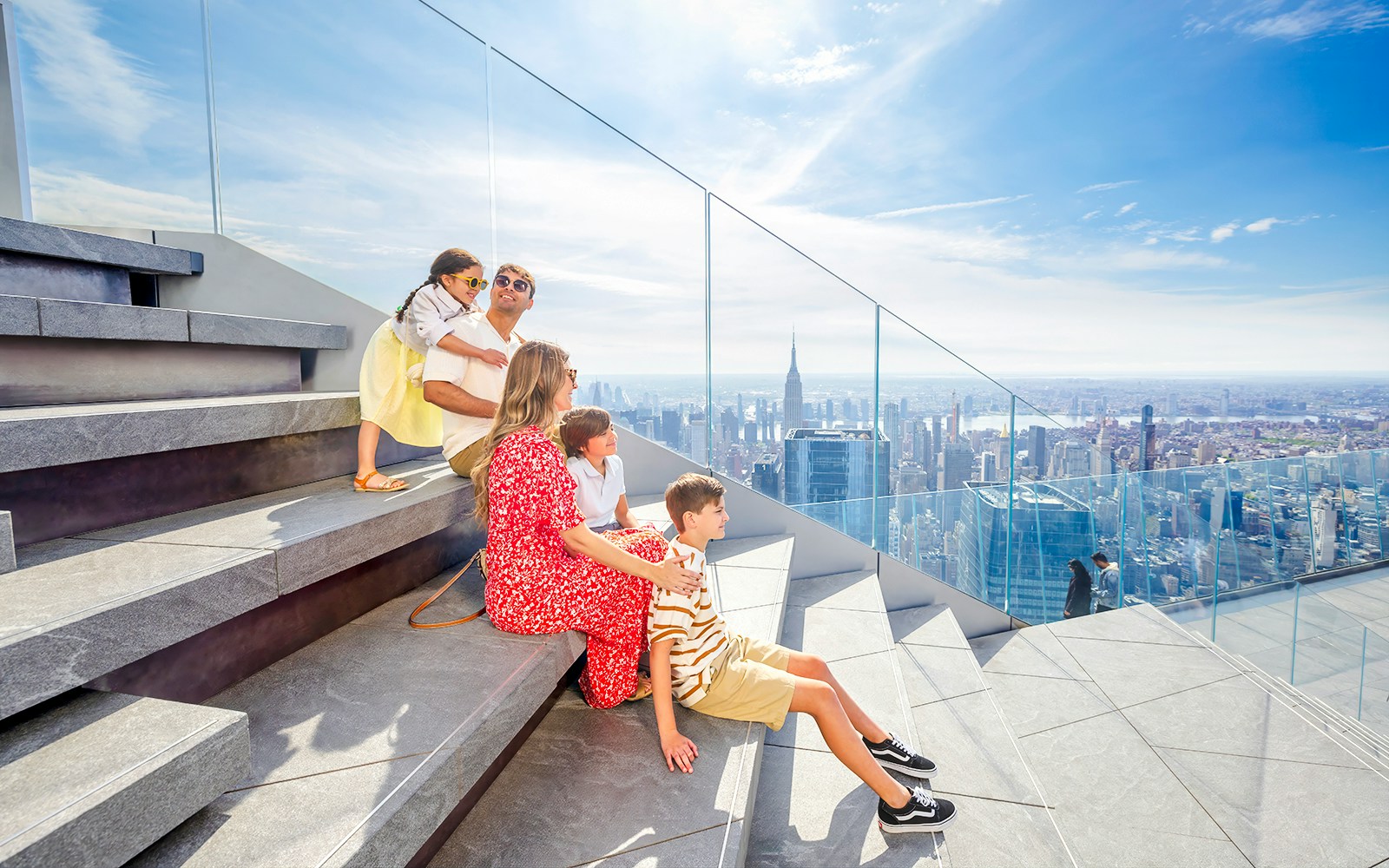
Finish in the slower zone. The steps lift you above part of the crowd for cleaner views, while the bar lets you stay in the atmosphere longer. It’s a good final stop once you’ve already tackled the more intense features.
Entry process
Book online first. Standard timed tickets work well if your day is fixed, while [Edge Flex Pass: Flexible Entry Tickets] and [Edge Express Pass: Skip-the-Line & Flexible Entry] are better if weather, sunset timing, or queues matter more. Security screening applies, and children under 12 must be with an adult.
Best times
Morning usually feels calmest and clearest for wide skyline photos. Sunset has the warmest light and the liveliest atmosphere, but it is also the busiest window. Night works well if you want city lights over long-distance visibility. [Edge Observation Deck: Sunset VIP Experience] is the easiest sunset-focused option.
Duration
Plan 60–90 minutes for a comfortable visit. A quick stop can take about 45 minutes if you focus on the outdoor loop and photos. Allow 90–120 minutes if you want the indoor spaces, a drink, and a little patience for popular photo spots.
Your route
- Indoor multimedia intro → sets context before the height reveal.
- Level 100 indoor gallery → get your bearings in climate-controlled comfort.
- Outdoor sky deck → do one full loop before joining any line.
- Glass Floor → tackle the most intense feature while energy is high.
- Eastern Point → take your photo turn, then keep moving.
- Skyline Steps or Skyline Bar & Café → finish with a calmer view.
Rules and accessibility
Edge is wheelchair-accessible, with elevators and step-free routes, and certified service animals are welcome. Large bags and luggage aren’t permitted. Outside food and drinks are generally not allowed, except bottled water in some ticket guidance. Strollers are permitted, but may need to be folded for elevators and escalators.
Tips
- Start indoors if you’re height-sensitive; the exposure builds more gently.
- For cleaner photos, use Skyline Steps and quieter corners away from the Glass Floor queue.
- Dress for rooftop conditions — wind and temperature can feel very different from street level.
- If timing matters, priority or flexible-entry options reduce pressure on crowded days.
Frequently asked questions about what’s inside Edge NYC
Edge feels more physical than many observation decks. You begin in an enclosed interior environment, but the experience quickly shifts into open air, angled glass, and a platform that projects outward from the building. That means the visit is not just about views — it’s also about exposure, wind, sound, and how comfortable you are with height.
If you’re deciding whether it suits you, start with [Top highlights inside Edge NYC] and [How to explore the Edge viewing platform]. Those sections give a better sense of how intense or relaxed the visit can feel depending on where you spend your time.
It’s both, but the outdoor portion is the main event. Edge includes an indoor observation area on Level 100 with large windows, plus an open-air sky deck with angled glass walls, the Glass Floor, Skyline Steps, and Eastern Point. In practice, that means you can ease into the experience indoors before stepping outside.
Weather matters more here than at a fully enclosed observatory. Wind, temperature, mist, or low visibility can change how long you want to stay outdoors. If weather flexibility matters to you, [Edge Flex Pass: Flexible Entry Tickets] is the least rigid option.
On a clear day, you can pick out Midtown towers, the Empire State Building, Downtown Manhattan, the Hudson River, One World Trade Center, and parts of Central Park from the right angle. The western position at Hudson Yards also gives Edge a strong river-facing perspective that feels different from Midtown-East decks.
What stands out most is not just one landmark, but the overall read of Manhattan’s shape. If skyline comparison matters to you, see [Edge vs SUMMIT One Vanderbilt] and [Edge vs One World Observatory] for a more side-by-side planning view.
For most visitors, the intensity is concentrated rather than constant. The Glass Floor is the sharpest moment because you’re looking straight down, while the angled walls feel exposed but controlled. You don’t have to do either immediately, and plenty of people start indoors or walk the outdoor perimeter before trying the more intense zones.
If you’re height-sensitive, treat Edge as a gradual experience. Begin with the indoor deck, step outside briefly, then decide whether the Glass Floor feels manageable. Many visitors find that the buildup is easier than they expected once they control the pace.
The strongest photo spots are usually Eastern Point for the ‘floating’ effect, Skyline Steps for wider skyline framing, and the outdoor perimeter for panoramic shots without too much foreground clutter. The indoor windows are useful too, especially if weather or wind is making outdoor shots harder.
Handheld personal photography is the easiest fit here. Tripods and selfie sticks are commonly restricted, so plan around your phone or a compact camera. If you want a smoother photo-focused visit, mornings tend to give you more breathing room than sunset. See also [Top highlights inside Edge NYC].
Yes. You’ll find standard visitor facilities nearby in the attraction complex, and the deck area includes Skyline Bar & Café for light bites and drinks. There are also areas where you can pause instead of constantly circling for views, which helps if you’re visiting with older relatives, children, or someone who wants a break from the most exposed zones.
This is one reason Edge feels more social than solemn. People don’t only come up, snap a few pictures, and leave. Many visitors linger, especially once they’ve already done the Glass Floor and want a slower finish.
Yes. Current ticket guidance states that Edge is fully accessible for wheelchair users, with elevators and ramps throughout the experience. Strollers are also permitted, though some elevator or escalator use may require them to be folded first. Certified service animals are welcome throughout the venue.
That makes Edge one of the easier high-view attractions to navigate if step-free access matters. If accessibility is a deciding factor in your planning, pair this page with [Plan your visit to Edge NYC] so you can review route, entry, and timing details in one place.
Most visitors spend about 60–90 minutes, though you can move faster if you’re focused on the outdoor deck or stay longer if you want drinks, multiple photo rounds, or both daylight and dusk. In practice, the pace depends on weather, crowd levels, and how long you wait for the more photogenic spots.
There usually isn’t a short fixed viewing timer once you’re up there, which is why sunset can feel crowded — earlier visitors may still be on the deck. For route planning, use [How to explore the Edge viewing platform].
That depends on what kind of stress you’re trying to avoid. If your day is fixed and you’re comfortable with a set slot, [Edge NYC Observation Deck Tickets:Timed Entry, Flexible & Priority Access Options] keeps things simple. If weather or timing is your bigger concern, [Edge Flex Pass: Flexible Entry Tickets] gives you room to adapt.
If the main goal is reducing lines, [Edge Express Pass: Skip-the-Line & Flexible Entry] is the easiest choice. And if you’re building your day around golden hour, [Edge Observation Deck: Sunset VIP Experience] is the most targeted sunset option in the current inventory.
Edge stands out because it is genuinely open-air and designed around sensation as much as scenery. Compared with One World Observatory, it feels more exposed and less enclosed. Compared with SUMMIT One Vanderbilt, it is less about immersive mirrored interiors and more about wind, projection, and physical skyline contact. Compared with Top of the Rock, it feels newer, sharper, and more engineered for thrill.
So if you want a classic skyline perch, another deck may suit you better. If you want the city to feel close, vertical, and a little adrenaline-charged, Edge is the stronger fit. See [Edge vs SUMMIT One Vanderbilt], [Edge vs Top of the Rock], and [Edge vs One World Observatory].
More reads
Plan your visit to Edge NYC
Check entry timing, weather considerations, how long to stay, and practical arrival tips before you commit to a slot.
Link: [Plan your visit to Edge NYC]
Compare Edge ticket and entry options
See which option suits you best — timed entry, flexible entry, priority access, or sunset-focused upgrades.
Link: [Edge tickets]
Edge vs SUMMIT One Vanderbilt
Compare open-air thrill, mirrored interiors, photo style, and overall atmosphere before choosing your New York deck.
Link: [Edge vs SUMMIT One Vanderbilt]
Best time to visit Edge NYC
Decide between daylight, sunset, and night by comparing crowd levels, lighting, mood, and weather exposure.
Link: [Best time to visit Edge NYC]
Explore Hudson Yards before Edge
Add neighborhood context with ideas for pairing Edge with the High Line, Vessel, and nearby West Side stops.
Link: [Hudson Yards guide]
NYC observation decks compared
Weigh Edge against One World Observatory, Top of the Rock, and the Empire State Building in one planning guide.
Link: [New York observation decks comparison]


