Bronx Zoo visitor guide for New York
The Bronx Zoo is a vast wildlife park best known for major immersive habitats like Congo Gorilla Forest, JungleWorld, and Wild Asia. A visit here feels more like covering a small park than popping into a compact city zoo; you’ll do a lot of walking, and poor pacing is what turns a good day into an exhausting one. The biggest difference-maker is route order: hit the monorail and headline habitats early, then save indoor exhibits for later. This guide covers timing, tickets, route planning, and what to prioritize.
Quick overview: Bronx Zoo at a glance
If you want the day to feel manageable, make the big decisions before you arrive. This zoo rewards an early start and a clear route more than most New York attractions.
- When to visit: Wednesdays and seasonal opening times vary, so check the daily schedule before you go; weekday mornings right at opening are noticeably calmer than late-morning weekends, because the monorail, gorilla habitat, and lunch lines all bottleneck at once.
- Getting in: From $43.95 for standard entry. Combo tickets with NYBG generally start around $74.66. Book ahead for weekends, school breaks, free Wednesdays, and Holiday Lights dates, because on-site ticket sales are not offered.
- How long to allow: 3–5 hours for most visitors. Add time if you want seasonal attractions, the Wild Asia Monorail, indoor houses, and breaks with children.
- What most people miss: The mandrills and red river hogs inside Congo Gorilla Forest, the proboscis monkeys high in JungleWorld, and how much time Wild Asia actually takes once you include the monorail.
- Is a guide worth it? A guide adds value if you want a conservation context or a structured route, but for a standard visit, most people do well self-guiding with a map and a shortlist.
🎟️ Tickets for Bronx Zoo can sell out in advance during school breaks, summer weekends, and Holiday Lights season. Lock in your visit before the time you want is gone. See ticket options
Jump to what you need
Where and when to go
How much time do you need?
| Visit type | Route | Duration | Walking distance | What you get |
|---|---|---|---|---|
Highlights only | Sea Lion Pool → Tiger Mountain → Congo Gorilla Forest → exit | 3–3.5 hours | ~3km | You’ll cover the strongest big-animal habitats and skip slower extras like the monorail, seasonal family areas, and most backtracking across the park. |
Balanced visit | Sea Lion Pool → Tiger Mountain → Congo Gorilla Forest → JungleWorld → African Plains → Wild Asia | 4–5 hours | ~5km | This gives you the signature habitats and at least one major indoor house, with enough time to pause rather than rush every viewing window. |
Full exploration | Full park loop including Sea Lion Pool, Tiger Mountain, Congo Gorilla Forest, JungleWorld, African Plains, Wild Asia Monorail, and seasonal areas | 5+ hours | ~7km | This is the most complete day, but it’s a lot of walking and the weak point is usually energy, not animal variety, by late afternoon. |
Which Bronx Zoo ticket is best for you
| Ticket type | What's included | Best for | Price range |
|---|---|---|---|
Bronx Zoo Tickets | Entry to the Bronx Zoo with access to immersive exhibits and attractions including the Zoo Shuttle, Butterfly Garden, Children’s Zoo, and Wild Asia Monorail across 265 acres | Visitors who want a full wildlife experience with animal exhibits, family-friendly attractions, and easy park transportation in a single visit | From $43.95 |
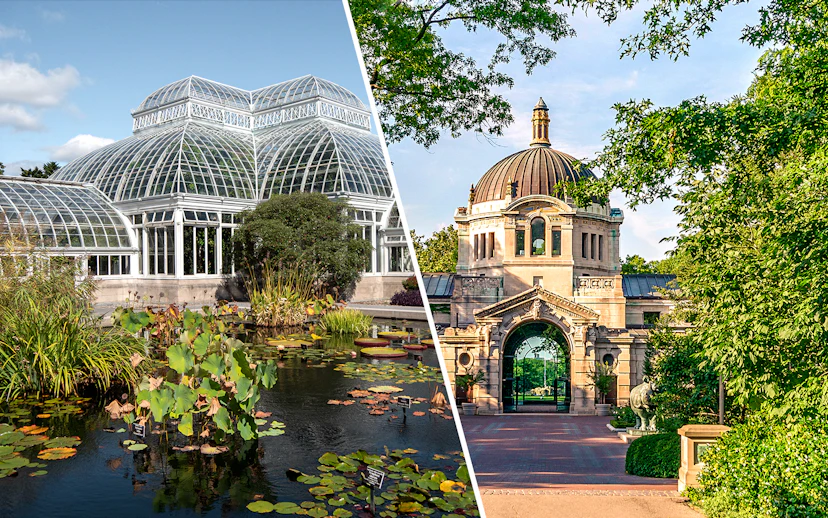
Combo: New York Botanical Garden + Bronx Zoo Tickets | Entry to the Bronx Zoo plus admission to the New York Botanical Garden, including the Enid A. Haupt Conservatory, themed gardens, seasonal exhibits, and narrated tram tour | Nature and wildlife lovers looking to combine two of NYC’s top outdoor attractions while saving on admission | From $74.66 |
How do you get around Bronx Zoo?
Which animals and habitats should you prioritise?

Congo Gorilla Forest
Species: Western lowland gorillas
This 6.5-acre rainforest habitat is the zoo’s signature exhibit, and it rewards patience more than a quick pass-through. The gorilla troop often shifts between active social moments and long quiet stretches, so give it real time. Most visitors focus only on the main gorilla views and rush past the mandrills and red river hogs deeper along the trail.
Where to find it: Inside the Congo Gorilla Forest trail circuit.
JungleWorld
Species: Proboscis monkeys and mixed Asian rainforest species
JungleWorld is a glass-enclosed indoor rainforest with mist, waterfall views, and some of the zoo’s most unusual animals. It’s especially worth prioritizing on hot, humid, or rainy days because it gives you a major exhibit without losing time outdoors. Most visitors pause at the obvious waterfall vista and miss the proboscis monkeys higher up in the habitat.
Where to find it: Inside the JungleWorld building along the main rainforest path.
Tiger Mountain
Species: Amur and Malayan tigers
Tiger Mountain gives you some of the zoo’s strongest predator viewing, with large glass windows and a real chance of catching movement if you time it well. Late morning can be especially rewarding when keeper talks or enrichment are happening. Most visitors move on too fast if the cats are resting, but even a quiet viewing window often changes after a few minutes.
Where to find it: In the Tiger Mountain habitat area on the main zoo route.
Wild Asia Monorail
Ride type: Elevated wildlife monorail
This is one of the clearest examples of why early timing matters at the Bronx Zoo. The monorail gives you wide views over the larger Asian habitat and helps the scale of the zoo make sense in a way walking alone does not. Most visitors underestimate the line here and leave it too late, when both waits and heat are worse.
Where to find it: In the Wild Asia section of the zoo.
African Plains
Habitat type: Open savanna exhibit
African Plains is one of the most classic wide-view habitats in the park, with lions, giraffes, zebras, bongos, and white rhinos spread across a moated landscape. It’s less immersive than Congo Gorilla Forest, but it gives you that big-animal, open-range feel many visitors come for. Most people stop only for the lions and skip the mixed-species viewing across the full savanna.
Where to find it: In the central African Plains area between headline habitats.
Sea Lion Pool
Species: California sea lions
Right near the entrance, Sea Lion Pool is easy to treat like a quick opener, but it’s worth slowing down for if you catch the animals vocalizing or during a feeding window. It’s one of the liveliest habitats in the zoo and a reliable reset point for families. Most visitors don’t realize the nearby aquatic bird areas are worth folding into the same stop.
Where to find it: Near the zoo entrance at Sea Lion Pool.
Facilities and accessibility
- 🍽️ Food and drink: Food is available on-site, but many visitors find drinks expensive, so bringing your own water is the smarter move.
- 🪑 Seating / rest areas: The zoo’s wide paths and green open areas make it easier to pause than at tighter city attractions.
- 🅿️ Parking: Paid on-site parking is available, which can make a big difference for families covering a long zoo day.
- ♿ Mobility: Many main visitor routes are broad outdoor paths, but this is still a 265-acre zoo, so a full circuit can be tiring even if individual areas feel manageable.
- 🧠 Cognitive and sensory needs: Weekday mornings are the easiest low-stimulation window; weekends get loudest around Sea Lion Pool, Wild Asia, and the children’s areas.
- 👨👩👧 Families and strollers: The main route is generally family-friendly, but the size of the park makes route planning more important than at smaller zoos.
- 🥾 Terrain: Most of the zoo feels park-like rather than rugged, but the walking distance adds up faster than first-timers expect.
This zoo works especially well for children who like animals, stroller breaks, and a mix of indoor and outdoor stops rather than one nonstop attraction.
- 🕐 Time: 3–4 hours is realistic with younger children if you prioritize Sea Lion Pool, one big habitat, one indoor house, and a seasonal family stop.
- 🏠 Facilities: The Children’s Zoo, petting opportunities, and play-focused zones make this easier for families than a standard wildlife park.
- 💡 Engagement: Build the day around animal behavior, not just a checklist. Sea lions, gorillas, and monorail views usually land better than trying to ‘do everything'.
- 🎒 Logistics: Bring water, snacks if permitted, and a clear route, because expensive drinks and long walking distances are what wear families down first.
- 📍 After your visit: New York Botanical Garden is the easiest nearby add-on if the kids still have energy and you want a calmer second stop.
Rules and restrictions
Practical tips
- Booking and arrival: Book at least a few days ahead for weekends, school breaks, and free Wednesdays, because timed entry is standard and on-site ticket sales are not offered.
- Pacing: Do Wild Asia early, because the line is one of the first to snowball, then use JungleWorld later as a climate-controlled reset when the outdoor walking starts to drag.
- Crowd management: The best working window is right at opening on a regular weekday, not midday, because the same pressure points, gorillas, monorail, and lunch lines all peak together.
- What to bring or leave behind: Bring a refillable water bottle and light layers, because it’s a mostly outdoor zoo with pricey drinks and at least one warm, humid indoor rainforest house.
- Food and drink: Eat before noon or after 2pm if you can, because midday food stops are busiest exactly when the zoo feels most crowded and least efficient.
- With kids: Don’t save the Children’s Zoo for the very end, because it closes 30 minutes before the rest of the park and is one of the easiest family wins.
- Route planning: Pick 3 headline stops before you walk in, because weak signage and the park’s size make ‘we’ll just wander’ a worse strategy here than at smaller zoos.
What else is worth visiting nearby?
Eat, shop and stay near the Bronx Zoo
Food is available inside the zoo, but many visitors treat it as a convenience fallback rather than a strong-value meal, and drinks are often described as overpriced.
- Dancing Crane Café: The zoo’s main dining venue, located near Dancing Crane Plaza, serves a wide selection of meals and refreshments, including burgers, pizza, salad bowls, snacks, coffee, ice cream, and cold beverages.
- The Patio: Situated near the Children’s Zoo, this casual outdoor dining spot offers lunch tables and quick bites, including fried chicken, hot dogs, pretzels, popcorn, and other grab-and-go favorites.
- Zoo Brews: Found near Nature Trek, Zoo Brews offers local craft beers, wine, and light bar snacks, ideal for adults looking to unwind during their zoo visit.
- 💡 Pro tip: Eat before noon or after 2pm if possible, because lunch lines overlap with the zoo’s busiest viewing window and make the middle of the day feel slower than it needs to.
- Dancing Crane Plaza Gift Shop: The zoo’s main retail store, located at Dancing Crane Plaza, features souvenirs, apparel, plush animals, toys, and wildlife-themed gifts perfect for all ages.
- Seasonal pop-up shops: Additional themed gift kiosks and seasonal stores may appear across the zoo during special events and holiday celebrations.
- Opening hours: The main Bronx Zoo shop typically operates until 5pm, though hours may vary depending on the season and park schedule
If the Bronx Zoo is the main reason you’re in this part of the city, staying nearby can make for a slower, easier day. For most short New York trips, though, this is better treated as a day outing than your main base, because the zoo sits outside the areas most travelers spend their evenings.
- Price point: A nearby stay can cost you upto $100 per night. Choose your stay accordingly.
- Best for: Visitors planning a Bronx-focused day with the zoo and New York Botanical Garden rather than a citywide sightseeing schedule.
- Consider instead: A more central New York base if the zoo is just one stop on your trip and you want easier evening dining, theater, and transit connections.
Frequently asked questions about visiting Bronx Zoo
Yes, you should book in advance because the Bronx Zoo uses timed entry and on-site ticket sales are not offered. Booking matters even more for weekends, school breaks, free Wednesdays, and Holiday Lights dates, when your preferred entry window can disappear before the day of your visit.
Most visits take 3–5 hours, though it’s easy to spend a full day if you add the Wild Asia Monorail, indoor houses, seasonal attractions, and food breaks. Families with children often move more slowly, and the real time-sink is not one exhibit; it’s the distance between them on a 265-acre site.
Arrive 15–20 minutes before your timed entry so you can scan in and start moving without giving away your calmest part of the day. That early buffer matters most if you want Wild Asia, Congo Gorilla Forest, or a smooth start with children.
No, you should not plan to buy tickets at the gate because Bronx Zoo tickets are sold online in advance. That is especially important for free Wednesday reservations and special events like Holiday Lights, where demand can be high and time slots are date-specific.
A small day bag is the safest choice for a Bronx Zoo visit, but the current size limits and locker rules should be checked before you go. This is a long, mostly outdoor visit, so what matters in practice is carrying water, light layers, and only what you want with you all day.
Yes, casual personal photos are a normal part of the visit, especially in the outdoor habitats. If you plan to bring tripods, selfie sticks, or larger camera gear, check the current rules before you go, because a large outdoor zoo can still have area-specific restrictions.
Yes, Bronx Zoo works well for groups, but it’s better when someone sets the route before arrival. The park is large enough that groups lose time quickly if they keep stopping to decide between Wild Asia, JungleWorld, gorillas, lunch, and seasonal attractions on the fly.
Yes, it’s one of the better family wildlife attractions in New York because it mixes major animal exhibits with child-friendly areas and seasonal activities. The one thing families underestimate is stamina, younger children usually do better with 3–4 priority stops than a full park loop.
Much of the main visitor route is easier to navigate than people expect because the zoo uses broad, open-air paths, but it is still a very large park. The biggest accessibility challenge is usually distance and energy over 3–5 hours, not just whether a single exhibit is reachable.
Yes, food is available on-site, so you won’t need to leave the zoo just to eat. The trade-off is price and timing, many visitors find drinks expensive, and midday lunch lines add friction to the busiest part of the day.
Yes, limited admission is free on Wednesdays, but you still need to reserve in advance. It’s a good savings option if your schedule is flexible, though the crowd trade-off is real and the day often feels busier than a regular paid weekday visit.
Yes, paid on-site parking is available, which is helpful for families and anyone trying to avoid a long cross-city trip on public transit. Check the current rate before you go, because pricing and availability details can change by season or event date.