Quick Information
Plan your visitDid you know?
Founded in 1804, the New-York Historical Society is recognized as New York City’s oldest museum.
Its collections include ~2 million manuscripts and ~500,000 photographs, making the institution a major research center for New York and U.S. history.
The DiMenna Children’s History Museum is built into the main museum on the lower level rather than operating as a separate site.
Is New-York Historical Society worth visiting?
The lobby quickly gives way to rooms where New York feels layered instead of abstract: portrait faces, campaign objects, glowing glass lamps, and children climbing into recreated city scenes downstairs. It’s calmer than the city outside but dense with stories.
The museum was built to collect and interpret New York’s memory, not just display trophies. That mission gives weight to the visit because the collections connect local history to bigger American subjects like politics, migration, design, protest, and everyday life.
What stays with most visitors is the sense of meeting New York at human scale. You leave with particular images — a Tiffany lamp, a presidential desk, a tenement vignette, a suffrage story, rather than a blur of dates.
Skip it if you want a blockbuster, high-energy museum day or have little patience for reading-heavy history displays.
What to see at the New-York Historical Society?
Special exhibitions
Start with the rotating shows, which often set the tone for the rest of the visit. They change regularly and can be the deciding reason locals return, so check what’s on before you arrive.
American art galleries
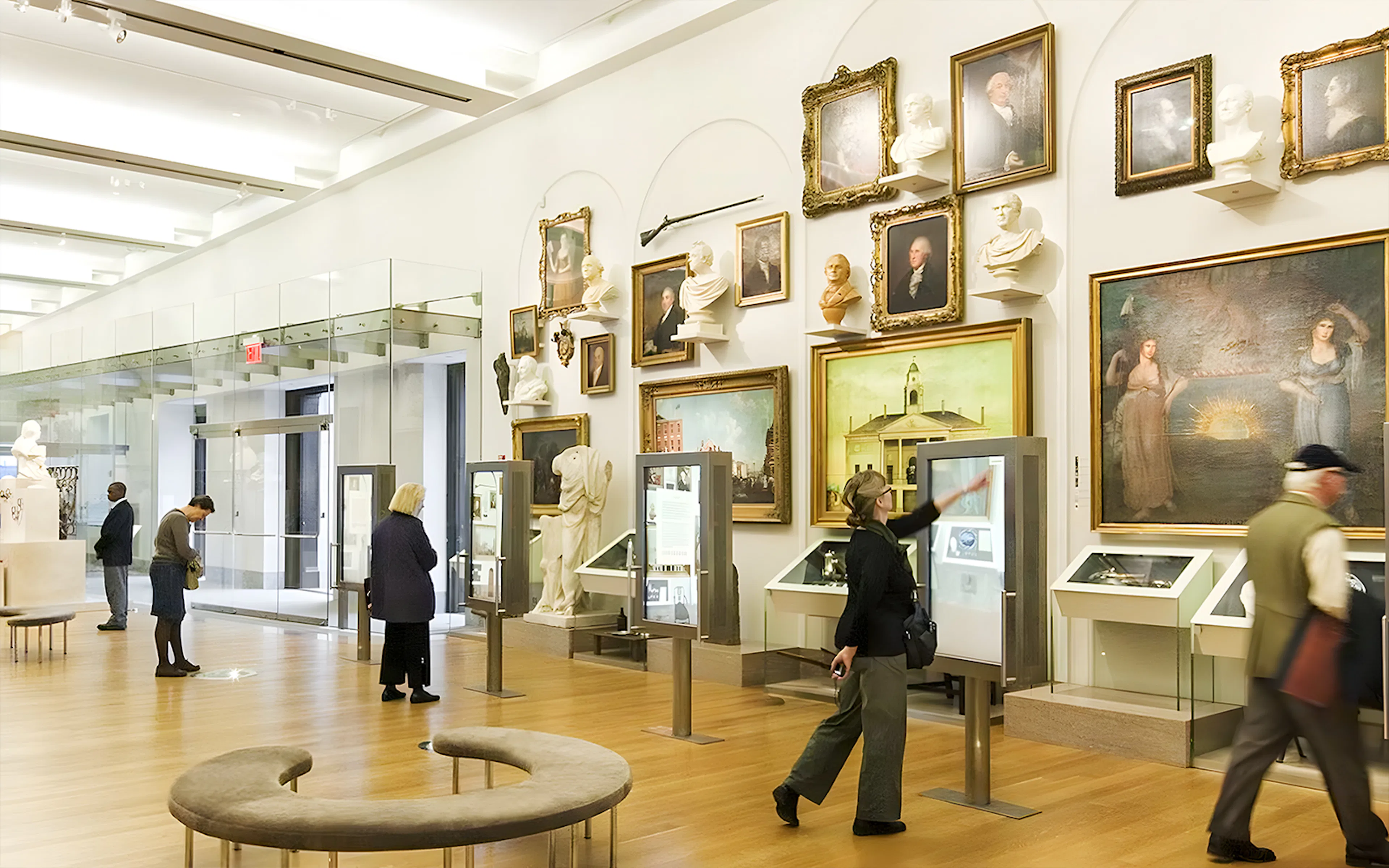
These rooms trace the country through portraits, landscapes, decorative arts, and political objects. Look for Hudson River School paintings and pieces that show how New York helped shape the national story.
Center for Women’s History
This floor goes beyond a token add-on. Expect exhibitions on women’s political, cultural, and athletic influence, with multimedia displays that make the subject feel current rather than sealed in the past.
Tiffany Lamp Gallery
One of the museum’s most memorable spaces, this gallery gathers 132 Tiffany lamps in a single glowing display. It’s visually richer than many visitors expect, and people often spend longer here than planned.
Meet the Presidents
This compact area includes a replica Oval Office desk and presidential material that turns civics into something tactile. It’s one of the museum’s most photographed stops, especially for families and first-time visitors.
DiMenna Children’s History Museum
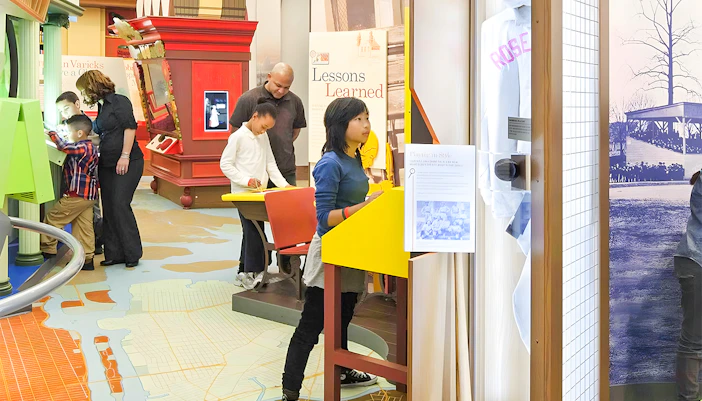
Downstairs, immersive sets and hands-on displays tell New York history through children’s lives. Families can easily spend 30–45 minutes here, and the space feels meaningfully different from the main upstairs galleries.
Luce Center
This visible storage area lets you peer into a much larger collection than the galleries alone can show. It’s easy to overlook, but it gives a useful sense of the museum’s depth and collecting ambition.
How to explore New-York Historical Society
How much time to spend?
Plan on 1.5–2.5 hours for a balanced visit. If you like reading labels, pausing in special exhibitions, or visiting with children, 3 hours feels more realistic. If you’re short on time, 75–90 minutes is enough for the major galleries and one focused temporary show.
Best visit order
Start with the current special exhibitions so you don’t miss timed or buzzier material. Then move through the permanent art and history galleries, work your way up to the Center for Women’s History and the Tiffany lamps, and finish downstairs at the DiMenna Children’s History Museum if you’re visiting with kids.
Must-see highlights
Must-see: Tiffany Lamp Gallery, Center for Women’s History, American art galleries, and the Oval Office replica.
Optional: the Luce Center and the DiMenna Children’s History Museum, which add about 30–45 minutes depending on how closely you browse.
Worth adding nearby
Central Park is directly across the street and adds anything from 30 minutes to a full afternoon. The American Museum of Natural History is also nearby, making this part of the Upper West Side easy to turn into a museum-and-park day.
Guided or self-paced?
Self-paced works well if you want to linger in the Tiffany, women’s history, or art galleries at your own pace. Guided is worth it if you want stronger context for the city’s political and social history; free guided tours are often offered at 1pm and 2:30pm with admission.
Brief history of New-York Historical Society
- 1804: The New-York Historical Society is founded, becoming New York City’s oldest museum.
- 19th century: It grows from a learned historical society into a major collecting institution, building holdings in manuscripts, art, maps, decorative arts, and civic memory.
- 20th century: The society establishes its long-term home on Central Park West, giving its collections a purpose-built public presence on the Upper West Side.
- Late 20th century: Renovation and reinterpretation shift the institution toward broader public audiences, not just scholars and researchers.
- 2011: The DiMenna Children’s History Museum opens, making family programming a central part of the visitor experience.
- Today: The museum and library present 4 centuries of New York and American history through exhibitions, archives, public programs, and research collections.
Architecture & design of the New-York Historical Society
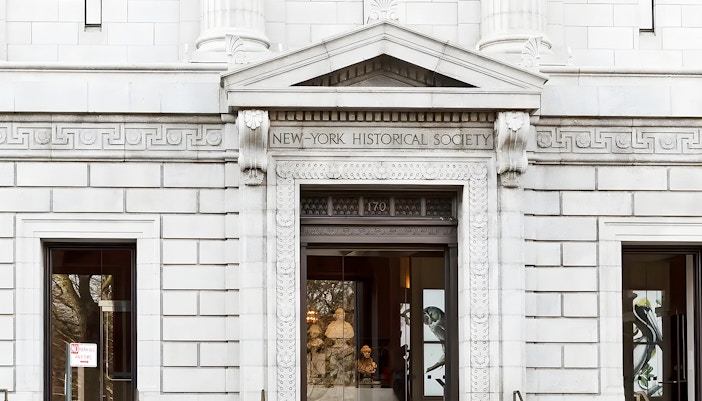
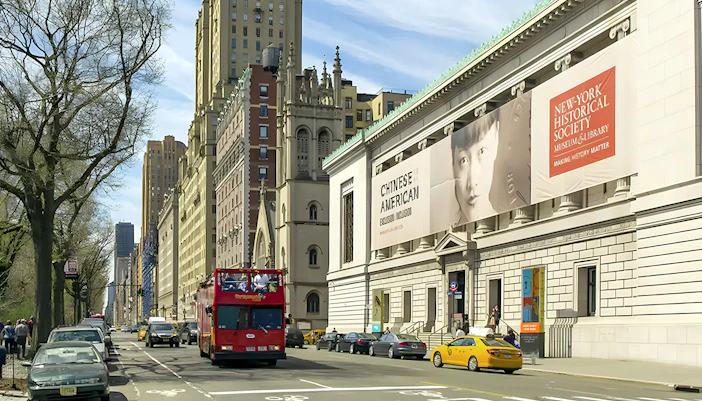
The building announces itself with quiet authority. Set along Central Park West, its neoclassical facade uses symmetry, deep-set windows, and a strong horizontal line to feel civic rather than theatrical. Inside, the mood shifts from formal to practical: galleries are arranged for close looking, whether you’re moving through portrait rooms, rotating exhibitions, or the brighter upper-floor Tiffany displays. What stands out is restraint. The architecture never tries to compete with the collection. Instead, it gives paintings, lamps, manuscripts, and objects enough visual breathing room to register properly. That measured museum atmosphere is part of what makes a visit here feel different from New York’s bigger, louder institutions.
Who built it?
The building was commissioned by the New-York Historical Society as a permanent home for its collections, library, and civic mission on Central Park West. Its classical language reflects that ambition: a serious public monument to New York memory, designed to project stability, scholarship, and permanence rather than spectacle.
Why the library sets this museum apart
What makes this institution different from many city museums is that it isn’t only a place to look at history — it also preserves and studies it at research level. The museum sits alongside a major history library and archive, which gives the exhibitions unusual depth. Even if you never enter the research side, you feel the difference in the galleries: objects are presented less as isolated highlights and more as evidence in a long civic story. That scholarly backbone is a big reason the museum feels authoritative without becoming dry.
Frequently asked questions about New-York Historical Society
Yes. General admission covers both the main museum and the DiMenna Children’s History Museum, so families don’t need a second ticket. If you’re visiting on a weekend or school break, it’s smart to book New York Historical Society Tickets ahead.
They’re part of the regular museum experience, usually within the Center for Women’s History. You don’t need a separate add-on, and many visitors treat this gallery as the visual highlight of the entire visit.
Yes. Free guided tours are often offered at 1pm and 2:30pm with general admission. They’re especially useful on a first visit, when the mix of art, politics, and social history can feel broad.
Not in the usual drop-in museum sense. The Patricia D. Klingenstein Library is a research library rather than a standard gallery space, so access typically involves advance arrangements beyond regular exhibition admission.
No. Children enjoy it, but adults usually do too because it turns presidential history into something physical and photo-friendly. It’s one of the few places in the museum where the tone becomes deliberately playful.
Yes. The two museums sit close together on Central Park West, so it’s easy to do one in the morning, break for lunch or a park walk, and visit the other afterward.
Yes. Strollers are manageable here, and stroller parking is available if you want freer movement in tighter galleries. Elevators make floor changes easier, though some exhibition spaces feel denser than large encyclopedic museums.
For many families, yes; for most adult travelers, think of it as a seasonal bonus rather than the entire reason to come. It’s charming and nostalgic, but strongest when paired with the main museum visit.