Quick Information
Plan your visitIs the Museum of Broadway worth visiting?
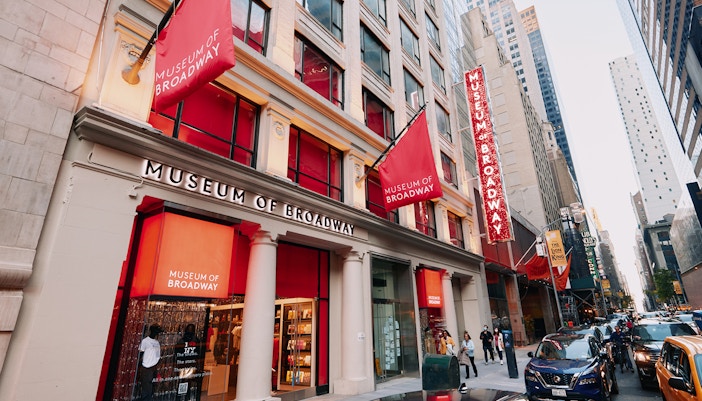
You step off West 45th Street and into glowing marquees, saturated color, projected city maps, and the hum of show music. It feels less like a conventional museum and more like moving through a staged sequence of reveals, with costumes, props, and set pieces pulling you forward.
The Museum of Broadway was built to give Broadway its own permanent home — not just to celebrate stars and hit songs, but to show how the industry grew and how a production is actually made. That purpose gives the visit real structure, from theater history to backstage craft.
What stays with most visitors is the sense that Broadway is larger than any one musical. You leave seeing the labor, design, and reinvention behind the spotlight.
Skip it if you want a fast photo stop and have little patience for reading, listening, and story-led exhibits.
What to see at the Museum of Broadway?
The Map Room
Start here. Floor-to-ceiling projections trace how New York’s theater district migrated north to Times Square, giving the rest of the museum geographic context before you meet the shows themselves.
The early Broadway galleries
These rooms move from 18th-century performance culture into the early 20th century through archival material, Playbills, and set recreations. Go slowly here; the background makes later blockbuster exhibits land better.
Landmark musicals and cultural shifts
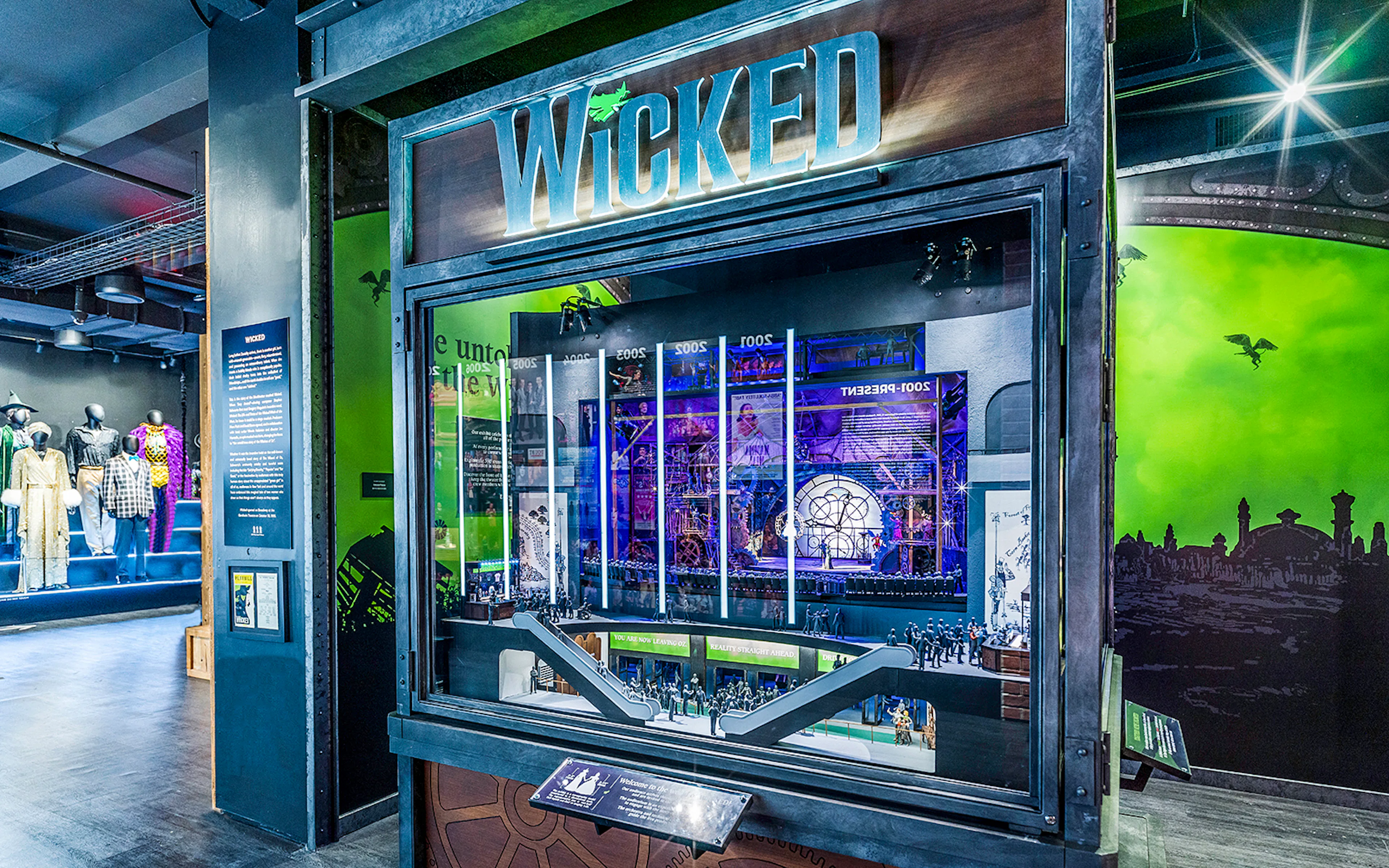
Era-by-era displays connect famous productions to wider social change through costumes, props, and interpretive panels. This is where casual visitors usually realize how many familiar titles shaped Broadway’s history.
The Making of a Broadway Show
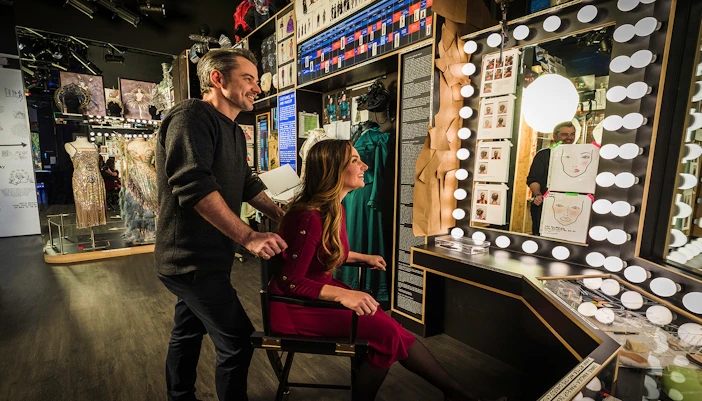
The backstage section breaks down choreography, scenic design, music, stage management, and other crafts audiences rarely see. If process interests you more than celebrity, this room earns a long stop.
Costume and memorabilia displays
Original costumes, masks, and props give the museum its strongest sense of texture. Look closely at construction details and wear marks; they connect performance to real backstage labor better than any label.
The rotating special exhibition
A temporary gallery keeps the museum from feeling fixed, with themed exhibits that change over time. If you’re returning or choosing between dates, this is the section most likely to be different.
How to explore the Museum of Broadway
How much time to spend?
Budget at least 90 minutes for a satisfying first visit. Most people spend 2–3 hours if they read the timeline panels closely, use the mobile audio guide, and linger in the backstage galleries. If you’re short on time, 60–75 minutes is enough for the Map Room, the main timeline highlights, and The Making of a Broadway Show.
Best visit order
Start with the Map Room so the movement of New York’s theater district makes sense from the outset. Then follow the timeline galleries in chronological order across the exhibit levels. Leave The Making of a Broadway Show for later, once you’ve seen the historical arc, and finish with the rotating exhibition and gift shop.
Must-see highlights
Must-see: the Map Room, the multi-level Broadway timeline, and The Making of a Broadway Show. Optional: rotating special exhibits and slower artifact browsing, which usually add 30–45 minutes.
Worth adding nearby
Times Square is right outside, and a Broadway performance is the most natural add-on if you’re making a theater-focused day of it. If you want a contrasting Midtown finish, Edge or the Empire State Building add about 90 minutes–2 hours.
Guided or self-paced?
Self-paced works very well here because the museum is designed as a walk-through story, and the audio guide helps fill in context. A guided product isn’t in the current assortment, so the smarter upgrade is a combo if you want a fuller day: Combo: The Museum of Broadway + Edge Observation Deck Timed Entry Tickets is the cleanest pairing.
Brief history of the Museum of Broadway
- Before 2022: Broadway history lived across archives, theaters, and temporary exhibits, but New York still had no permanent museum devoted entirely to Broadway.
- November 2022: The Museum of Broadway opens on West 45th Street as the first permanent museum dedicated to telling Broadway’s story.
- 2022: The opening galleries establish the museum’s structure through the Map Room, a chronological timeline, and The Making of a Broadway Show.
- 2023: Strong word-of-mouth from theater fans and tourists helps the museum settle into the Theater District as a stand-alone attraction.
- 2024: National recognition grows as the museum appears in USA Today’s 10Best awards.
- Today: Rotating exhibitions, artifact loans, and a mobile audio guide keep the experience current while preserving Broadway’s past for new audiences.
Architecture & design of the Museum of Broadway
The building keeps a fairly modest Midtown exterior, but inside, the design behaves like stagecraft. Corridors open into bursts of color, projections spill across walls and floors, and sightlines are managed the way a musical manages a reveal. Instead of asking you to stand still and observe, the museum keeps repositioning you — first as audience, then as witness, then as someone almost backstage. The most memorable design move is the way immersive rooms, artifact displays, and scenic recreations overlap, so history never feels sealed behind glass. That theatrical rhythm matters. You aren’t just learning dates and titles; you’re moving through Broadway as a sequence of scenes, transitions, and visual cues shaped by Broadway-connected designers and contemporary artists.
Who built it?
The museum was created to give Broadway a permanent public archive rather than leaving its story scattered across playbills, backstage collections, and memory. No single architect defines the project; its identity comes from a collaborative exhibition team of Broadway-connected producers, historians, scenic designers, and contemporary artists.
A museum with a living Broadway mission
The Museum of Broadway does more than preserve old playbills and costumes. It positions Broadway as a living industry with a past worth protecting and a present still being made. That matters in a district where most visitors only encounter the finished performance. Here, the writers, dressers, stage managers, designers, and crews become part of the story. A portion of ticket revenue also supports Broadway Cares, which gives the visit a small but real connection to the broader theater community rather than treating Broadway as nostalgia alone.
Frequently asked questions about the Museum of Broadway
No. The museum is built as a story, not a quiz, so first-time visitors can follow Broadway’s rise from early Manhattan theaters to modern productions without arriving with deep show knowledge.
Yes, many are genuine production artifacts, including costumes, props, Playbills, and set elements. The thrill is seeing Broadway material at close range instead of from the distance of a theater seat.
Timed entry is standard, which helps pace the galleries and keeps crowding manageable. If you want the straightforward option, The Museum Of Broadway Tickets cover admission, while combo products work better for a longer Midtown day.
Yes. The museum is step-free, elevators connect the exhibit levels, and strollers are allowed. It’s one of the easier culture-focused attractions in Midtown for families, or for a person using a wheelchair.
Photography for personal use is usually fine, but flash photography, tripods, and selfie sticks are not allowed in exhibition areas. That matters because many rooms use projections and lighting effects that extra equipment would disrupt.
Yes. A mobile audio guide app adds narration and extra context, and it’s worth using if you like deeper background without joining a tour. It also helps international visitors move through the museum at their own pace.
Yes. School-age children and teens usually get more out of it than toddlers, because the museum mixes visual installations with text-heavy timelines. Children aged 12 and under must be accompanied by an adult.
No. Food, drinks, oversized bags, and luggage are not permitted inside. Travel light if you’re fitting the museum between other Midtown plans, because it’s designed for browsing galleries, not managing shopping bags or suitcases.