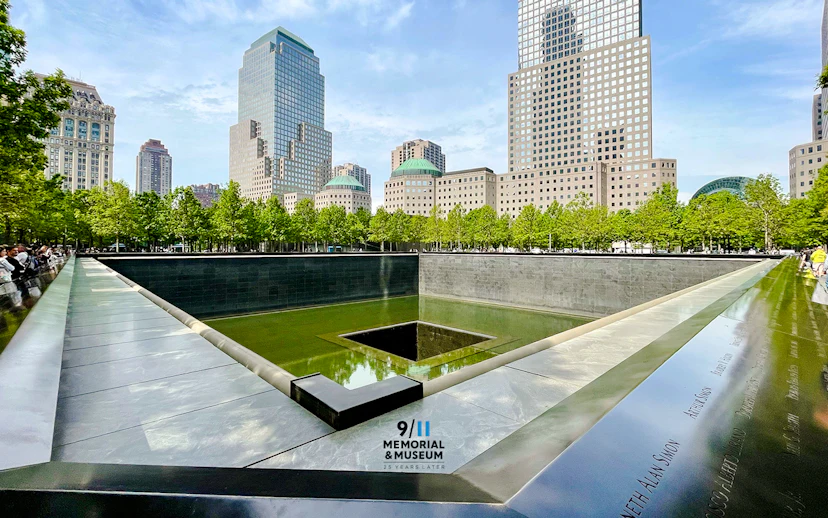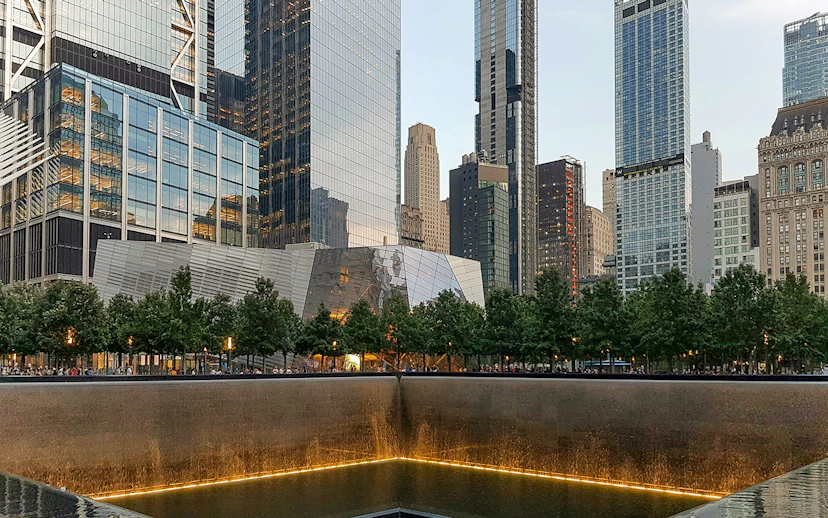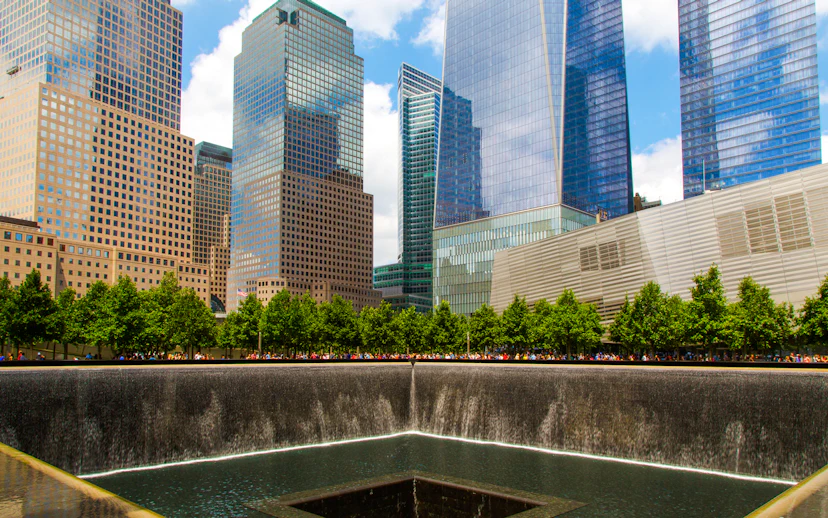

#9/11 Museum and Memorial

Slurry Wall Tickets

Included with #9/11 Museum and Memorial tickets

Timings

RECOMMENDED DURATION

3 hours

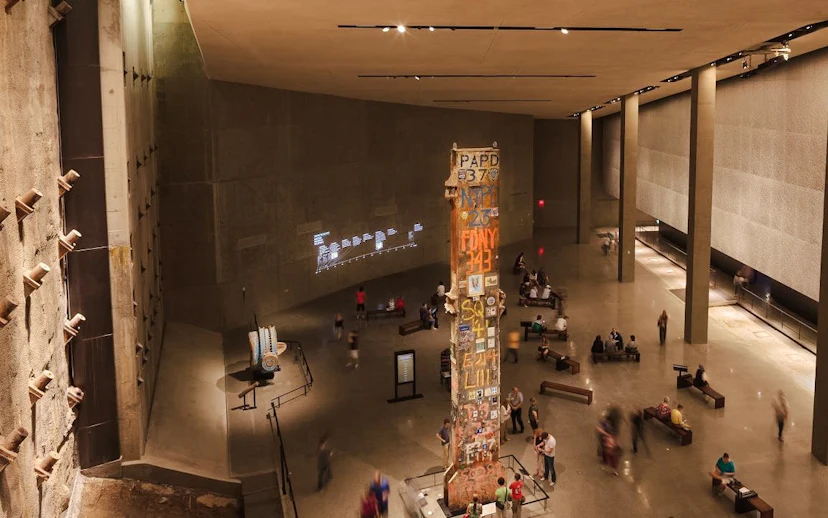
Slurry Wall at the 9/11 Memorial Museum

From happy customers

Loved by 51 million+
Trustpilot rating: 4.5 out of 5

İlke U

Couple
2 weeks ago
We were very satisfied; by buying our tickets online through Headout, we didn’t have to wait in line. We highly recommend it. You won’t regret it.

Lyndsey B

United States
Solo
Apr 2026

+3 more

Booking with Headout was easy and straightforward. I was able to go to MoMA and see works of arts from very well known artists. I was really excited and surprised to see "The Starry Night" by Vincent Van Gogh. I was so excited to see it in person. Additionally, I was amazed to see paintings from Monet, Matisse, Pollock, Frida Kahlo, David Rivera, Picasso, Dali, Warhol, Cezanne and manyyyyy more. I would highly recommend.

Giovanna V

Couple
May 2026

+1 more

Everything was perfect—very simple and efficient. We arrived early and got in right away; no lines, no problems. They didn’t ask for any ID, though they did check our backpacks, and then we went through an airport-style metal detector. Even the ferries to and from Ellis Island and Liberty Island were fast—it’s impossible to go wrong; everything is super organized.

Margot M

France
Couple
May 2026
It was a breeze—we just had to scan our tickets, the staff was super friendly, and we didn't wait more than 3 minutes before heading up. We went around 6:50 p.m., just in case :)

Joel P

United States
Couple
Apr 2026
The highlight was the beautiful view from the lookout point—it was absolutely incredible and stunning. I don't regret going at all; I'd go again in a heartbeat. I highly recommend it.

Karina B

United States
Family
Apr 2026

+2 more

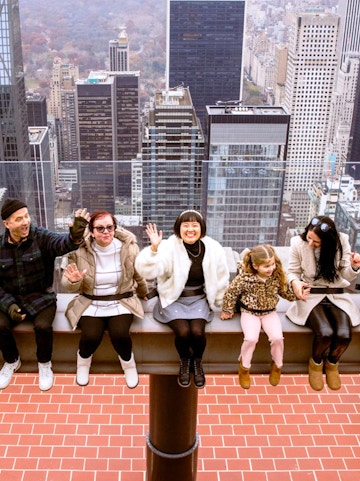
The Summit is incredible—the floors are made of glass, the view is spectacular, and the spaces are beautiful. You can see New York from every angle.

Daniel M

Spain
Family
Apr 2026

+2 more

Both Summit and Edge have pleasantly surprised me. Summit, in addition to offering spectacular views of the Big Apple, provides the incredibly fun experience of floating silver balls, as well as a glass-bottomed observation deck. At Edge, you feel like you’re in the clouds when you lean out over the windows, which are slightly angled toward the void. The sensation of standing on its glass floor is incredible.

Gerardo C

Mexico
Family
Feb 2026
Honestly, it was a very simple visit without much interaction. The welcome speech was great, and the view of New York's past in the elevators was also great, but honestly, nothing out of the ordinary. Obviously, the observatory is beautiful, and the views are great. We would have liked more interaction with the views of New York's past, more information, something more entertaining. We found it a bit too simple for the cost.

Top things to do in New York

Quick overview

Access: Included in all 9/11 Memorial & Museum tickets
When you'll see it: Midway to final portion of the indoor exhibition (located in Foundation Hall)
Visit duration: 10–15 mins self-guided/15–20 mins with a guided tour
Best time: Early morning weekdays or late afternoon slots
Restrictions: Photography allowed without flash; standard museum security check required

The Slurry Wall is included with all 9/11 Memorial & Museum tickets. No separate ticket is needed. You reach it late in the museum route inside Foundation Hall, after the main historical galleries, and you can’t enter it directly without going through the museum first. Book a timed-entry museum ticket if you want to move quietly at your own pace, or choose the Ground Zero 9/11 Memorial Tour & 9/11 Museum skip-the-line tickets for a stronger context before you arrive.

How to best experience the Slurry Wall
Best time to visit
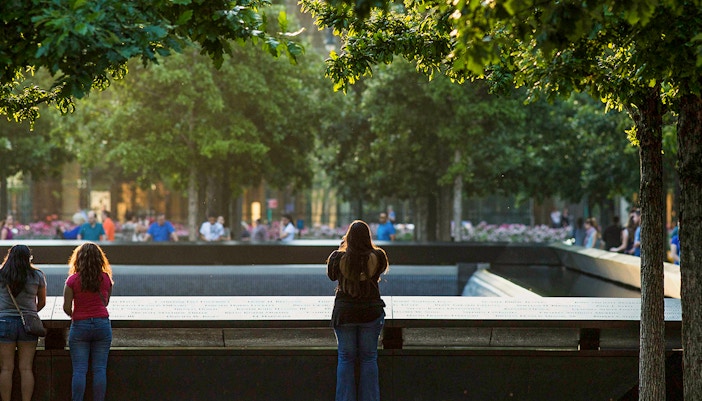
Choose the first timed entry on a weekday, or a late-afternoon slot after 3pm. Foundation Hall feels more reflective when the flow is steadier and you can stand still for a few minutes. Avoid the busiest midday windows if you want space to read the wall, the labels, and the nearby tributes.

How long to spend

Plan 10–15 minutes self-guided, or 15–20 minutes if you’re visiting with a guide or audio commentary. That’s enough time to understand what the wall did, where it sits, and why it mattered after the collapse. If you only glance at it and move on, it reads like concrete instead of engineering history.

Where it fits in your itinerary

You’ll reach the wall late in the museum visit, not at the start. Most visitors spend 60–90 minutes getting there because the route moves through major artifacts and the historical exhibition first. Don’t schedule the museum as a rushed stop between downtown activities if the Slurry Wall is one reason you’re coming.

Crowd patterns

Crowds build fastest from late morning into early afternoon, especially on weekends and school-break periods. In Foundation Hall, that means more people stopping for photos of the Last Column and less room to linger near interpretive panels. If you want a quieter look, pick a weekday morning or a later slot.

What to prioritize if time is short

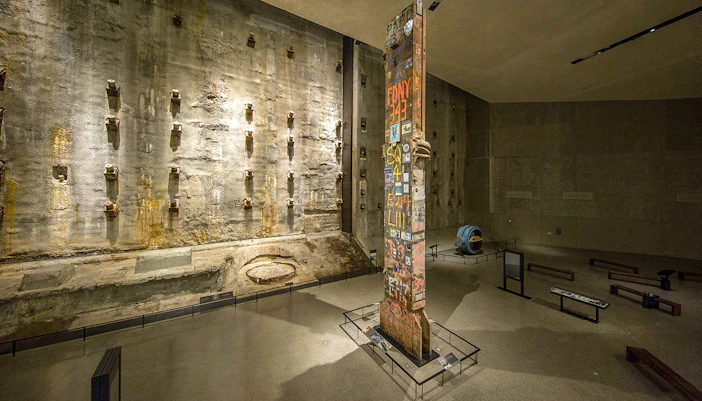
If you only have a few minutes, focus on three things: the exposed wall face, the explanation of how it held back the Hudson River, and its relationship to the Last Column nearby. Stand back far enough to see the wall as part of the full hall. Don’t treat it as a quick pass-by object.

Common mistakes to avoid

Most visitors look at the Last Column first and never fully read the Slurry Wall around it. Pause long enough to understand that this wall remained in place when almost everything above collapsed. Another common mistake is arriving emotionally and physically drained, then rushing the final galleries. Save enough attention for the end of the route.

Best tickets to experience the Slurry Wall

Ticket typeWhy choose it

Timed-entry museum ticket

Best if you want to move quietly and spend extra time in Foundation Hall without following a group pace.

Guided Ground Zero tour + museum entry

Best if you want the engineering and recovery story explained before you reach the wall late in the route.

Museum + One World Observatory combo

Best for pairing reflection below ground with skyline views above, without booking two separate Lower Manhattan experiences.

Why it’s worth seeing

Most visitors arrive at the Slurry Wall expecting an artifact and leave realizing it was infrastructure that helped keep Lower Manhattan from a far worse disaster. Many people don’t realize this preserved concrete wall was built to hold back the Hudson River from a 70-foot-deep excavation. If you know what to look for, Foundation Hall stops feeling like a large room of remnants and starts reading like the site’s structural memory.

The wall face

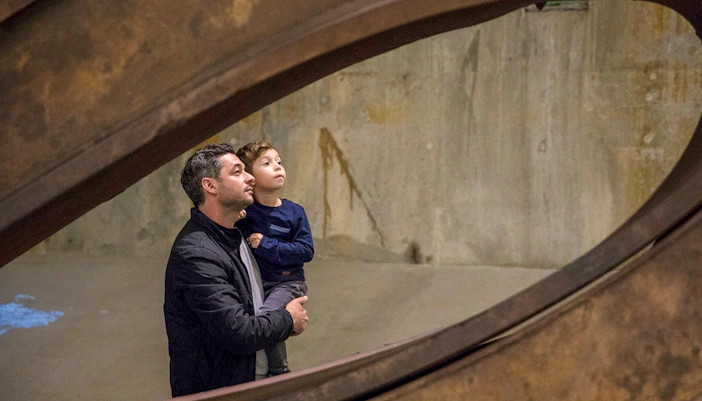
In Foundation Hall, look along the long exposed concrete wall behind the main viewing area. The stains, seams, and patched surfaces are not reconstruction. They are part of the original retaining wall that stayed standing after the towers fell, which is why this section matters far beyond its plain appearance.

The anchor points

Look for the steel tie-back points embedded through the wall. These helped brace it against water pressure from the river side and soil pressure from the city side. They turn the wall from a symbolic object into an understandable engineering system, which makes its survival much easier to grasp.

The wall in context

Pause far enough back to see the Slurry Wall, the Last Column, and the height of Foundation Hall together. This helps you read the site properly: you are deep below street level inside the former World Trade Center excavation, not in a conventional gallery room. The scale explains why preserving the wall became so important.

Historical and cultural significance

Built in the late 1960s as part of the World Trade Center excavation, the Slurry Wall was engineered to keep the Hudson River out of a 70-foot-deep site. After the towers collapsed in 2001, it remained standing and helped prevent even greater structural damage below ground. Today, it is preserved in Foundation Hall as evidence of survival, recovery, and the original engineering logic of the site.

Notable figures

Leslie Robertson | Structural engineer

Helped design the original World Trade Center structure and the engineering system that made the retained wall possible.

View Wikipedia

Minoru Yamasaki | Architect

Lead architect of the original World Trade Center complex built around the excavated superblock site.

View Wikipedia

Daniel Libeskind | Master planner

Argued for exposing the Slurry Wall in the rebuilt site as visible evidence of resilience.

View Wikipedia

Know before you go

  • Open: Wednesday–Monday, 9am–7pm
  • Last entry: Around 5pm for the museum
  • Closed: Tuesdays, with special schedule changes around major observances
  • Free admission: Mondays from 5:30pm–7pm, with limited tickets released online at 7am the same day

Address: 180 Greenwich St, New York, NY 10007

  • Nearest transit: World Trade Center Station (E) and WTC Cortlandt (1) are both a short walk
  • Entry point: Enter through the museum pavilion on the Memorial Plaza, on the Greenwich Street side
  • Time to reach the wall: Allow about 60–90 minutes from museum entry if you move through the main exhibitions carefully
  • Direct access: Not possible; the Slurry Wall is inside Foundation Hall and reached through the museum route
  • Wheelchair access: Yes; the museum and Foundation Hall are accessible by ramps and elevators
  • Mobility devices: Wheelchairs, mobility scooters, walkers, and strollers are accommodated
  • Visual support: Braille materials and staff assistance are available on-site
  • Hearing support: Videos are open-captioned, and hearing loop support is available in the museum
  • Additional access: Service animals are welcome, and accessible restrooms are available
  • Photography: Personal photography is allowed in most areas without flash, but some galleries and memorial spaces prohibit photos
  • Security: All visitors, bags, and personal mobility devices go through airport-style screening
  • Large bags: Large backpacks, luggage, and oversized items are not permitted
  • Food and drink: Outside food, drinks, and glass bottles are not allowed inside the museum
  • Conduct: Keep voices low and behavior respectful; this is a memorial space, not a standard attraction

Frequently asked questions about the Slurry Wall

Yes. Access is included with every valid 9/11 Memorial & Museum ticket. No separate ticket exists.

More reads