Arte Museum New York visitor guide
Planning a visit to Arte Museum New York? From the best time to go and how long to spend inside to ticket tips, café upgrades, and must-see immersive rooms, here’s everything you need to know before stepping into New York’s multisensory digital art experience.
Quick overview: Arte Museum New York at a glance
Planning ahead helps you enjoy the immersive rooms with fewer crowds and a smoother visit experience.
- Best time to visit: Weekday mornings and early afternoons are usually quieter, especially compared to weekends and holiday periods when the projection rooms fill up faster.
- Tickets: Arte Museum New York offers a standard admission ticket, with an optional upgrade that includes the Arte Café experience. Since entry is flexible during operating hours, you can arrive anytime on your selected date.
- How long to spend: Most visitors spend about 60–90 minutes exploring the exhibition. Add extra time if you want photos, interactive exhibits like Live Sketchbook, or a café stop.
- Don’t miss: Waterfall Infinite, Tornado, the Musée d’Orsay collaboration, and the New York-themed installations are among the most memorable parts of the experience.
Jump to what you need
🕒 Where and when to go
🗓️ How much time do you need?
🎟️ Which ticket is right for you?
🗺️ Getting around
🎨 What happens inside
♿ Facilities and accessibility
Where and when to go

How do you get to Arte Museum New York?
Arte Museum New York is inside Chelsea Piers on Manhattan’s west side in Chelsea, a short ride from Midtown and an easy add-on to the High Line or Chelsea Market.
Address: 61 Chelsea Piers, New York, NY 10011 | Find on Maps
- Subway: 23 St on the C or E → 12–15-minute walk → easiest rail option if you don’t mind walking west to the river.
- Bus: M23-SBS at Chelsea Piers / 23rd Street → 3–5-minute walk → the simplest public transit drop-off for the door.
- Taxi / rideshare: Chelsea Piers curbside drop-off → 1–2-minute walk → best if you’re visiting with kids or in bad weather.
- Driving: Chelsea Piers underground parking → on-site → paid parking is available, but weekends are the toughest time to find a quick spot.
Which entrance should you use?
There’s one museum entrance inside the Chelsea Piers complex, and the main mistake visitors make is assuming they’re at the door once they reach the pier rather than allowing a few extra minutes to find the check-in point.
- Located at: The Arte Museum entrance inside Chelsea Piers. Expect around a 5–15-minute wait during Friday evenings, Saturdays, and holiday slots.
When is Arte Museum New York open?
- Monday–Thursday: 10am–7pm
- Friday–Sunday & public holidays: 10am–9pm
- Last entry: 5:30pm Monday–Thursday and 7:30pm Friday–Sunday
When is it busiest? Saturday afternoons, holiday weekends, and later Friday slots feel most crowded, especially in Waterfall Infinite, Tornado, and other rooms where visitors stop for photos.
When should you actually go? A weekday slot close to opening gives you more space, cleaner photo moments, and a quieter soundscape before the darker rooms start to fill.
How much time do you need?
| Visit type | Route | Duration | Walking distance | What you get |
|---|---|---|---|---|
Highlights only | Entry → opening projection rooms → Tornado → Live Sketchbook → exit | 1 hr | ~0.5 km | You see the biggest projection rooms and interactive highlights, but you will rush the quieter later spaces and likely skip the café. |
Balanced visit | Entry → opening rooms → Tornado → Live Sketchbook → Musée d’Orsay room → New York is Art → exit | 1–1.5 hrs | ~0.7 km | This covers the full main experience at a comfortable pace and gives you time for the Orsay room and late-route installations without dragging the visit out. |
Full exploration | Full walkthrough → all major rooms → Live Sketchbook → Musée d’Orsay room → New York is Art → ARTE Cafe | 1.75–2 hrs | ~0.8 km | This adds sketching time, slower photo stops, and the café finish; it is the fullest version of the visit, but only worth it if you want to linger rather than move straight through. |
Which Arte Museum New York ticket is best for you
| Ticket type | What's included | Best for | Book from |
|---|---|---|---|
Arte Museum General Admission | Entry + access to all multimedia installations + self-guided visit | A flexible visit where you want the full projection rooms without paying extra for the café finale | $48.99 |
General Admission + Café Experience | Entry + access to all multimedia installations + 1 beverage at Arte Café + interactive media-table experience | A visit where you want the full ending sequence and don’t mind adding around 15 minutes after the galleries | $54.43 |
How do you get around Arte Museum New York?
How is the museum laid out?
Arte Museum New York follows a mostly linear, room-to-room layout, so it’s easy to navigate without a map. Visitors move through a sequence of immersive digital environments rather than separate museum wings or galleries.
- Opening rooms: Large-scale projection spaces like Waterfall Infinite introduce the museum’s immersive style and are usually where visitors stop first for photos and videos.
- Interactive rooms: Installations like Tornado and Live Sketchbook tend to draw longer pauses, especially for families and visitors spending extra time with the interactive elements.
- Art collaboration spaces: The Musée d’Orsay collaboration rooms are quieter and more reflective, focusing on digitally reimagined works inspired by artists like Monet and Van Gogh.
- Finale zone: The later sections include New York-themed installations and ARTE Café, where visitors can add a themed drink experience before exiting.
- Suggested pace: Most visitors move quickly through the first rooms and slow down later. If you want a more balanced visit, save extra time for the Musée d’Orsay and New York-themed sections rather than spending it all upfront.
Maps and navigation tools
- Map: The route is straightforward and mostly one-way, so most visitors won’t need a printed map once inside.
- Signage: Interior wayfinding is simple, though finding the entrance within the larger Chelsea Piers complex can take a few extra minutes.
- Audio guide or app: Arte Museum New York is designed as a self-guided experience with built-in soundscapes and visual storytelling, so there is no traditional museum-style audio guide.
What happens inside Arte Museum New York?
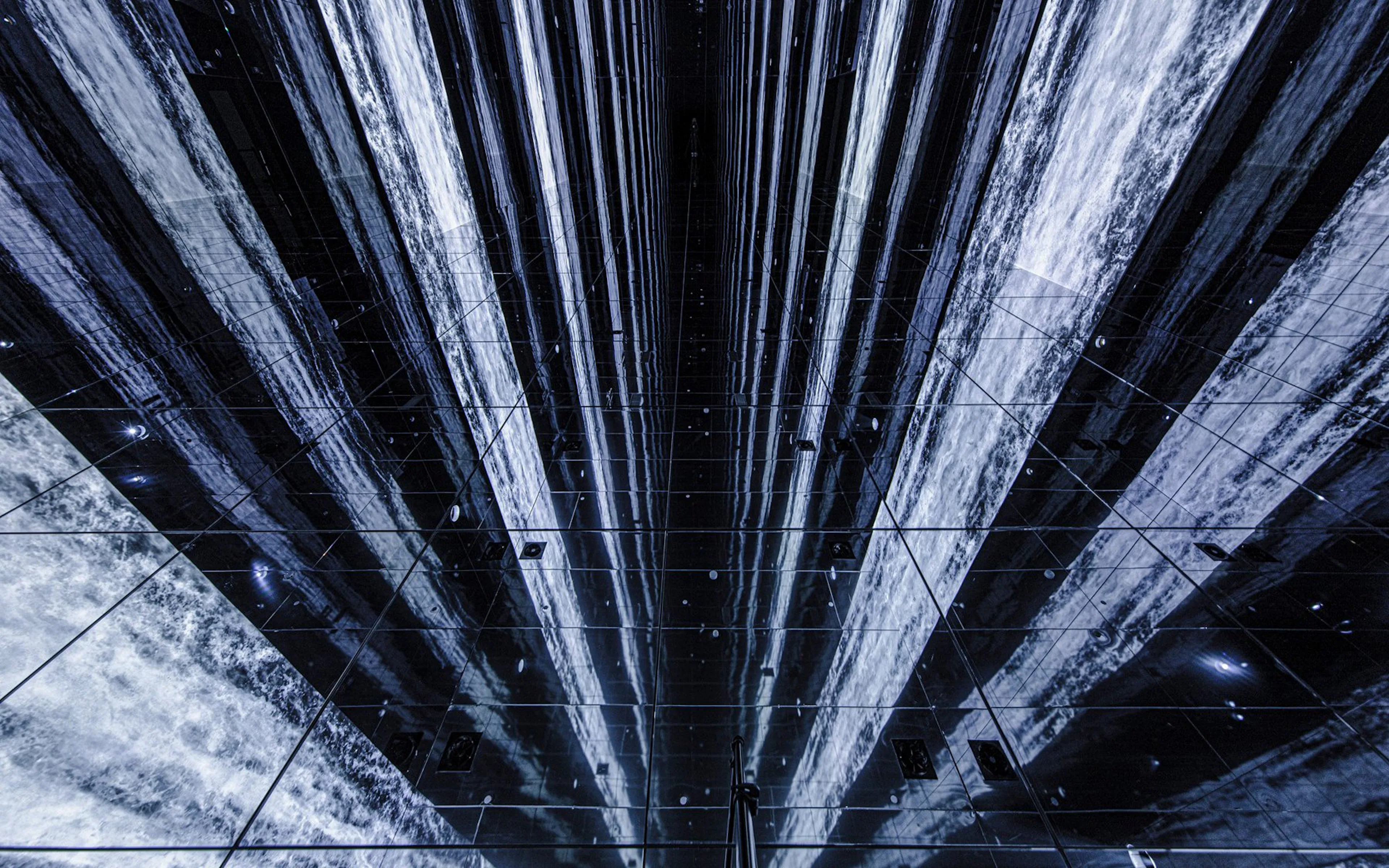
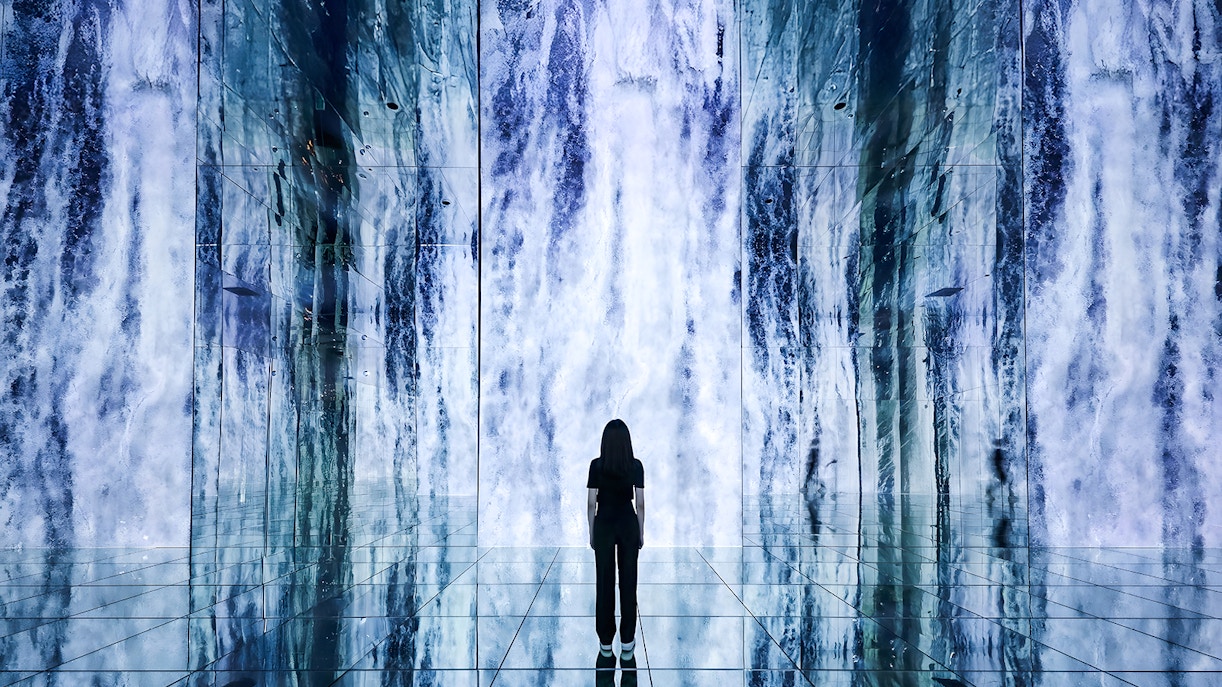
Waterfall Infinite
Theme: Immersive digital waterfall environment
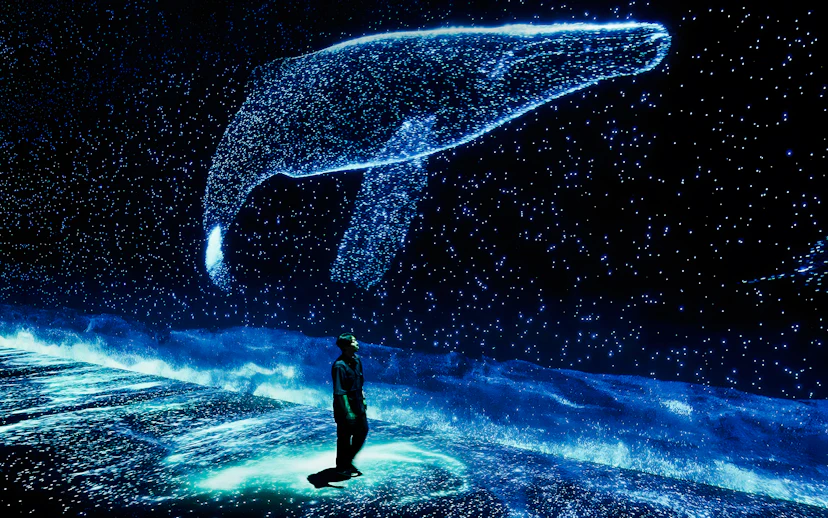
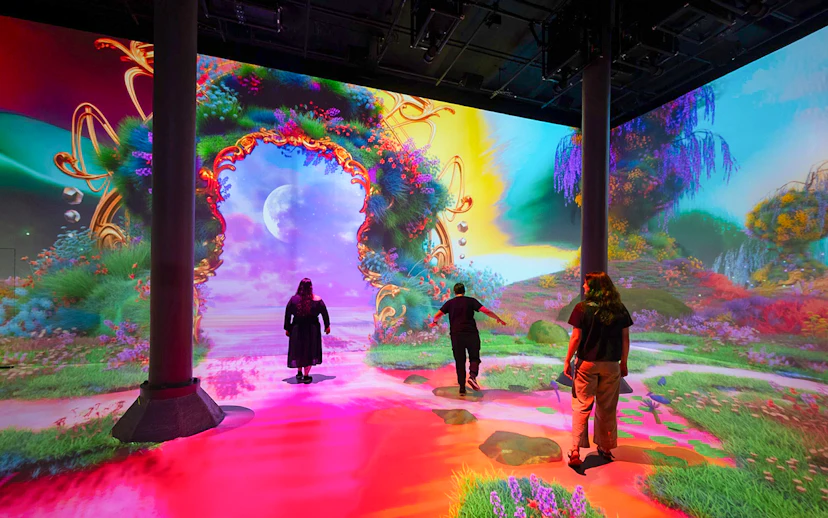
This is one of the most visually striking rooms in the museum, with projected water cascading across the walls and floor so the whole space feels in motion. It works best when you don’t rush straight to the middle — the edges often give you the best full-room perspective. Most visitors focus on the scale and miss how the reflected light changes across the floor, which is part of what makes the room feel so deep.
Where to find it: Early in the route, soon after you enter the exhibition proper
Tornado
Theme: Interactive storm simulation
Tornado is one of the liveliest rooms in the experience, with swirling projections and wind effects that make the whole chamber feel unstable in a fun way. It’s especially popular with families, so it rarely stays quiet for long. Most visitors stop for a quick video and move on, but it’s worth waiting through one full cycle to catch the changing intensity and how silhouettes are pulled into the storm.
Where to find it: Midway through the exhibition route
Live Sketchbook (Guardians)
Theme: Interactive drawing installation
This is the hands-on room where your own drawing becomes part of the digital environment, which makes it one of the few sections where you actively create rather than just observe. Kids tend to stay longest here, but adults get just as into it once they see their work animate on the wall. What many people miss is that it’s one of the best pace-break rooms in the museum — a smart place to linger if the projection-heavy spaces start blending together.
Where to find it: In the interactive section around the middle of the visit
Arte Museum × Musée d’Orsay
Theme: 19th-century masterworks reimagined as digital art
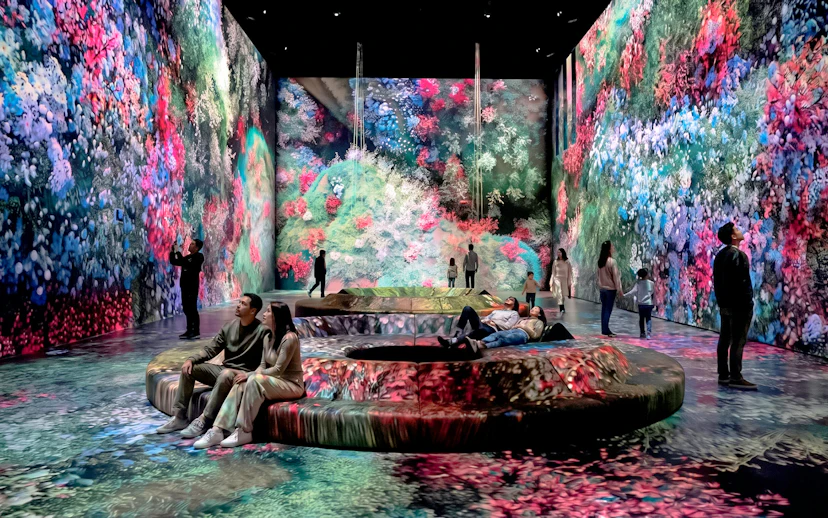
This is the room that connects the spectacle back to painting, reworking themes and imagery tied to artists like Monet and Van Gogh into moving environments. If you care about the art connection, this is the section that makes the visit feel more substantial than a pure photo attraction. Many visitors give it too little time because it comes after larger wow-moment rooms, but it’s where the curatorial idea is clearest.
Where to find it: In the later-middle stretch of the route, after the major projection rooms
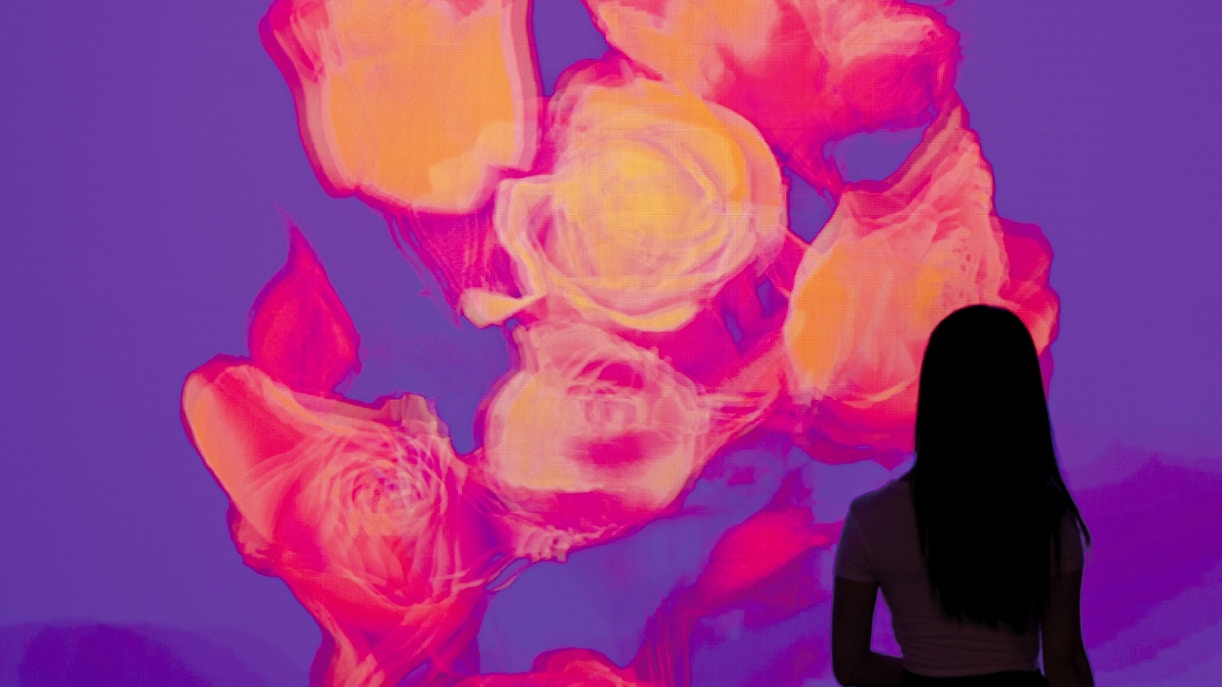
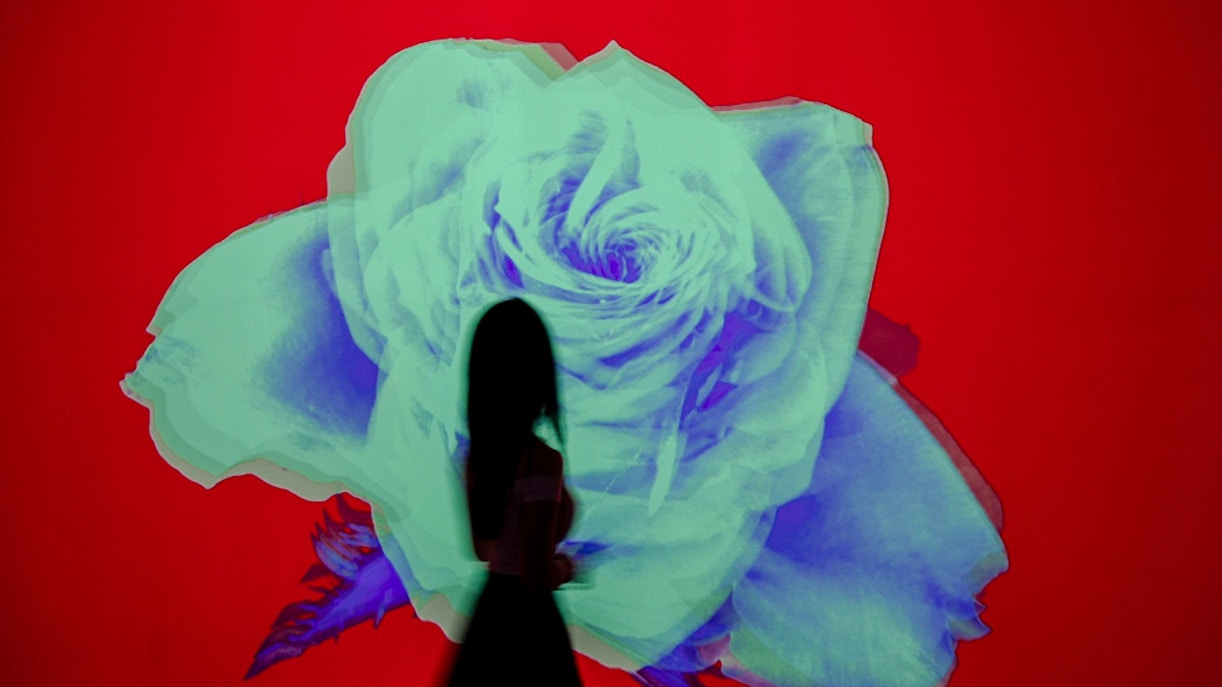
New York is Art garden
Theme: New York-inspired digital garden installation
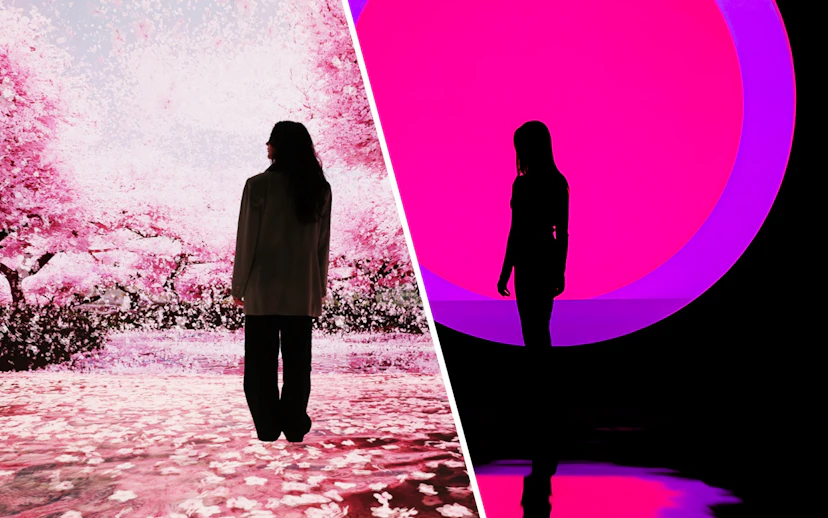
This room brings the experience back to its local setting, blending floral and city-inspired imagery into a calmer, more open-feeling environment. It works as a reset after the darker, louder spaces earlier in the route. Many people treat it as a pass-through on the way out, but it’s one of the easiest places to slow down because the crowd flow starts thinning by this point.
Where to find it: Near the end of the main exhibition sequence
Arte Café
Theme: Interactive media-table café finale
The café is the optional final stop, where a drink is served at a table animated with digital visuals. It’s less about the beverage itself and more about extending the immersive mood for another 10–15 minutes. What people often get wrong is assuming it’s essential to the core visit — it’s fun, but the main value of your ticket is still the exhibition rooms, not the drink.
Where to find it: At the end of the route, just before the exit
Facilities and accessibility
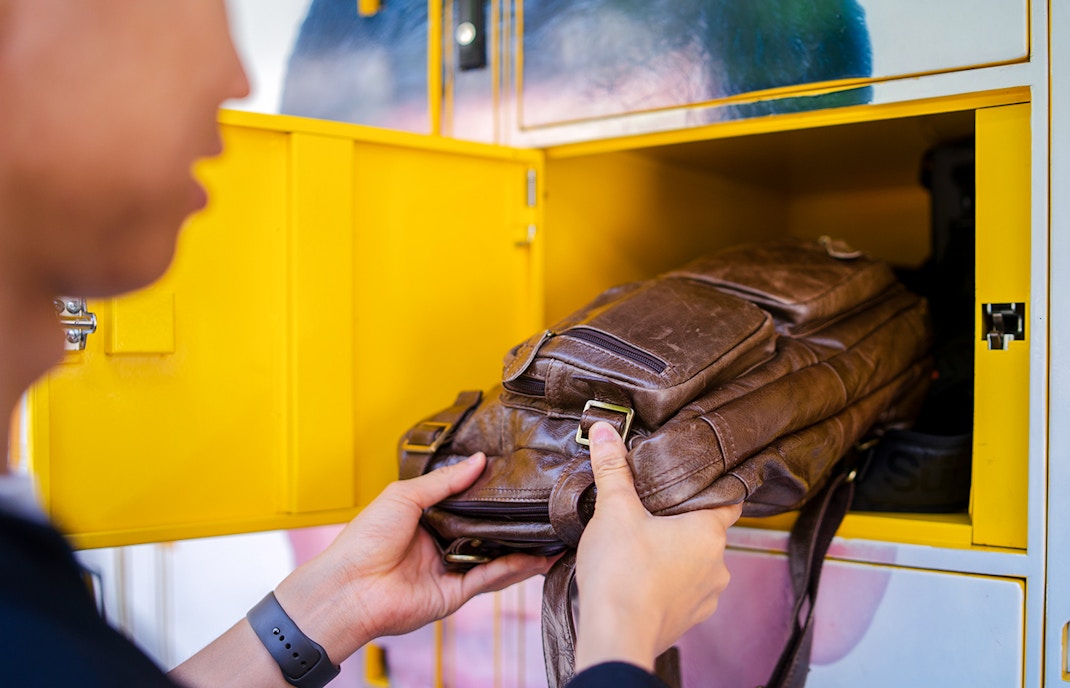
- 🎒 Lockers: Free lockers are available on-site, which helps if you want to tour the dark rooms without carrying a bulky bag the whole way.
- ☕ Arte Café: The café sits at the end of the route and adds about 15 minutes if you choose the drink option with the interactive media-table experience.
- 🅿️ Parking: Paid underground parking is available at Chelsea Piers, which is useful if you’re arriving by car and want the shortest walk in.
- 🪑 Seating / rest areas: The main seated break comes at the café finale rather than in the projection rooms, so don’t expect many built-in pauses earlier in the route.
- ❄️ Indoor environment: The entire experience is indoors and climate-controlled, which makes it an easy year-round visit in bad weather, heat, or winter cold.
- 👨👩👧 Self-paced route: You move at your own speed through the exhibition, which makes it easier to pause for kids, photos, or quick breaks without keeping up with a group.
- ♿ Mobility: The venue is ADA-accessible, and the indoor, self-paced route is easier to manage than a multi-floor museum with long distances between galleries.
- 👁️ Visual impairments: This experience depends heavily on projected light and motion, so it is less rewarding if you rely on tactile interpretation rather than visual immersion.
- 🧠 Cognitive and sensory needs: The museum uses darkness, shifting projections, sound, and scent throughout, so a weekday morning visit is the gentlest option if overstimulation is a concern.
- 👨👩👧 Families and strollers: The route is family-friendly and self-paced, but very young children or sensory-sensitive visitors may find rooms like Tornado and the louder projection spaces intense.
- 🔊 Sound levels: Several rooms use strong surround sound, which adds to the immersion but can make the visit feel more demanding than the compact layout suggests.
- 🌫️ Scented environments: Bespoke fragrances are part of the concept here, so visitors sensitive to scent should be prepared for that from the start of the visit.
Arte Museum New York works best for school-age children who enjoy lights, movement, and interactive play, though the darkest rooms can feel intense for toddlers and sensory-sensitive kids.
- 🕐 Time: Around 1 hour is realistic with children, and the best sections to prioritize are Waterfall Infinite, Tornado, and Live Sketchbook.
- 🏠 Facilities: Free lockers and the self-paced route make the logistics easier, and the café at the end gives families a natural final break.
- 💡 Engagement: Save a little extra time for Live Sketchbook because it’s the room where children shift from watching to making the experience themselves.
- 🎒 Logistics: Bring only what you want during the exhibit, use the lockers early, and book a morning or early afternoon slot if you want the least chaotic version of the visit.
- 📍 After your visit: Chelsea Market is the easiest family-friendly follow-up nearby if you want food choices without adding another long walk.
Rules and restrictions
What you need to know before you go
- Entry: Arte Museum New York uses date-based admission, and visitors can generally enter anytime during operating hours on their selected day. Arriving a little early is still helpful for check-in and finding the entrance within Chelsea Piers.
- Bag policy: Lockers are available on-site for bags and bulky items, which can make it easier to move through the darker immersive rooms comfortably.
- Re-entry policy: Re-entry may be limited once you leave the exhibition, so it’s best to carry anything you’ll need during the visit before entering.
Not allowed
- 🚫 Food and drink: Keep food and drinks for the café area at the end rather than bringing them into the exhibition rooms.
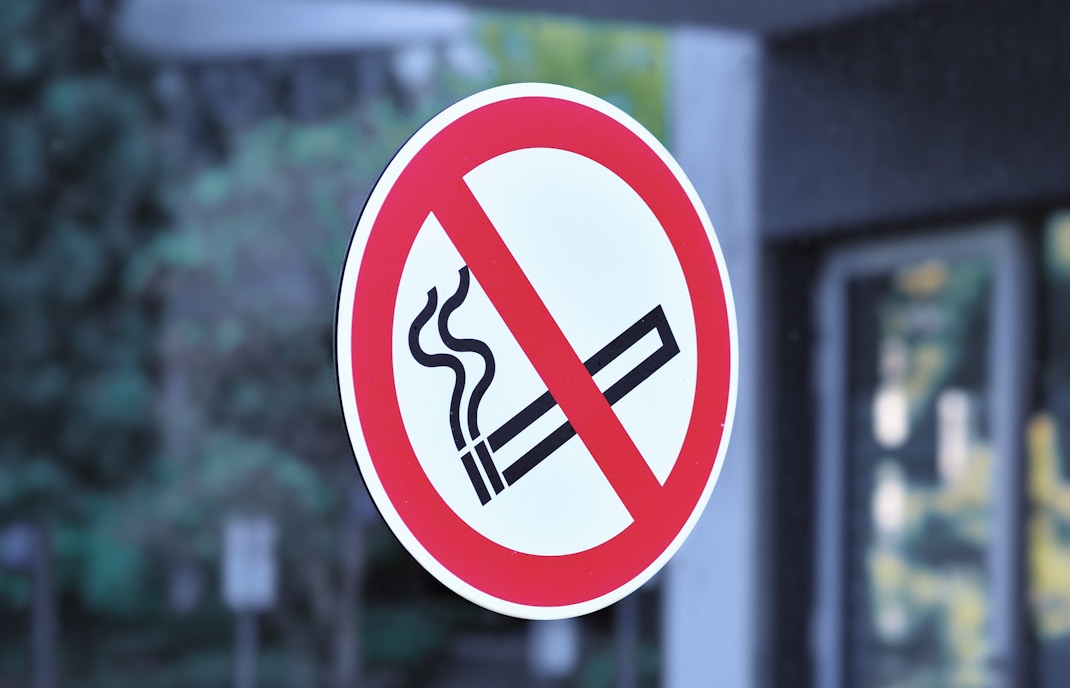
- 🚬 Smoking and vaping: Smoking and vaping are not part of the indoor experience and should be assumed off-limits inside the venue.
- 🖐️ Touching exhibits: Only the clearly marked interactive stations are meant to be hands-on, so don’t assume every projection room is touch-responsive.
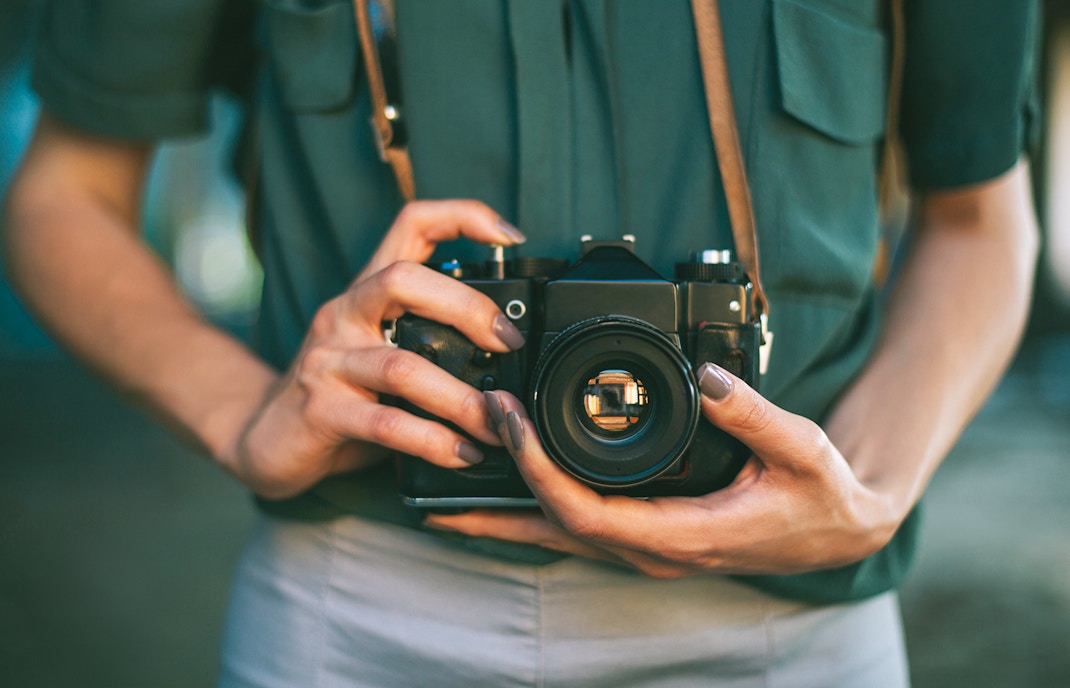
Photography
Photography is part of the appeal here, and most visitors take photos or short videos throughout the immersive rooms. The key distinction is practical rather than room-by-room: the darker, reflective spaces work best if you keep your setup simple and avoid anything that blocks other people’s views. Flash adds little in these environments, and large shooting setups can slow the route in already crowded rooms.
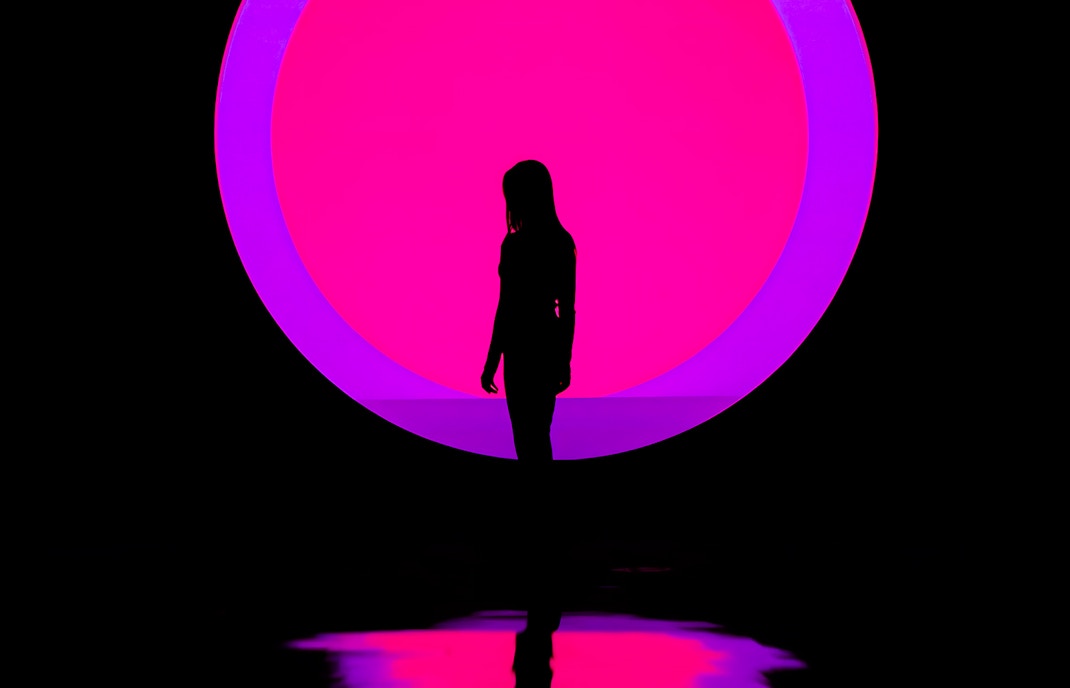
Good to know
- Crowd surprise: Arte Museum New York can feel much busier in the late afternoon, evenings, weekends, and holidays because visitors often pause for photos and videos inside the immersive rooms.
- Sensory note: The exhibition is family-friendly, but some installations use loud sound, dark spaces, flashing visuals, and motion effects that may feel overstimulating for very young children or sound-sensitive visitors.
Practical tips
- Booking and arrival: Reserve weekend and holiday visits in advance, especially for later-day entry. Arriving a little early also helps since the entrance can take a few minutes to find within Chelsea Piers.
- Pacing: Don’t spend your entire visit in the first photo-heavy rooms. Save time for the Musée d’Orsay collaboration and the New York-themed installations, which are quieter and often more memorable on a slower walk-through.
- Crowds: Weekday mornings and early afternoons usually feel the most immersive because there are fewer people stopping for photos in the larger projection rooms.
- What to bring: Travel light if possible. Lockers are available on-site, and moving through the darker rooms is easier without bulky bags or extra layers to carry.
- Food and drink: The standard admission ticket includes the exhibition, with an optional ARTE Café upgrade available during booking. The café adds a short interactive drink experience near the end of the visit.
- Sensory prep: Some rooms include loud sound, dark environments, scent effects, and moving visuals. Earlier visits are usually calmer for young children and visitors sensitive to sensory stimulation.
What else is worth visiting nearby?
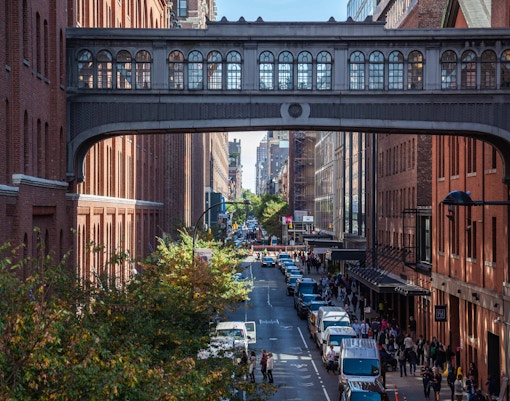
Commonly paired: Chelsea Market
Distance: 800 m — 10-minute walk
Why people combine them: It’s the easiest post-visit food stop in the area, especially if you skip the café add-on or want a fuller lunch after the exhibition.
Book / Learn more
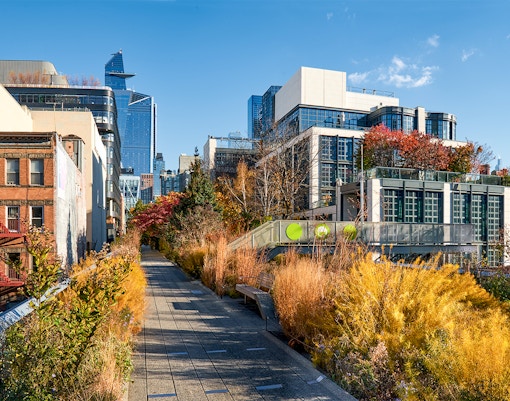
Commonly paired: The High Line
Distance: 900 m — 10–15-minute walk
Why people combine them: It balances the indoor digital experience with an outdoor walk, and the route between the two fits naturally into a half-day Chelsea plan.
Book / Learn more
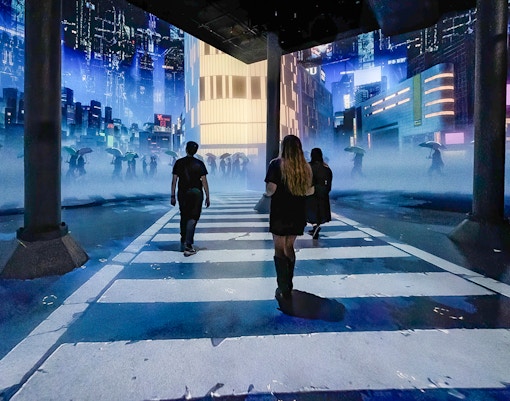
Also nearby: ARTECHOUSE NYC
Distance: 1 km — 12-minute walk
Why people combine them: It’s the closest comparable immersive art experience nearby and works well if you want to compare different digital exhibition styles in one day.
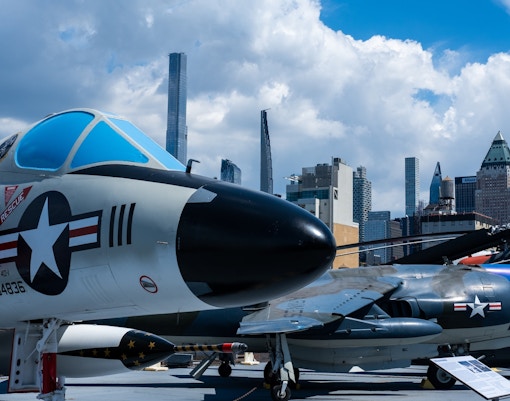
Also nearby: Intrepid Sea, Air & Space Museum
Distance: 1.6 km — 20-minute walk
Why people combine them: It’s a good add-on for families or visitors who want to balance immersive digital art with a more traditional museum experience.
Eat, shop and stay near Arte Museum New York
- On-site: Arte Café is located near the end of the experience at Arte Museum New York, and is known for its interactive media-table visuals and themed drinks. It works best as a short immersive stop rather than a full meal break.
- Chelsea Market (10-minute walk, 75 9th Ave): A large indoor food hall with everything from tacos and seafood to bakeries and coffee shops, making it one of the easiest nearby dining options for groups.
- Los Tacos No. 1 (10-minute walk, inside Chelsea Market): A popular quick stop for tacos and casual bites if you want something fast after the exhibition.
- Miznon (10-minute walk, inside Chelsea Market): A good option for a more filling sit-down-style meal while staying close to Chelsea Piers.
- Chelsea Market Shops: Food gifts, books, pantry items, and small design finds in one stop, which makes this the most useful nearby shopping option after your visit.
- Artists & Fleas Chelsea: Independent makers and small-brand shopping near Chelsea Market, worth a stop if you want something more local than standard souvenir retail.
Chelsea works well if you want a neighborhood with good food, easy subway access, and enough nearby attractions to fill more than one half-day. Around Chelsea Piers, the vibe is more functional than charming right on the water, but it gets better fast once you move east toward the High Line and Chelsea Market. For a short New York trip, it’s a solid base if you want to mix sightseeing with good dining and don’t need to be in Midtown itself.
- Price point: This area skews mid-range to upscale, with the best value usually found a little farther east rather than directly by the river.
- Best for: Visitors who want to pair Arte Museum New York with the High Line, Chelsea Market, Hudson River walks, and west-side dining without long transfers.
- Consider instead: Midtown West works better for a first New York stay with denser sightseeing access, while Greenwich Village suits longer stays if you want a more neighborhood-driven feel.
Frequently asked questions about visiting Arte Museum New York
Most visits take around 1–1.5 hours. Add another 15 minutes if you book the ARTE Café experience or spend extra time in interactive spaces like Live Sketchbook. You can move faster in about 60 minutes, but that usually means treating it as a photo stop rather than a full experience.
Yes, advance booking is the safer move, especially for weekends, holiday periods, and later-day slots. Timed entry is the standard format, and the more popular times can sell out before the day of your visit. Midweek daytime slots are usually the easiest to book without stress.
Arrive about 10 minutes before your slot. That gives you enough time for check-in and lockers without standing around too long before entry. If you show up right at your time, you may still get in, but you’ll start the visit feeling rushed.
Yes, but it’s smarter to store anything bulky in the free lockers on-site. The rooms are dark, photo-heavy, and easier to enjoy when you’re not carrying extra things. A small bag is fine, but a larger one just becomes something to manage in tight, reflective spaces.
Yes, photography is one of the main draws here. Most visitors take photos and short videos throughout the immersive rooms. The best results come from keeping your setup simple, because large gear slows you down and gets in the way when the busier rooms start filling up.
Yes, and the museum is used by families, friend groups, and small outings without any problem. Just know that larger groups naturally move slower in rooms like Tornado and Live Sketchbook, so a timed slot that feels generous for two people can feel tighter once photo stops multiply.
Yes, but it suits school-age children better than very young or easily overstimulated kids. Rooms like Waterfall Infinite and Live Sketchbook are usually the easiest wins, while darker, louder spaces can feel intense. A morning visit tends to be the family-friendliest version of the experience.
Yes, the venue is ADA-accessible. The indoor, self-paced layout is generally easier to manage than a large traditional museum, and you won’t be dealing with long outdoor walks between sections. The bigger accessibility question here is sensory load rather than route complexity.
Yes. Inside the venue, the ARTE Café adds a drink-based finale rather than a full meal. Nearby, Chelsea Market is the most useful option if you want real lunch, snacks, or a wider range of food choices within about a 10-minute walk.
No, the café drink is typically treated as an add-on rather than a standard part of the base visit. It usually adds about $5 and around 15 minutes. If you care most about the exhibition rooms, you won’t miss the core experience by skipping it.
A weekday slot close to opening is the best time for most visitors. The rooms feel more immersive when they’re less crowded, and you’ll spend less time waiting for clear photos in the most popular spaces. Saturday afternoons and later Friday slots are the busiest times.
It can be. The experience uses darkness, projection, surround sound, and scent throughout, so it’s more stimulating than a standard museum visit. If that’s a concern, choose an early weekday slot, keep the visit short, and focus on a few rooms rather than trying to do everything.